

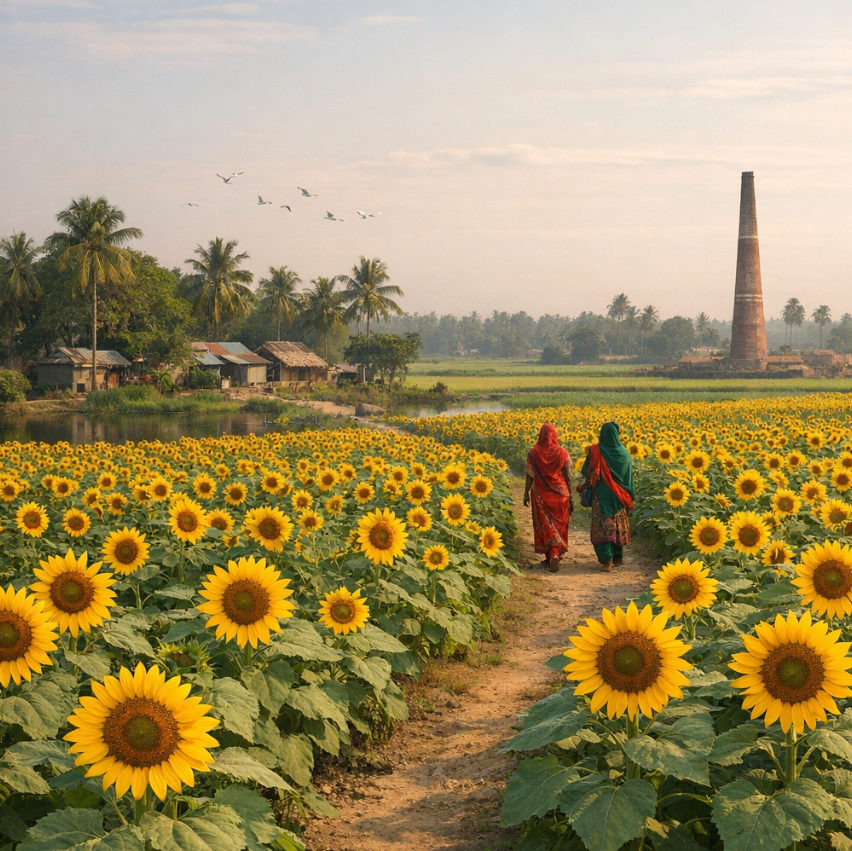

Sunflower farming has brought new hope to farmers in Madhupur after a local grower showed how the crop can be both profitable and gentle on the land. Shanowar Hossain turned a hilly red soil plot into a wide sunflower garden using the BARI-3 hybrid variety on two bighas and his success drew many visitors and curious farmers to learn the method. Sunflower grows faster than many traditional crops and asks for less water, so it can save time and cut the cost of irrigation. It also needs lower amounts of fertilizer and pesticide, which reduces the money farmers spend and lowers the risk of chemical harm. Because the crop costs less to raise and reaches market quickly, the profit margin is often higher than that of paddy or some other local crops. Sunflower has been planted on forty eight hectares in the area, a big rise from eighteen hectares before, and the jump shows how farmers are testing new choices when prices for edible oil stay high. Sunflower oil is valued for nutrition, with useful fats like omega six and omega nine plus nutrients such as vitamin E, and this steady demand helps farmers find buyers. Local agriculture officers say the crop can play a real role in growing domestic oilseed production and easing the need to buy so much edible oil from abroad. Visitors to the fields include students, small traders and officials who want to see what works on the hilly land, and many come away with clear tips on planting, pest control and soil care. Shanowar, who also worked on fish farming and a wide mix of fruit and tree crops, shares advice on seed choice, spacing and simple care, and he urges farmers to try small plots first to learn without big risk. Extension staff and the upazila agriculture office are offering training and advice under support programmes to help more people grow sunflowers the right way, and local leaders say hands on lessons and short courses can spread the skills quickly. Expanding sunflower can boost local incomes, create jobs for people who sort and sell seed and oil, and start small processing work that keeps more value in the area. The crop fits well with efforts to use less water and to choose plants that match the soil and weather, and it can complement other farm work so fields stay productive year round. Farmers who try sunflowers find the bright fields attract buyers and hope, and the clear early successes in Madhupur offer a simple model that other communities can follow to make farming more profitable and steady. Local groups plan more demonstrations and support to help more families join this change for more families.