

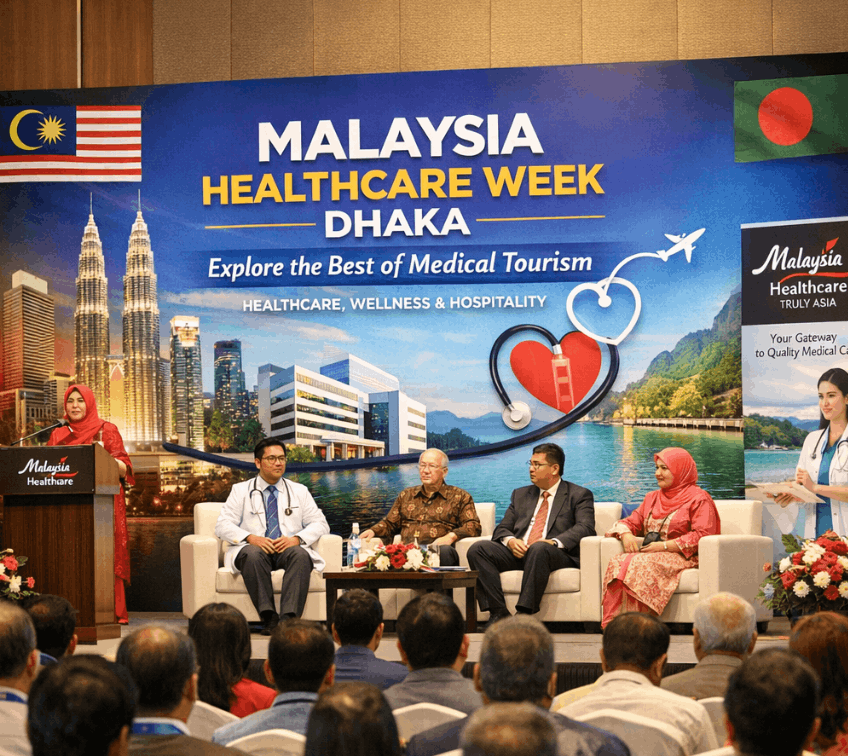

Malaysia Healthcare Week has opened in Dhaka with a clear goal: to connect Bangladeshi patients, travel partners, and healthcare providers with Malaysia’s medical tourism network and specialized treatment options. The week-long program is part of Malaysia’s Year of Medical Tourism 2026 push and is being led by the Malaysia Healthcare Travel Council, which says the event is meant to bring its healthcare ecosystem closer to Bangladesh and build stronger cross-border cooperation. The initiative comes at a time when more Bangladeshi patients are looking abroad for care, especially for treatments that need advanced facilities, expert doctors, and smoother travel support. Organizers say Malaysia is promoting a mix of high-quality medical care, warm patient service, and competitive prices, while also pointing to the strong air link between Dhaka and Kuala Lumpur as a key advantage. Official figures shared by the organizers show that Bangladeshi health travel to Malaysia reached about RM10.4 million in 2025, the highest level on record, while more than 10,800 Bangladeshi health tourists had been recorded by February 2026. The program began with a networking dinner in Dhaka that brought together travel agencies, medical tourism facilitators, healthcare and travel stakeholders, and diplomatic representatives. It also gave Malaysian hospitals a chance to present their specialties and explain how Bangladeshi patients can move from early inquiry to treatment and recovery with more guidance. During the week, Malaysia Healthcare is also taking part in the Dhaka Travel Mart, where a dedicated pavilion is being used to showcase services and create more contact between Malaysian providers and Bangladeshi partners. Participating names include IHH Healthcare Malaysia, KL Fertility Centre, Sunway Medical Centre, KPJ Healthcare, and the National Heart Institute, each offering different strengths in fields such as heart care, fertility, and specialist hospital treatment. For Bangladesh, the event highlights the growing importance of medical travel as families look for trusted treatment choices beyond national borders. For Malaysia, it is another step in building its image as a reliable regional healthcare hub. Organizers say the main aim is not only to promote hospitals, but also to create long-term links between providers, facilitators, and patients so that care becomes easier to access and better understood. In that sense, the event is as much about trust and guidance as it is about business, and it reflects the wider growth of healthcare tourism in Asia.