

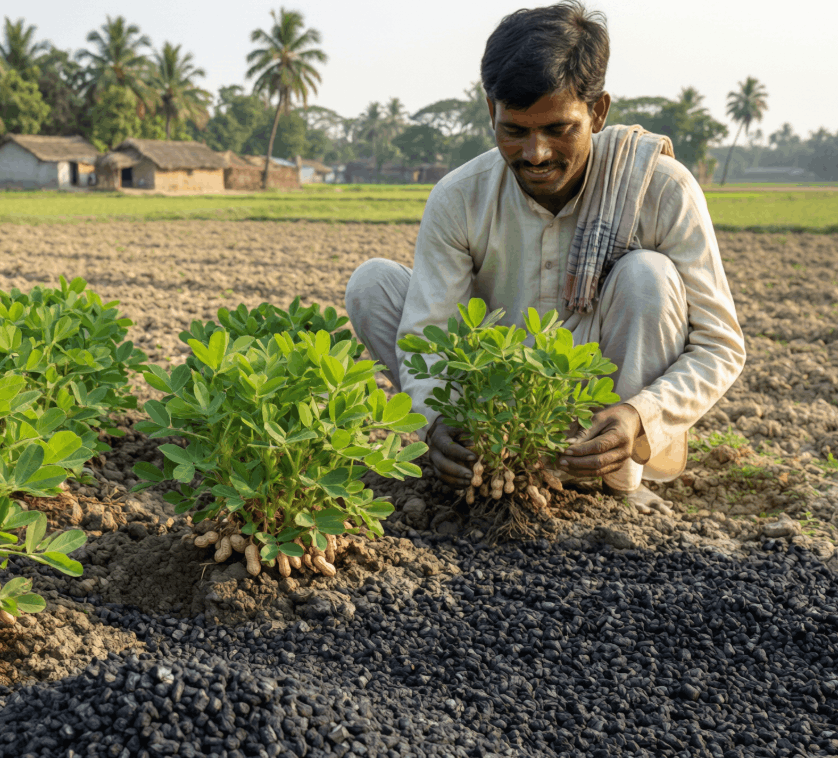

A new study from Bangladesh shows that peanut farming can become both more productive and more climate-friendly when farmers use biochar together with biofertilizer. Researchers from the Bangladesh Agricultural Research Institute and the Bangladesh Sugarcrop Research Institute studied groundnut fields in Jamalpur and found that the combined treatment gave the best results. The work was done over two years in the charland area, where soils and growing conditions can be challenging, so the findings may be especially useful for farmers who need practical ways to improve output without depending too much on costly chemical fertilizers. In the field trial, scientists tested seven soil treatments, including a control plot, standard fertilizers, biochar made from rice husks, and a rhizobium-based biofertilizer. Among all the options, the mix of biochar and biofertilizer performed best. It produced the highest nut yield, averaging 2.30 tons per hectare, and also improved root nodules, which are important because they help the plant fix nitrogen from the air. The study also found that this method improved the soil itself. After harvest, the treated soil had better pH balance, more nitrogen, phosphorus, and potassium, and lower bulk density, which helps roots grow more easily and allows the soil to hold water better. The researchers explained that biochar works as a carrier for the helpful bacteria in the biofertilizer, creating a stronger microbial environment in the soil. This supports nitrification, a natural process that makes nitrogen easier for plants to absorb during the growing season. The climate benefit is also important. The combined treatment increased soil organic carbon by about 26 percent compared with other treatments and saved about 6.6 kilograms of carbon dioxide equivalent per hectare in greenhouse gas emissions. That means the method may help store more carbon in the ground while also reducing the pressure from synthetic nitrogen fertilizer, which can be expensive and harmful to the environment. The study points to a simple idea with big value: better soil care can raise crop yields, support long-term fertility, and help farming become more resilient. For Bangladesh, where agriculture remains central to rural life and food supply, such a method could give farmers a more affordable and sustainable tool for growing groundnuts in a changing climate. The authors say more long-term studies will help confirm the benefits, but the early results already show strong promise for wider use in sustainable farming.