

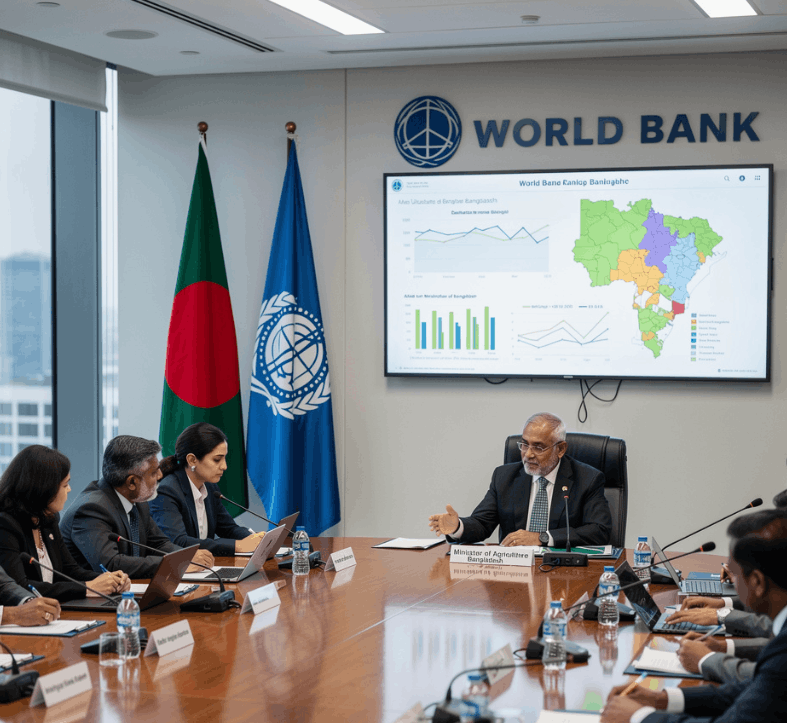

A World Bank delegation has met Bangladesh’s Agriculture Minister to discuss new ways to support the farm sector, with a strong focus on helping farmers, improving production, and drawing more investment into agriculture. The meeting took place at the agriculture ministry, where the delegation led by Jean Pesme, World Bank Division Director for Bangladesh and Bhutan, paid a courtesy call and praised the minister on joining the cabinet. The minister shared details of a new “Farmer Card” plan that will be introduced in phases across the country. This year, the plan will begin as a pilot in 11 blocks in different districts before being expanded nationwide. He said the card is meant to protect farmers’ interests, raise production, and support long-term growth in the sector. World Bank representatives showed interest in helping Bangladesh increase investment in agriculture, especially in the supply of farm inputs, the processing of farm products, and market development. The minister welcomed that idea, saying wider cooperation could help the sector grow in a more stable and modern way. The talks also showed that both sides want to work more closely on improving farmers’ living standards. That goal is important because many farmers still face problems with high costs, uneven access to inputs, and weak market links. A stronger system for identification and support could make it easier to reach the right people at the right time, while better processing and market support could help farmers earn more from what they produce. The Farmer Card idea could also help the government improve planning and make support programs more effective in the future. For Bangladesh, the meeting signals a clear effort to make agriculture more organized, more productive, and more attractive to investors. It also shows that the government sees farming not only as a source of food, but also as a sector with room for modern tools, better business systems, and stronger public-private cooperation. If the planned support moves forward well, it could help farmers gain more protection, improve output, and build a better link between the field and the market. The meeting was a small but important step toward a larger goal: a farm sector that is more sustainable, more connected, and better able to support rural families across the country. It also reflects growing interest in using digital and policy tools together, so that support can reach farmers more directly and with less delay. That kind of change could make future farm programs easier to manage and more useful for the people who depend on them most.