

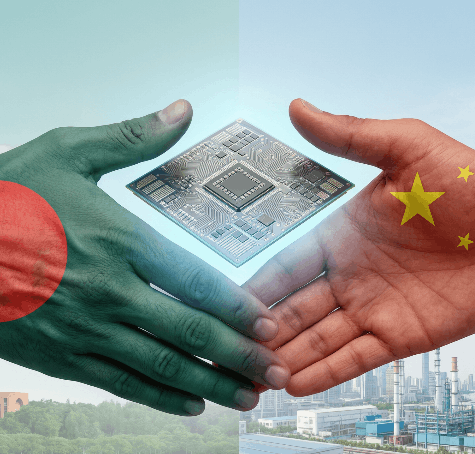

Bangladesh should move faster on semiconductors and treat China as a key partner in that effort, according to a recent opinion piece that links the country’s long-term growth to the rise of artificial intelligence and chip making. The article says semiconductors are now as important to power and influence as oil once was, and argues that Bangladesh cannot afford to stay stuck in discussion while other countries build real capacity. It points to the growing global chip market, which is already worth more than $630 billion and could reach $1 trillion by 2030 as AI demand keeps rising. Against that backdrop, the piece says Bangladesh has a real opening to learn from China’s experience in manufacturing, research, supply chains, and industrial scale. The argument becomes stronger because Bangladesh and China already have deep economic ties. China is Bangladesh’s largest trading partner and a major source of foreign investment, while earlier Belt and Road projects have already helped improve roads, energy systems, logistics, and business costs. The article also notes that Bangladesh Semiconductor Industry Association and China’s Hubei Semiconductor Industry Association have signed a memorandum of understanding, which gives both sides a formal starting point for closer cooperation. From there, the piece calls for practical follow-up rather than broad promises. It suggests creating a dedicated semiconductor investment desk, giving ready-to-use facilities in economic zones, and offering tailored support to selected Chinese firms. It also recommends joint ventures for testing labs, packaging plants, and training centers, along with stronger university-industry links through research labs, internships, and exchange programs. Another major focus is workforce development. The article says Bangladesh should build a national skills pipeline with scholarships, short courses, and training centers in every division so students and technicians can learn chip testing, cleanroom work, and packaging skills. It also argues for a national semiconductor strategy with ring-fenced funding, a testing lab, and incentives tied to jobs, exports, and technology transfer. The main message is clear: Bangladesh should not wait for perfect conditions before acting. Instead, it should use its current relationship with China to build a real semiconductor base step by step, because the AI era will reward countries that prepare early and move with purpose.