

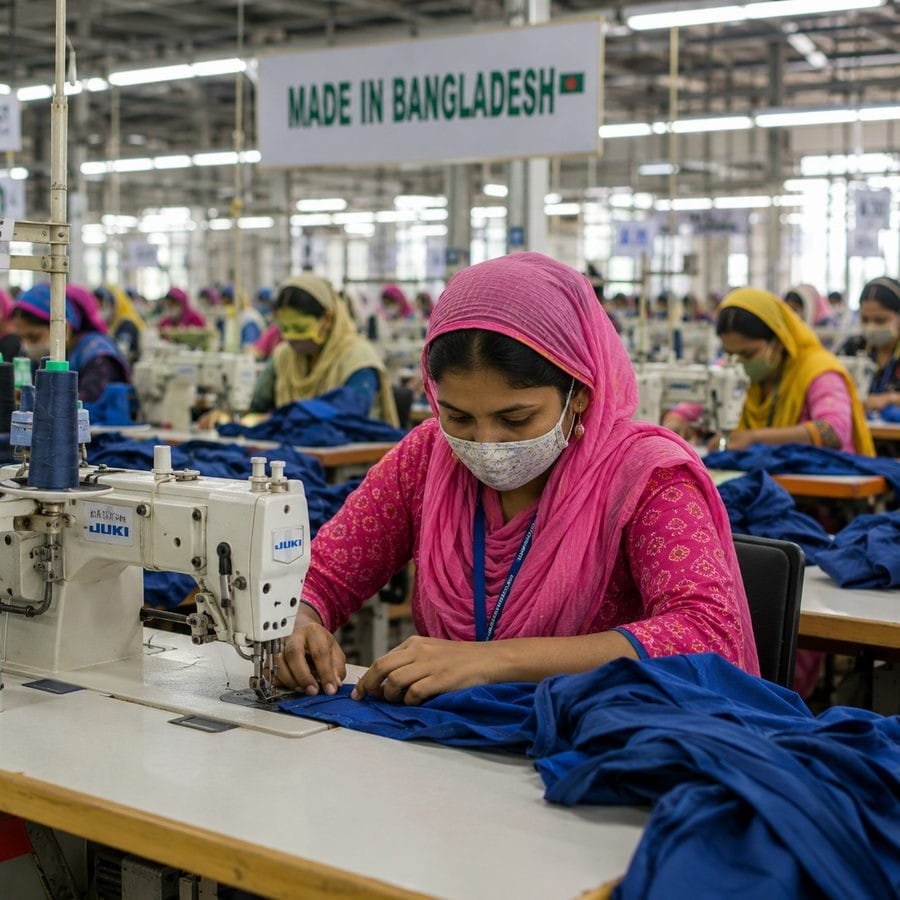

Bangladesh’s export earnings made a strong comeback as shipments grew by nearly 10 percent, giving fresh confidence to manufacturers, workers, and businesses linked with global trade. The export income reached $4.40 billion, supported mainly by the ready-made garment sector along with several other export items. This recovery is important because exports are one of the main engines of Bangladesh’s economy. They bring foreign currency, keep factories active, support millions of jobs, and connect local production with global buyers. A rise in export earnings also shows that Bangladeshi producers are still able to compete in international markets despite changes in demand, price pressure, and global business uncertainty. The garment industry remains the strongest contributor, but the positive movement also reflects the role of wider industrial production. When export orders rise, factories need more workers, raw materials, transport, packaging, and banking services. This creates activity beyond the factory floor and helps many small businesses that supply goods and services to exporters. For workers, steady export performance means better job security and more stable income for families. For business owners, it gives a reason to continue investing in quality improvement, timely delivery, and better production systems. The rebound also supports national foreign-exchange stability. Strong export earnings help the country pay for imports, manage external payments, and reduce pressure on the dollar market. Bangladesh’s export strength has been built over many years through skilled workers, factory experience, buyer relationships, and the ability to produce at scale. However, the latest improvement also shows that the country must keep upgrading to stay competitive. Buyers now look for quality, sustainability, faster delivery, product variety, and reliable compliance. To maintain growth, exporters need to move toward higher-value products, greener factories, better design, and stronger branding. Diversifying beyond basic garment products can also help Bangladesh earn more from each shipment. Other export sectors such as leather goods, jute products, home textiles, pharmaceuticals, light engineering, and agro-processing can grow beside apparel if they receive the right support. A healthy export performance is not only good news for large companies; it also matters for the whole economy because it supports jobs, income, banking, transport, and local production. If businesses continue to improve quality and explore new markets, this export rebound can become part of a longer journey toward stronger, more balanced trade growth for Bangladesh.