

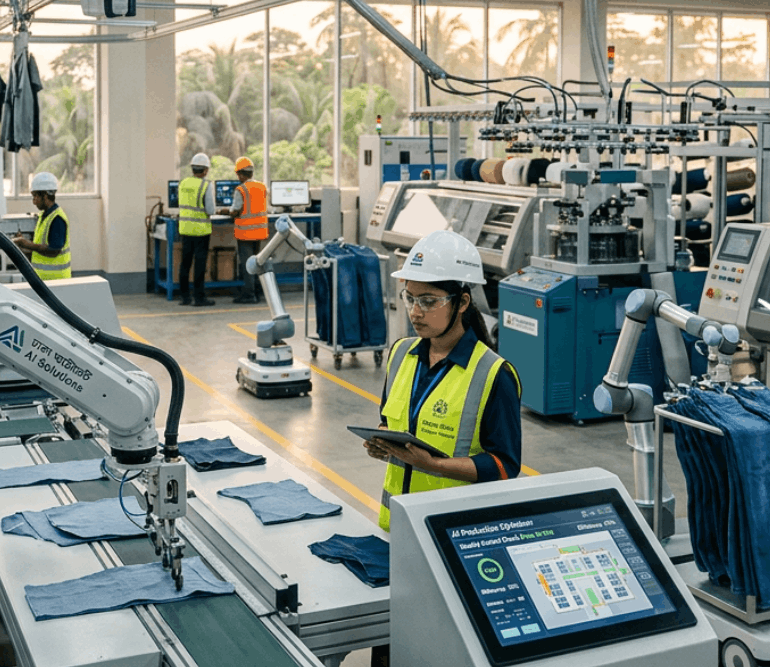

Bangladesh’s apparel industry has taken another clear step toward digital change as a major AI and automation event in Dhaka brought together global technology firms and leading local manufacturers to discuss the future of smarter production. The meeting, jointly organised by Centric Software and Zukunu Inc, focused on how artificial intelligence, automation, and better use of data can help factories work faster, reduce waste, and improve overall planning. Important industry groups including Hameem Group, Majumdar Group, SQ Group, MAS Holdings, Azim and Sons, and Knit Concern Group were present, showing strong interest across the sector. Speakers said the next phase of growth will depend on more than just scale and lower costs. They stressed that companies now need strong data systems that can study past trends, improve supply chain decisions, and support better results on the factory floor. Zukunu Inc leaders explained that careful data use can improve efficiency and cut waste at many points in the production process. Centric Software’s team also shared how product lifecycle management tools and AI-based solutions are helping global brands and manufacturers move products to market faster, keep tighter control over costs, and make supply chains easier to follow. For Bangladesh, this kind of discussion matters because the country remains one of the world’s biggest garment makers, and the market is changing quickly. Buyers want faster response times, better transparency, and more reliable delivery, while factories are under pressure to raise quality and stay competitive. Digital tools can help with all of these goals by giving managers clearer information and better control over production, planning, and inventory. They can also support better teamwork between design, buying, sourcing, and factory operations, which is becoming more important as orders grow more complex. The event also showed that Bangladesh is becoming part of a larger global shift in apparel manufacturing, where technology is no longer optional but a practical part of daily business. Industry observers said such efforts can strengthen Bangladesh’s place in the world market and help local companies keep pace with new demands from international customers. As more factories look for ways to modernize, events like this may play an important role in turning interest in technology into real business change. The message from the gathering was simple: the future of apparel will belong to companies that can combine skilled people, strong operations, and smart digital tools to build a faster, cleaner, and more responsive industry. That shift may also create new opportunities for workers and managers who learn how to use digital systems well, since modern apparel operations need both technical skills and strong communication across teams. In that way, the event pointed to a practical path forward: not just buying new software, but building a workplace culture that uses data to make better everyday choices.