

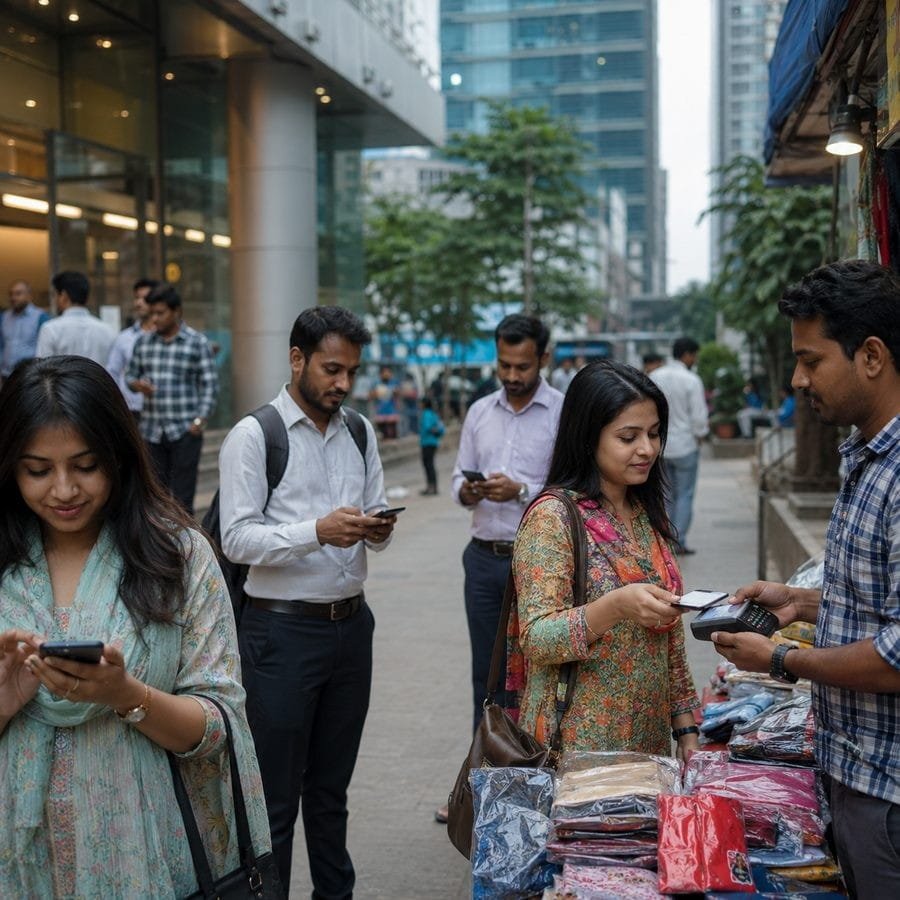

Digital transactions in Bangladesh grew by 13 percent in both volume and value, showing that more people and businesses are choosing electronic payment methods for daily financial activities. This growth points to a clear change in how money moves across the country. Instead of depending only on cash, people are using mobile financial services, internet banking, cards, QR payments, and other digital channels more often. A rise in both the number and value of transactions is important because it shows wider use and deeper trust at the same time. More transactions mean more people are using digital tools, while higher value means users are becoming more comfortable handling larger payments electronically. This shift can make the financial system faster, safer, and more organized. For customers, digital payment can reduce travel time, save effort, and make services available beyond regular banking hours. People can send money, pay bills, shop online, receive salary, and manage small business payments with greater ease. For businesses, digital transactions help create proper records, reduce cash handling, and improve payment tracking. These records can support accounting, loan applications, tax planning, and business decisions. Small merchants may benefit especially if digital payment history helps them become more visible to banks. The growth also reflects the role of stronger financial technology infrastructure. Banks, mobile financial service providers, payment gateways, and regulators have been building systems that allow faster and safer transfers. As more people use smartphones and internet services, digital finance becomes easier to access. The adoption of tools such as Bangla QR and local payment networks can make cashless transactions more practical in shops and service points. However, digital growth must be supported by user education and cybersecurity awareness. People need to know how to protect passwords, avoid fraud, check transaction messages, and use official apps. Service providers must keep systems reliable so that users do not face failed payments or delays. Financial inclusion is also important. Digital finance should reach not only urban users but also rural families, small traders, students, workers, and women entrepreneurs. A stronger cashless economy can reduce informal money movement, improve transparency, and help the country build better financial data. It can also support e-commerce, freelancing, online services, and modern retail. The steady rise in digital transactions shows that Bangladesh is moving toward a more connected financial future where money can move faster, safer, and more efficiently across homes, shops, banks, and businesses.