

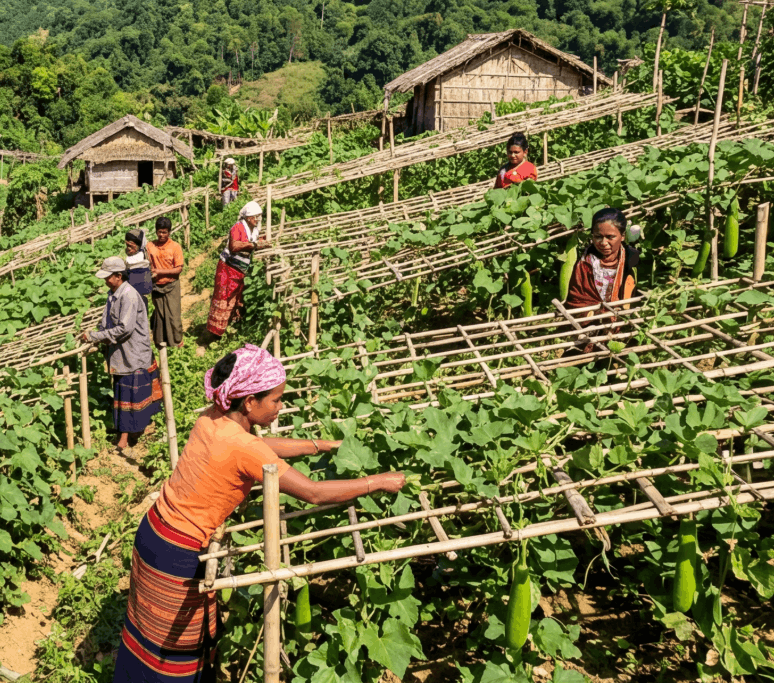

Bangladesh’s hill farmers are turning to a newer method called machan farming as pressure on land makes the old jhum system harder to sustain. In the Chittagong Hill Tracts, growers are using bamboo trellises to raise vegetables above the ground, especially cucumber and bitter gourd, instead of clearing and burning hill patches for shifting cultivation. The change is happening because crowded hills and shorter fallow periods have reduced the chance for soil to recover, and many families now need a steadier and more productive way to earn a living. Machan farming keeps the hillside covered with plants, which helps protect the soil from heavy rain and lowers erosion on steep land. It also gives farmers more than one harvest in a year, while jhum depends on seasonal cycles and long rest periods between uses. For families that once depended mostly on jhum, the new method is bringing more stable income and less risk. One farmer in Bandarban says the bamboo-frame system has helped him support his family better than before, with earnings that are much higher than what he could get from traditional shifting cultivation alone. Local agriculture officers say the method is spreading quickly in parts of the hill districts and is especially suited to the region’s slopes, where bare soil can wash away during monsoon rains. Recent data show that land under jhum has been falling, while machan cultivation has expanded by more than 500 hectares in recent years, which suggests that many farmers now see the bamboo trellis as a practical answer to land pressure and falling yields. Officials also say the method uses local materials, so it is easier for small farmers to build without large costs. The story is not only about higher income. It is also about keeping the land healthy. By covering the ground with living plants and bamboo frames, machan farming can help reduce damage to fragile hills and keep farmland useful for longer. At the same time, many Indigenous communities say jhum still matters as a cultural practice tied to identity, knowledge, and tradition, so the shift is not meant to erase it completely. Instead, the new approach is giving farmers another option when food needs, family income, and environmental care all have to be balanced. In a region where land is limited and pressure is growing, the bamboo trellis method is becoming a clear example of how local farming can adapt without losing sight of the land itself.