

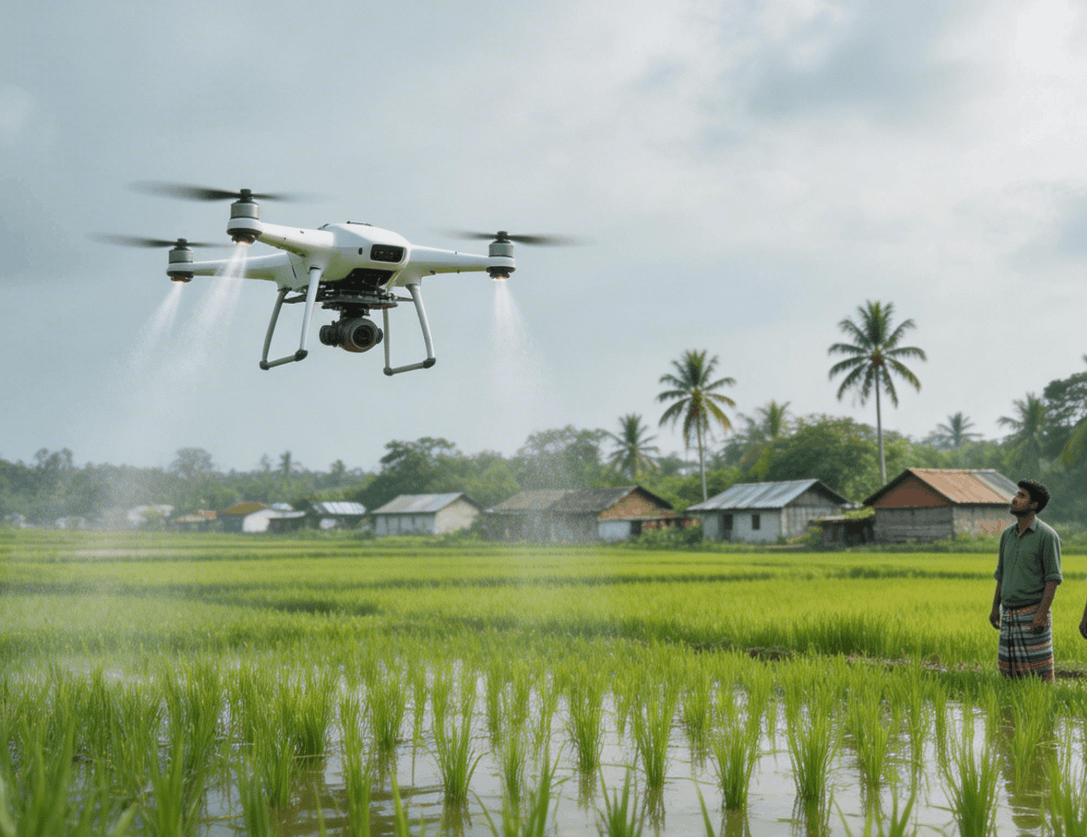

Precision farming is being seen as one of the most useful ways for Bangladesh to face climate change while also protecting food production. The idea is simple: instead of treating every part of a field in the same way, farmers use data, sensors, drones, satellite images and smart tools to give each crop only what it needs. That means water, fertilizer, seed and pesticide can be used more carefully, with less waste and less harm to the environment. In a country where rising heat, uneven rain, salinity, floods and cyclones already put pressure on farming, this kind of target-based method could make a real difference. Rice is still the main crop for the country, and it supports a large share of jobs and income, but it also adds to greenhouse gas emissions because flooded fields release methane and heavy fertilizer use can raise other harmful gases. The article says precision farming can help break this cycle by saving water, cutting chemical use and lowering emissions at the same time. One example is alternate wetting and drying, a watering method that lets farmers reduce methane and use much less irrigation water without lowering yields. Other tools, such as variable-rate fertilizer use, can improve nutrient efficiency and lift production. Drones and satellites can also help farmers spot drought stress, heat damage and salt damage early, so they can act before losses become serious. The article notes that these methods could be especially helpful in coastal areas, where land has already been affected by salinity, and in regions that need different crop choices because of local weather and soil conditions. At the same time, the piece makes it clear that adoption is still uneven. Most farms are very small, and many farmers cannot easily afford sensors, drones or software. Weak internet, poor rural connectivity, low digital skills and unreliable power also make the shift harder. Women farmers face extra barriers in credit, training and access to technology. Even so, the article argues that the right support can make precision farming more practical. Shared equipment, demo farms, local language apps, better broadband, public-private partnerships and targeted subsidies could help small farmers join in. The larger goal is not only higher yields, but a farming system that is more resilient, less polluting and better prepared for a warmer future.