

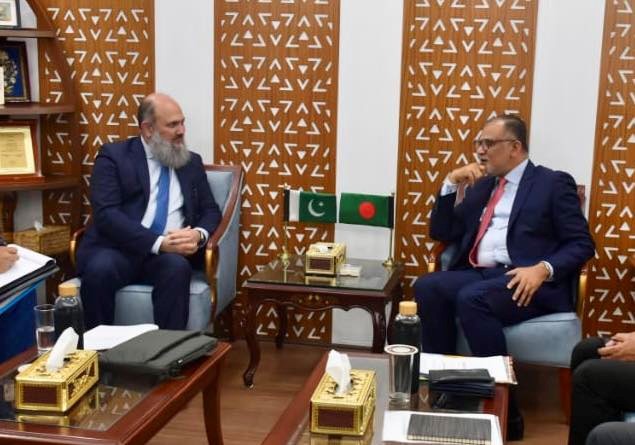

Commerce Minister Jam Kamal Khan met Bangladesh’s Adviser for Industries Adilur Rahman Khan in Dhaka to begin a practical push for closer industrial cooperation that can create jobs and make factories more competitive. They agreed to start with things that can be done quickly and will help ordinary businesses, like trade visits, joint exhibitions and easier links between buyers and makers. Both sides highlighted areas with clear promise: food and agro-processing to add value for farmers, leather and shipbuilding to boost exports, sugar and small and medium enterprises to widen opportunity, and pharmaceuticals, textiles and information technology where know-how can be shared. The ministers spoke about practical steps such as joint investment projects, shared testing and grading labs, and simple training programs so workers learn new skills fast. They also said that delegations of business leaders will visit partner factories to spot deals, and that clearer paperwork and faster visa rules for officials and trade teams will make meetings easier. The officials noted a recent agreement to allow visa-free travel for holders of diplomatic and official passports as a helpful step, and they welcomed an upcoming visit by a senior delegation to continue talks and set a timetable. For exporters the plan aims to cut the gap between raw material and finished product by building more local processing lines, better cold chains for food, and finishing units that meet buyer standards. For small firms the key idea is simple: link them to larger buyers, give them short technical training, and offer small loans or tax breaks while projects start up. Experts at the meeting urged cluster development near ports and roads so parts, testing labs and worker training are close by and costs fall. The tone was practical and businesslike: officials want jobs, more local value, and clearer trade ties rather than long debates. If plans move ahead, factories could take on new work, farmers could sell higher-value crops, and more people might find steady pay in towns and rural areas. Speakers also flagged the role of banks and investors to back trade finance and reduce risks for early projects so companies can start without long waits for cash. Small pilot projects will test ideas on the ground and show quick wins that can be scaled up if results are positive. Many attendees said that steady steps and fast pilot work can build trust between businesses and keep momentum as deals begin.