


Dr Zafrullah Chowdhury and Gonoshasthaya Kendra are being remembered as a powerful example of how health care can reach people far beyond city hospitals. The profile says Chowdhury, a public health activist from Bangladesh, helped build Gonoshasthaya Kendra, or GK, as a people-focused health centre that began in 1972 and grew around the idea that rural people should have access to practical, affordable care close to home. From the start, the group focused on self-reliant development and on services that matched the daily needs of villagers, not just the plans of large institutions.
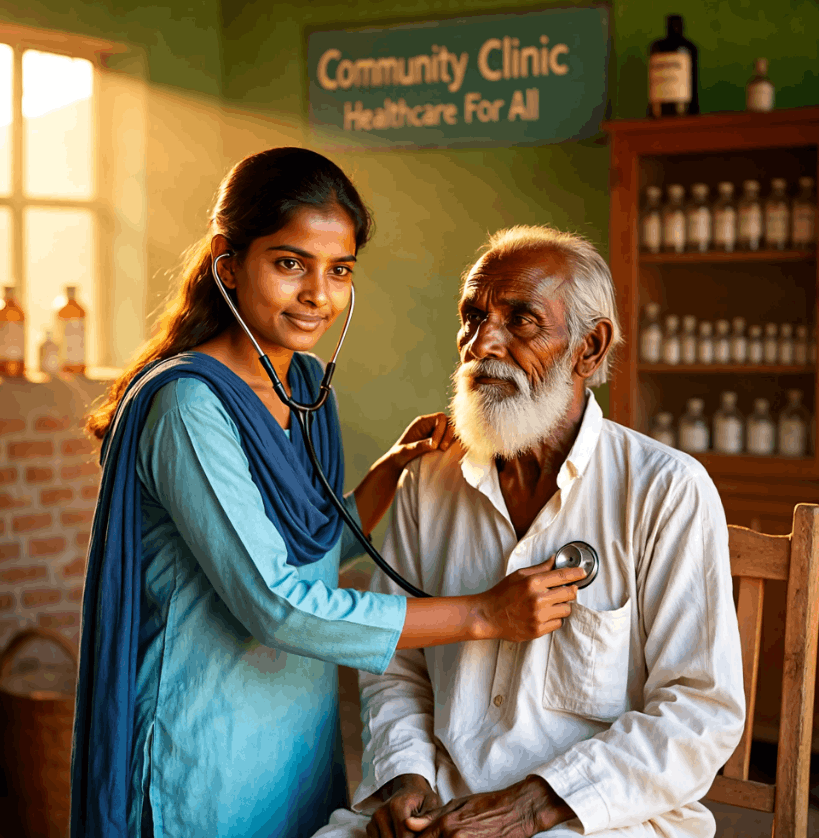
One of GK’s most important ideas was training paramedics for village-level care. The organization became the first place outside China to train paramedics seriously, and today about 160 paramedics serve a population of around 180,000 through the main centre and its sub-centres across the country. These workers are trained in preventive medicine and simple treatment, which helps families get help earlier and avoid long trips for basic care. GK also runs a health insurance scheme that is linked to what people can afford, which makes the system more reachable for poorer households.
The results have been strong in the areas where GK works. The profile says infant and maternal mortality in its service area has fallen to about half of the national average in Bangladesh, showing how community-based care can improve lives when it is steady and well organized. GK did not stop with health services. Over time, it expanded into education, nutrition, agriculture, job creation, basic medicine production and women’s empowerment, reflecting a wider view of human development rather than a narrow medical mission.
GK also made a mark in the supply of essential medicines. In 1981, it created Gono Pharmaceuticals to produce quality drugs at low cost. The company now supplies a meaningful share of medicines in Bangladesh, and its lower prices helped push prices down more broadly in the market. The profile also notes that half of its profits go back into social projects, which connects business activity with public service. Chowdhury later advised the government on a drug policy that removed many harmful or useless medicines from the market, adding another important layer to his work in public health.
For many people, the legacy of Zafrullah Chowdhury is not only a story about one doctor, but about a full model of care. It is a model built on local workers, fair pricing, practical training and the belief that rural communities deserve strong health systems of their own.