

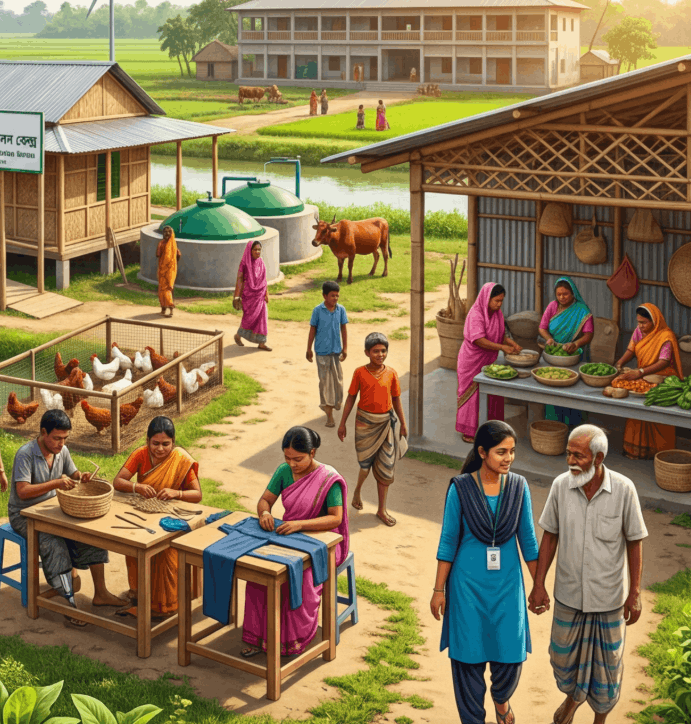

Unilever Bangladesh has pledged financial support for two organisations working to improve rehabilitation care and create more inclusive livelihoods for people with disabilities and other vulnerable groups. The organization announced that it intends to assist the Centre for the Rehabilitation of the Paralysed, widely referred to as CRP, along with the Disabled Rehabilitation & Research Association, commonly abbreviated as DRRA, with the purpose of strengthening services that help people recover, learn new skills, and build steadier incomes. Through CRP, the support will help the Bangladesh Health Professions Institute, which trains rehabilitation professionals. The aid will cover academic and residential fees for students from low-income families, a move that can help more young people enter the field at a time when the country needs more trained therapists and related specialists. This is important because access to rehabilitation is still limited for many families, especially those who cannot afford private care or long treatment periods. The support also connects to wider development goals, including better health, stronger education, and lower inequality. At the same time, Unilever is backing a six-month programme run by DRRA in Dhaka’s Vatara area, where many climate-displaced families live with poverty and few job options. The programme is designed to help people earn money in practical ways while also learning useful business skills. One part of the effort supports a mobile food court run by a young person with a disability and a caregiver, while training is offered in hygiene, food safety, and money management. Another part helps mothers with disabilities run an online shop called Bangla Ma, giving them a way to earn from home and take part in the digital economy. The company said these efforts are meant to build community strength and make sure that people who are often left out are not forgotten. The overall message behind the support is simple: rehabilitation is not only about treatment, but also about giving people a fair chance to work, learn, and live with dignity. By helping train professionals and support small income projects, the initiative aims to create a chain of benefit that reaches both care providers and the families who need them most. In a country where many people still face barriers to healthcare, disability support, and stable work, even modest partnerships can make a real difference. The programme combines skills, care, and income in a way that may help vulnerable people become more independent over time.