

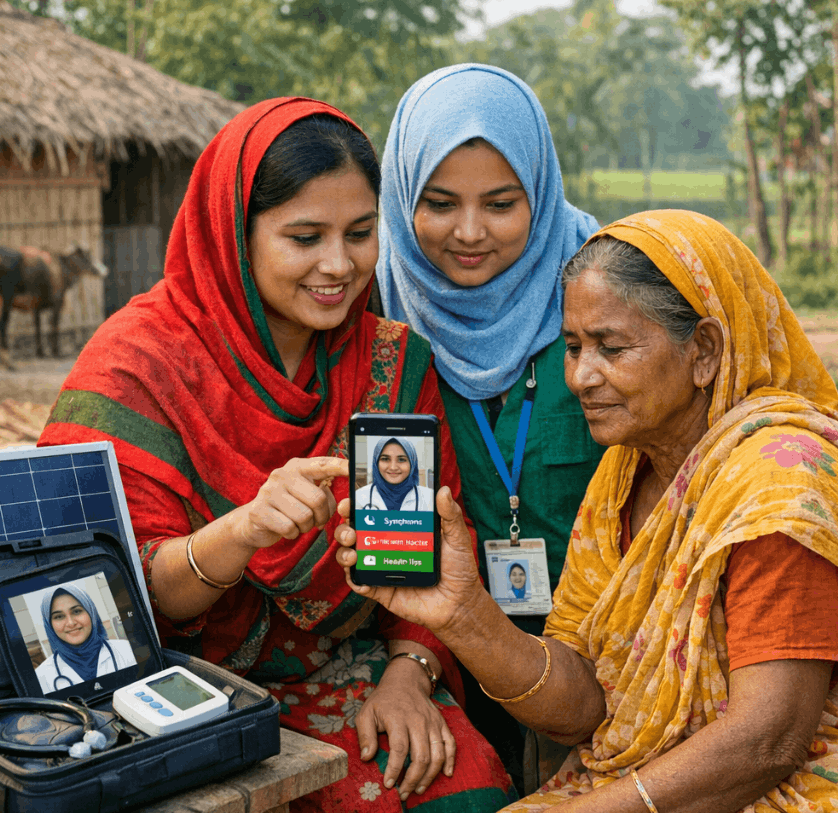

A digital health service in rural Bangladesh is showing how technology can bring care closer to people who have long been left behind by distance, cost and a lack of doctors. In Rampal sub-district of Bagerhat, a community-based telemedicine model has been used to send trained health workers from house to house, where they collect blood pressure, weight and symptom data through a mobile app and pass it on for review. Simple cases are handled locally, while more complex ones are referred to doctors, making the system easier to use for families who cannot travel far for care. The project has now served thousands of people across many villages, and most of the users have been women, which is important in places where privacy concerns, social limits and travel costs often stop them from seeking help. The service has also revealed a serious but quiet problem: many adults who were screened had high blood pressure, yet only a small share knew they had it. That means a large number of people were living with a disease that could lead to stroke, heart attack or kidney failure without any warning. The same screening also showed a mixed nutrition picture, with some adults still underweight while many others were overweight or obese, proving that rural Bangladesh now faces both old and new health problems at the same time. Health workers involved in the project say monthly home visits make people more comfortable with regular checks and help them understand that headaches, tiredness and other common signs may point to bigger risks. The model is not just about medicine. It is also about trust, because people are more willing to use care when it comes from familiar local workers who speak their language and understand village life. The article suggests that this kind of digital care could play a bigger role in the country’s push for universal health coverage, especially if it is built around community needs instead of distant hospitals. For rural Bangladesh, the lesson is clear: when health services reach the doorstep, hidden illness becomes easier to spot and early care becomes possible for more families.