

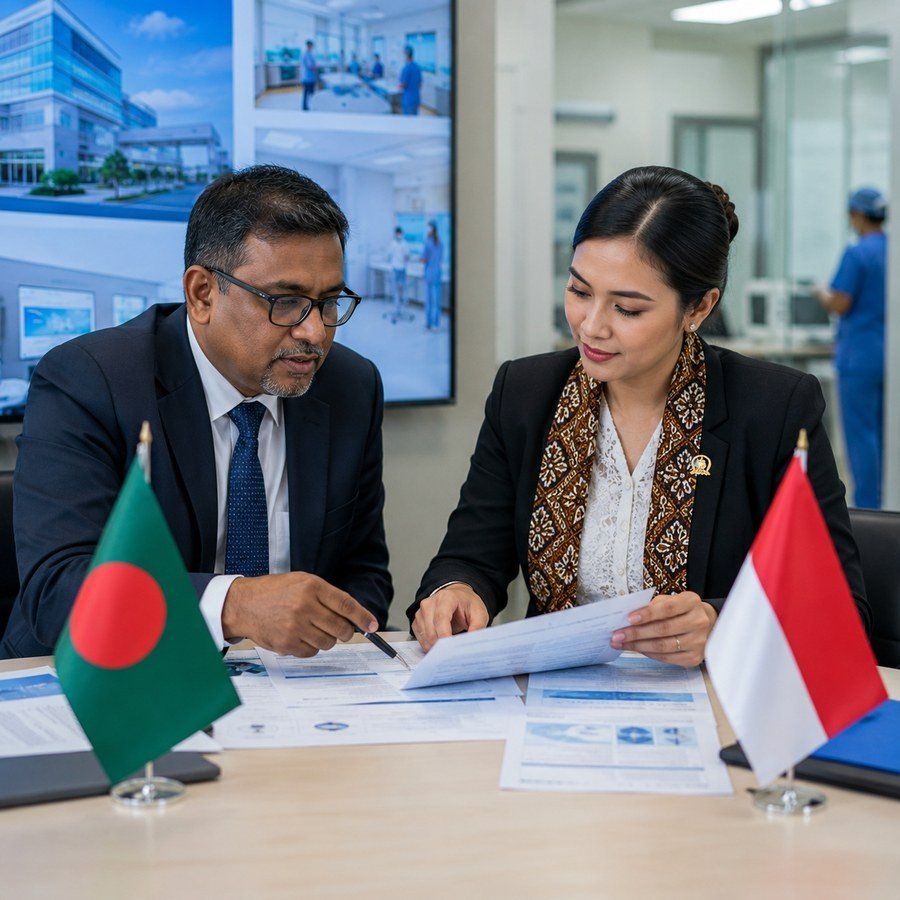

Indonesia is looking to strengthen healthcare cooperation with Bangladesh, opening new possibilities for medical collaboration, training, trade, and knowledge exchange between two growing Asian countries. This step matters because health systems across the region face many shared challenges. Countries need better hospitals, skilled workers, affordable medicine, stronger emergency response, digital health tools, and wider access to care. Cooperation can help both sides learn from each other and build practical partnerships. Bangladesh has a growing pharmaceutical sector, a large health workforce, and wide experience in community health services. Indonesia has its own strengths in healthcare delivery, medical products, hospital systems, and regional cooperation. When these strengths are connected, both countries can benefit. Healthcare cooperation can take many forms. It may include medical training, hospital partnerships, public health research, pharmaceutical trade, technology exchange, and joint work on disease prevention. Doctors, nurses, pharmacists, technicians, and health managers can gain from professional exchanges. Patients can benefit in the long run if cooperation leads to better services, safer medicine, and stronger systems. Bangladesh can also explore opportunities to expand exports of quality medicines and health products, while learning from Indonesia’s experience in serving a large and diverse population. Health diplomacy is important because disease, medicine supply, and medical knowledge do not stop at borders. Countries that work together can respond better to outbreaks, improve emergency planning, and support public health goals. Digital health is another area with potential. Telemedicine, electronic records, hospital management software, and health data systems can help countries serve more people with better organization. However, cooperation must be realistic. It should focus on clear projects, not only broad statements. Both sides need to identify areas where partnership can produce visible benefits. Private hospitals, public institutions, universities, pharmaceutical companies, and professional bodies can all play roles. Stronger healthcare cooperation can also support people-to-people ties. Students may study health subjects, experts may attend training, and companies may build business links. For Bangladesh, this partnership can help diversify international health cooperation beyond traditional partners. For Indonesia, Bangladesh offers a large market and a growing base for medical and pharmaceutical collaboration. The goal should be to make healthcare more affordable, accessible, and trusted. If both countries move forward with practical steps, stronger Bangladesh-Indonesia cooperation can support better health services, professional learning, and long-term regional friendship.