

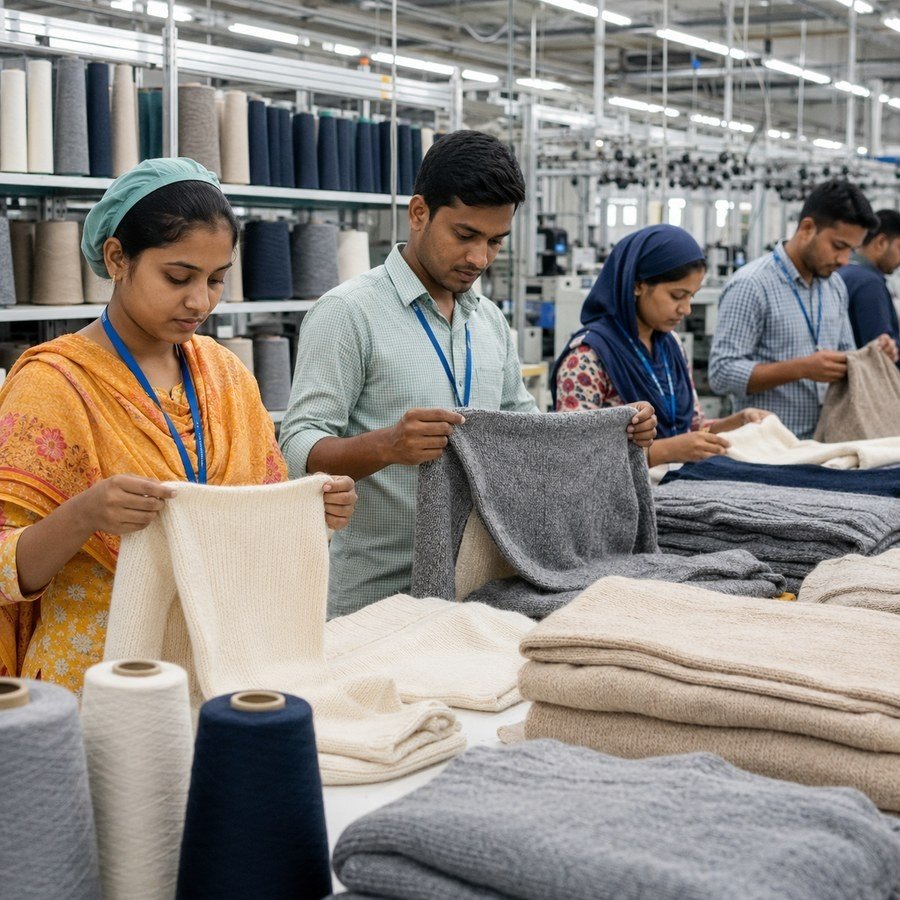

Bangladesh’s knitwear sector is looking toward the premium wool market as exporters search for higher-value products, better buyer interest, and stronger global positioning. The move is important because Bangladesh is already known for large-scale garment production, but the next stage of growth depends on making more advanced and valuable items. Wool-based knitwear can help open that path. Wool products are often linked with comfort, warmth, durability, and quality. They also require careful design, skilled production, good material handling, and strong buyer trust. For Bangladeshi manufacturers, entering this space can support better prices and reduce dependence on basic products where competition is very high. The shift also shows how the country’s apparel sector is trying to improve its value rather than only increase volume. Premium wool products need trained workers who understand yarn quality, washing, finishing, measurement, and product care. Factories also need strong quality control because small mistakes can affect the feel and look of the final garment. This creates a chance to upgrade skills across the sector. Designers, merchandisers, machine operators, quality teams, and managers can all benefit from learning how to handle more specialized products. If the sector builds these skills, it can attract buyers who want more than low-cost production. The opportunity is also connected to Bangladesh’s strong knitwear base. Many factories already have experience in sweaters, pullovers, cardigans, and other knitted products. With the right training, sourcing support, and design development, some of these factories may be able to move into wool blends and premium collections. This could help exporters reach new customers in colder markets and fashion segments. However, success will require careful planning. Wool supply chains can be different from cotton or synthetic materials. Buyers may ask for clear standards, responsible sourcing, product testing, and special care instructions. Factories must be ready to meet those expectations. The move could also support sustainability if producers focus on better materials, lower waste, cleaner processing, and long-lasting garments. For workers, higher-value production can create chances for skill growth and more stable factory demand. For businesses, it can improve reputation and help Bangladesh compete with countries that already serve premium apparel buyers. The broader message is clear: the future of the garment sector depends on quality, innovation, and market diversity. Premium wool may not replace existing exports, but it can become an important addition. If factories, trainers, buyers, and industry groups work together, Bangladesh can build a stronger place in the global market for value-added knitwear.