

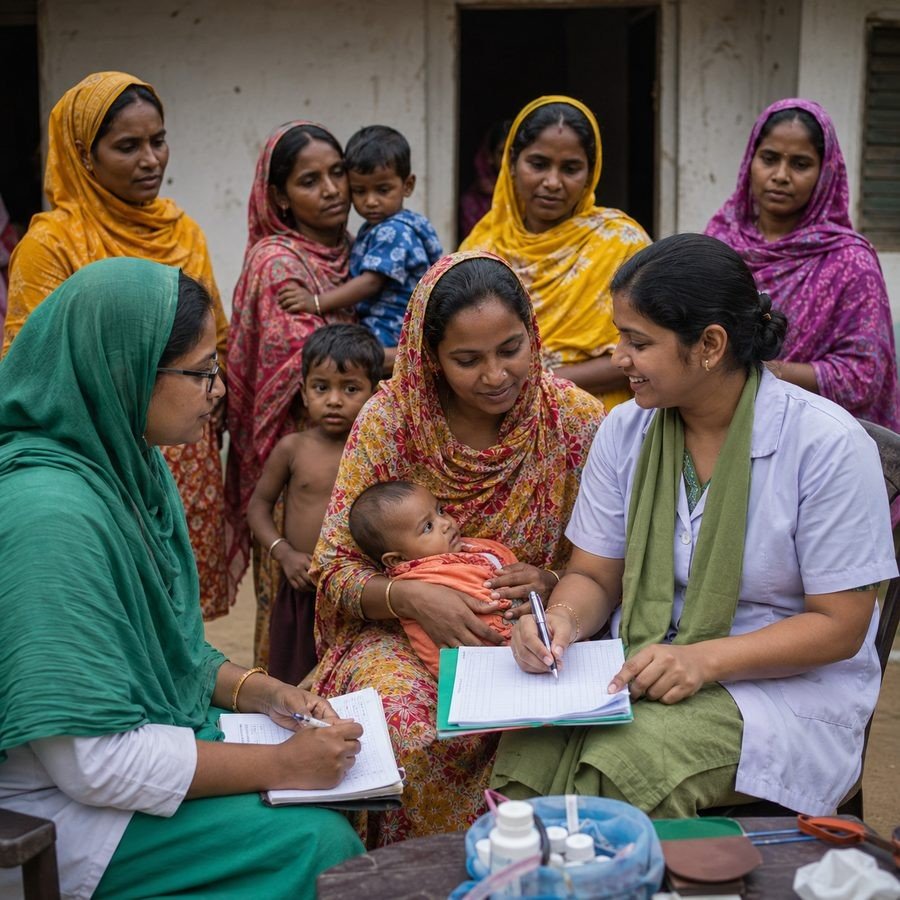

Bangladesh plans to recruit 125,000 health staff, including 100,000 health workers and 25,000 midwives, to bring healthcare services closer to people’s homes. This is a major step for the health sector because access to care often depends on the number of trained people available at community level. Hospitals and clinics cannot serve patients properly if there are not enough workers to guide families, provide basic care, support mothers, help newborns, and connect patients with higher-level services when needed. The plan gives special importance to primary healthcare, which means care that begins near the community before health problems become serious. A stronger primary healthcare system can focus on prevention, early detection, maternal care, child health, nutrition, vaccination, family planning, and regular guidance for common health issues. This can reduce pressure on crowded hospitals because many health problems can be managed earlier and closer to home. The recruitment of midwives is especially meaningful for mothers and newborns. Skilled midwives can support safe pregnancy care, childbirth, postnatal care, and health education for families. In many communities, a trained midwife can make a major difference by helping mothers receive care at the right time and by identifying danger signs early. The wider recruitment of health workers can also create jobs for young people who want to serve in the healthcare sector. These jobs can support families while also improving public service delivery. Training will be very important because health workers need practical knowledge, communication skills, and the ability to work with different communities. They must understand prevention, referral systems, patient records, basic treatment support, and respectful care. The plan also reflects Bangladesh’s interest in moving from a treatment-focused health system to one that gives more attention to prevention. This shift is important because preventing disease is often cheaper and better than treating illness after it becomes severe. Community health workers can play a strong role in teaching families about hygiene, nutrition, pregnancy care, chronic disease risks, and when to seek medical help. For rural areas, island communities, hill regions, and low-income urban neighborhoods, more health staff can improve fairness in service access. The success of the plan will depend on proper recruitment, training, placement, supervision, and supplies. If the new staff are well supported, they can become a strong bridge between families and the healthcare system, improving care for millions of people across Bangladesh.