

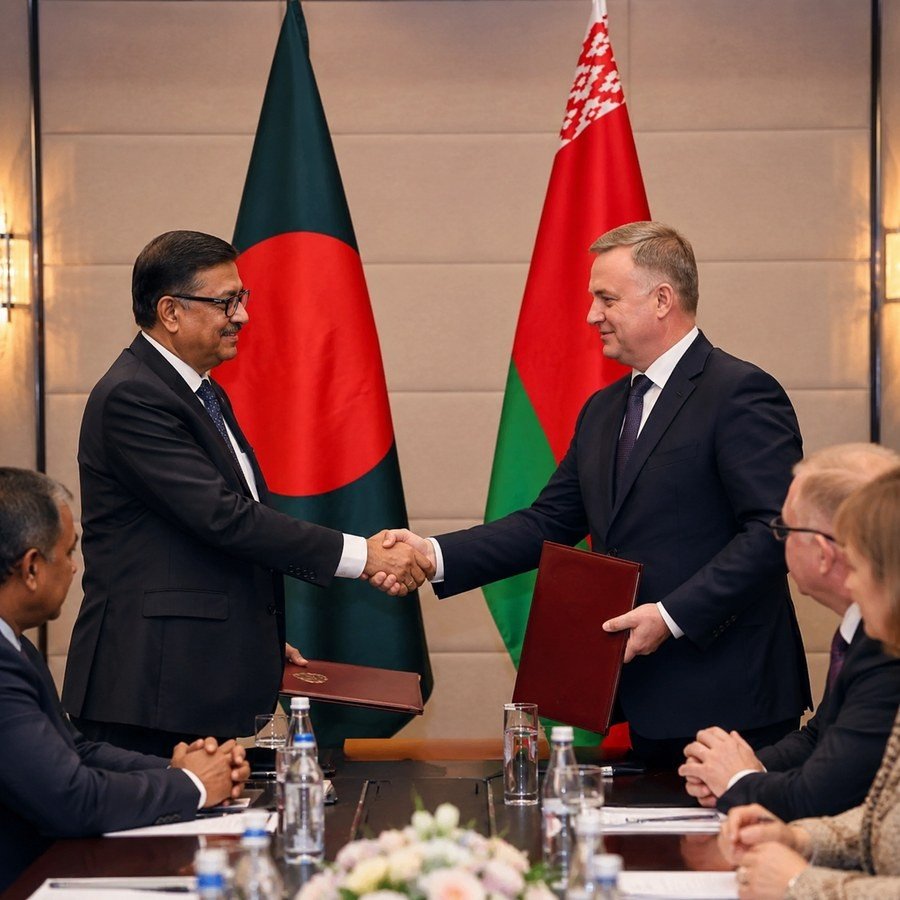

Bangladesh and Belarus have discussed wider cooperation in agriculture, defence, ready-made garments, and other areas, opening the door for stronger economic and technical links between the two countries. The discussion is important because Bangladesh is working to expand its global partnerships beyond traditional markets and build new opportunities for trade, investment, skills, and technology. Belarus has experience in agricultural machinery, industrial production, engineering, and technical training, while Bangladesh has a strong manufacturing base, a large workforce, growing export capacity, and a well-known apparel sector. When two countries with different strengths explore cooperation, both sides can find practical ways to support growth. Agriculture is one of the most useful areas for such cooperation. Bangladesh’s farmers need better machines, efficient tools, storage support, and modern production systems to reduce costs and save time. Cooperation with a country known for agricultural equipment could help improve access to suitable technology, especially for land preparation, harvesting, processing, and transport. Better mechanization can reduce labour pressure and help farmers finish work on time during short crop seasons. It can also support higher productivity and better income if machines are affordable and easy to maintain. The ready-made garment sector is another major area of interest. Bangladesh is one of the world’s important apparel producers, and stronger international links can help the sector move toward higher value, better design, improved technology, and new markets. Cooperation may also support training, industrial inputs, and business contacts that help exporters reach more buyers. At the same time, Belarus may see Bangladesh as a growing market and a production partner in South Asia. Trade cooperation can benefit both countries if it focuses on practical goods, fair business links, and clear rules. Beyond agriculture and garments, the discussion also points to the value of technical education, industry, and knowledge exchange. Bangladesh’s young workforce can gain from training and technology partnerships, while local businesses can explore new supply chains. For any cooperation to succeed, both sides will need regular follow-up, business-to-business contact, clear project planning, and simple communication between institutions. Strong diplomatic relations become meaningful when they create jobs, improve production, support exports, and bring useful services to people. This discussion shows that Bangladesh is looking for wider partnerships that can support long-term development. If the ideas move from talks to real projects, farmers, manufacturers, workers, and businesses may all benefit. The goal should be practical cooperation that strengthens local capacity, expands trade, and helps both countries build a more active and balanced relationship.