

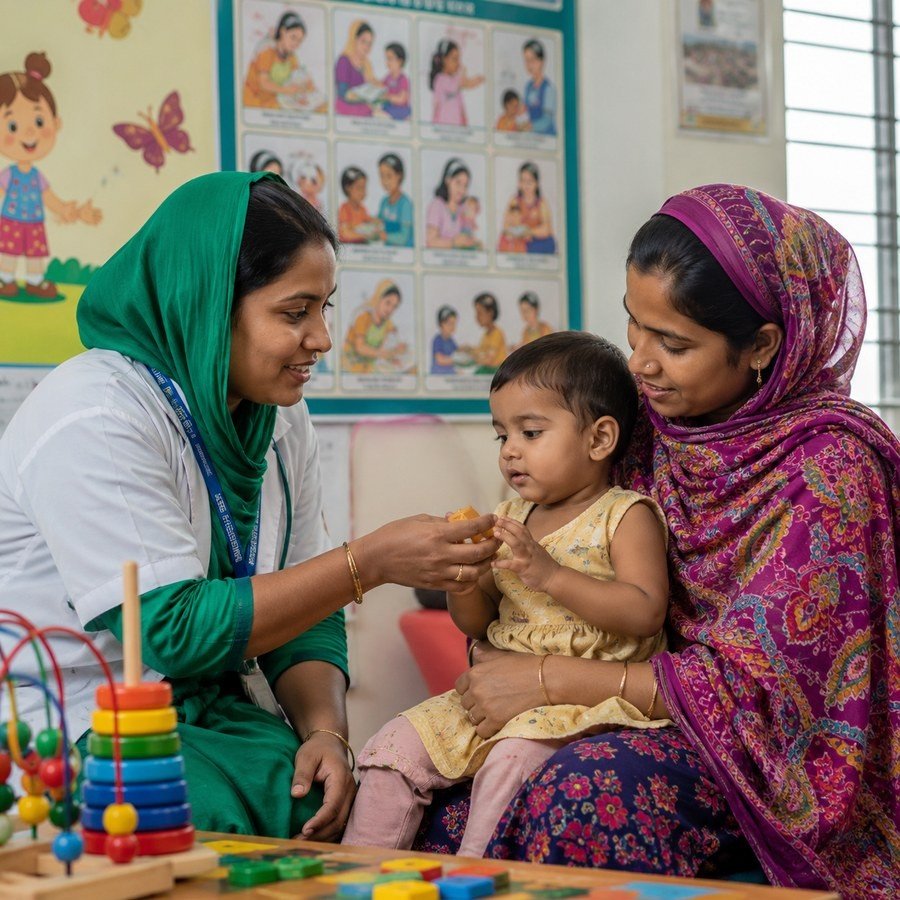

Bangladesh’s Shishu Swarga model has been presented at a global health forum, bringing attention to a child-focused care approach that can support vulnerable children, families, and community health services. The presentation is important because child welfare is one of the clearest measures of a society’s progress. Children need safe care, nutrition, learning support, emotional attention, and protection from neglect and illness. A model that places children at the center can offer useful lessons for health workers, social service providers, educators, and policymakers. Bangladesh has many active community-based efforts, and sharing one of them at an international platform can help show how local ideas can speak to wider challenges. Child health is not only about treating sickness. It includes early support, safe environments, mental well-being, disability care, family guidance, and social inclusion. When children receive care early, they have a better chance to grow, learn, and take part in society. Models like Shishu Swarga can be valuable if they connect health services with compassion and practical family support. Many families face pressure from poverty, distance, lack of information, and limited access to specialized care. A child-focused model can help reduce these barriers by bringing services closer and making care more understandable. Presenting the model globally can also open doors for learning. Other countries and organizations may share feedback, offer partnerships, or adapt parts of the approach in similar settings. At the same time, Bangladesh can learn from global experience on child protection, rehabilitation, nutrition, disability support, and community health. The strongest models are those that can be repeated, measured, and improved over time. To grow, a child welfare model needs trained workers, stable funding, safe spaces, clear records, and family trust. It must also respect children’s dignity and protect their rights. The global presentation can help attract attention, but the real success will depend on the impact at home. If more children receive better support because of this approach, then the model can become a meaningful part of national child welfare efforts. Bangladesh’s strength often comes from community action, and Shishu Swarga appears to reflect that spirit. It shows that care can be organized around people, not only institutions. By highlighting the model internationally, Bangladesh can share a hopeful story of child-centered service and encourage wider investment in children’s health, protection, and future development.