

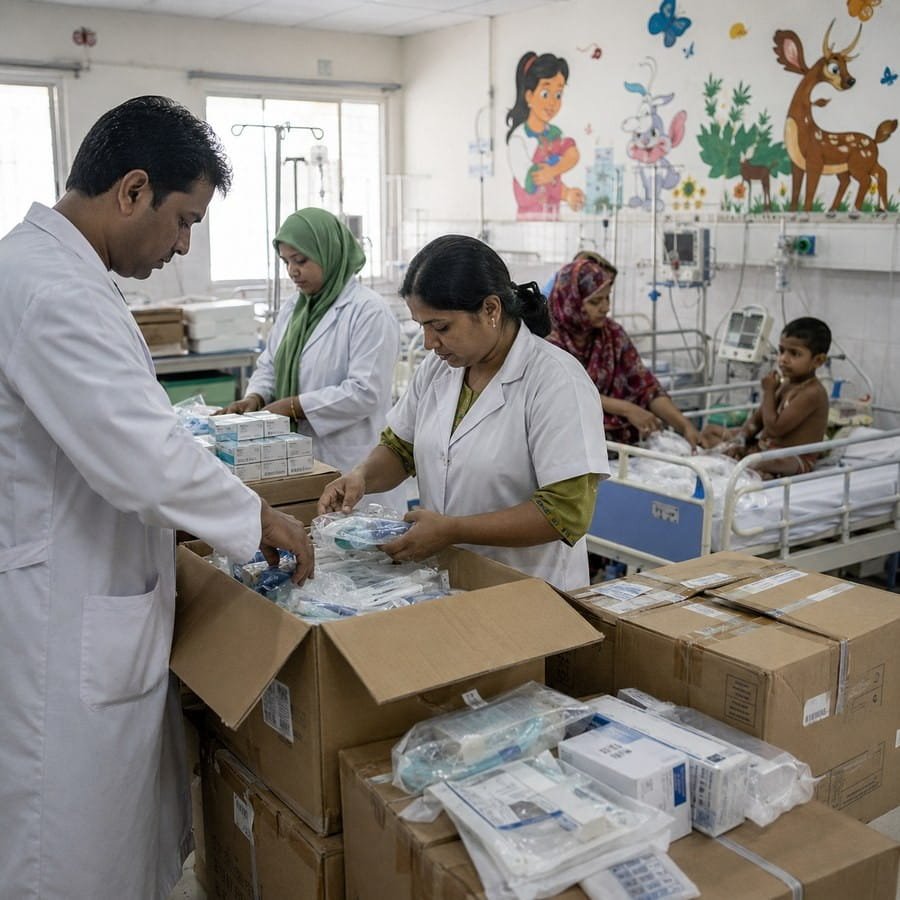

The ICRC has donated medical equipment to support Bangladesh’s response to a measles outbreak, strengthening health workers’ ability to treat patients and protect vulnerable communities. This support is important because measles can spread quickly, especially in crowded areas or places where children have missed vaccination. Although measles is preventable, outbreaks can still place pressure on hospitals, clinics, families, and local health teams. Medical equipment can make a real difference when facilities need to manage patients, monitor symptoms, and provide safe care. Humanitarian support is most useful when it reaches the people and institutions facing urgent needs. In a measles response, doctors and nurses may need supplies for diagnosis, infection control, patient monitoring, and basic treatment. Families also need clear information about symptoms, vaccination, isolation, and when to seek care. Equipment support can help health facilities work more safely and efficiently, but it must be combined with public awareness and vaccination efforts. Bangladesh has experience managing public health programmes, yet outbreaks remind everyone that prevention and preparedness must continue. Children, displaced communities, low-income families, and people living in dense settlements can face higher risk when disease spreads. A timely donation can reduce pressure on local systems and help health workers focus on patient care. It can also show the value of cooperation between national institutions and humanitarian partners. Measles response requires trust. Parents need to understand that vaccination protects children and communities. Health workers need enough supplies and support to serve people without delay. Local leaders can help by sharing accurate messages and reducing fear. The wider lesson is that health security depends on strong systems before emergencies happen. Regular vaccination, disease surveillance, trained staff, clean facilities, and fast communication are all part of protection. When an outbreak occurs, these systems must act quickly. The ICRC’s equipment donation can support immediate needs, but long-term progress depends on sustained investment in public health. Bangladesh can use this moment to strengthen routine immunization, improve outreach, and ensure that no community is missed. For families, the most important result is safer care and faster recovery. For health workers, better equipment means more confidence and better service. For the country, every effective outbreak response builds experience for future challenges. Humanitarian support, when well coordinated, can help protect lives and strengthen local health capacity. This donation is therefore a useful step in Bangladesh’s broader effort to keep communities safe from preventable diseases.