

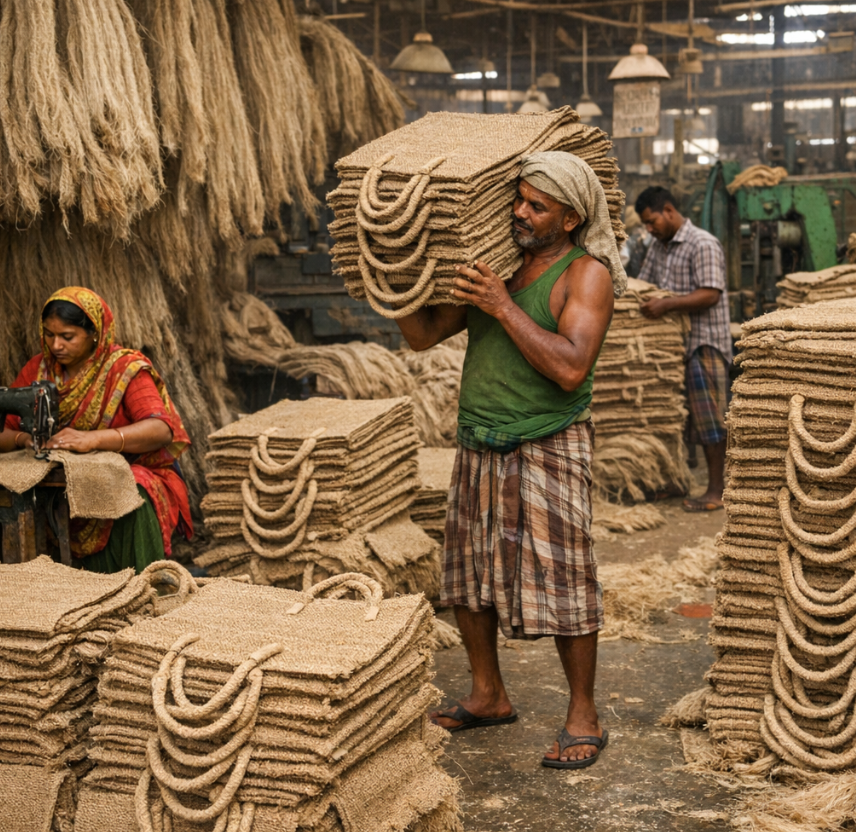

Bangladesh’s jute goods exports are showing signs of recovery, bringing hope to farmers, mill workers and small exporters who have struggled for several years. After four years of steady decline, shipments rose slightly in the latest reporting period, a sign that global buyers are again choosing natural, reusable fibres. Industry managers report that exports reached about three hundred forty-six million dollars in the July to November window, which marks a small but welcome gain for the sector. Turkey has been an important buyer this season and traders say orders from the Middle East, Europe and North America are also picking up as brands look for greener options. Stable jute prices helped exporters plan shipments, while efforts to add simple value in local mills raised the appeal of jute sacks, bags and fabrics. The return of orders has allowed some factories to restart lines that had been idle and to rehire staff on fixed contracts and for seasonal work. Workers and small traders say steady work makes it easier to cover family needs and to invest in small repairs and tools that keep machines running. Exporters stress that the recovery is modest and must be backed by policy steps and easier access to finance so gains can last and grow. High interest costs and delays in payment have made it hard for firms to scale up quickly when demand returns, so exporters are asking for lower loan rates and faster payments on outstanding bills. Industry groups also want support for marketing and trade fairs that help sellers reach new buyers and show how jute items fit modern supply needs. Local mills are experimenting with more value added items such as stylish jute bags and blended fabrics that meet global design tastes while using fewer raw fibres. These steps can lift prices for makers and create more skilled jobs in small factories and workshops. Young workers can learn sewing, finishing and quality checks, and that helps local shops grow into larger businesses over time. Many stakeholders say that simple measures — clearer export rules, steady port handling and small training grants — could turn a small rise into lasting growth. Community leaders also see a chance to promote jute farming methods that yield better fibres and reduce costs for growers. If these moves are combined, the jute sector could offer steady work, protect the environment and give Bangladesh a stronger place in green supply chains. The mood among exporters is cautious but hopeful: the recovery is real, but it needs clear support and steady buyers to become durable. With careful steps, modern design and fair prices, Bangladesh jute can be a reliable, green choice in global markets.