

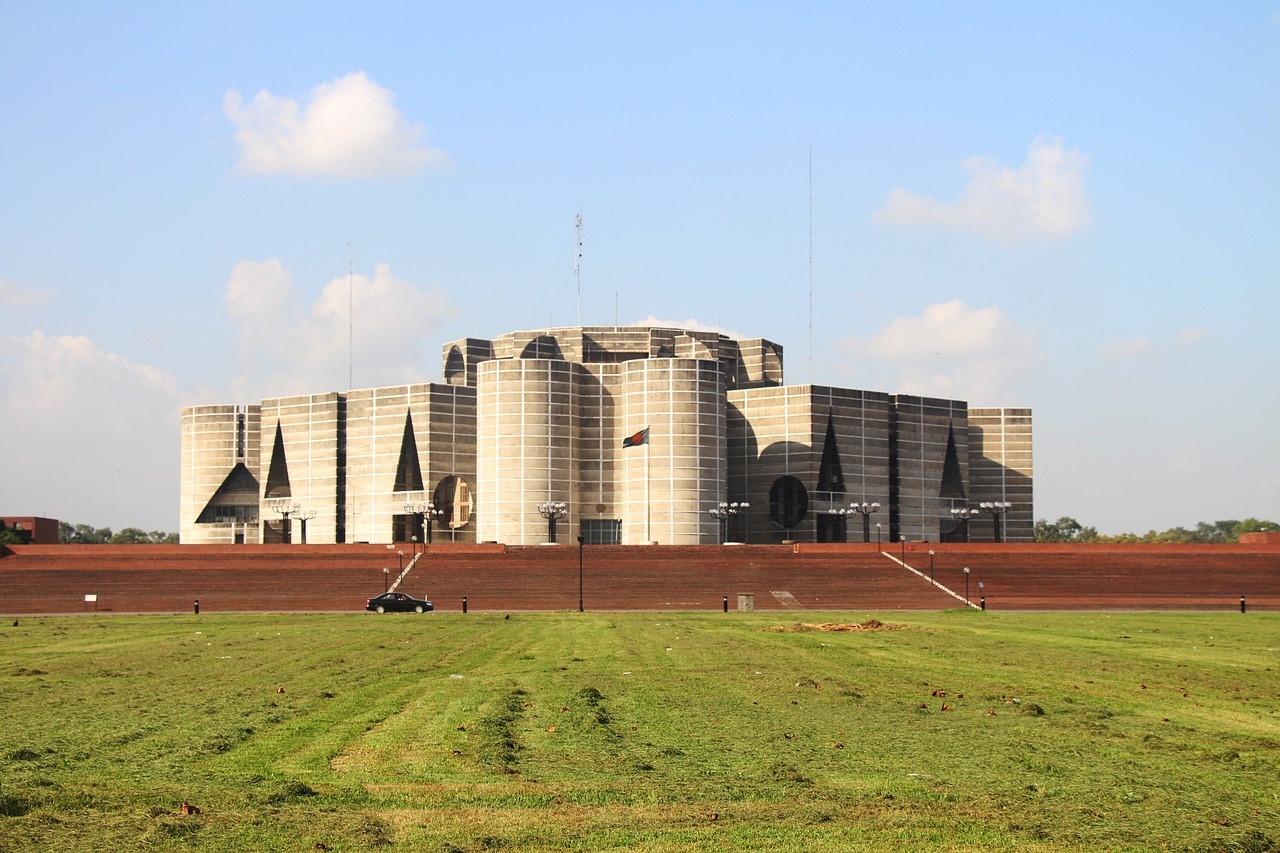

The creation of the National Assembly Building in Dhaka stands as a turning point in South Asian architecture and draws visitors for its bold and thoughtful design. The building was imagined by Louis I. Kahn working with local architects to answer the needs of a new nation and to respect local culture while using modern ideas. (PA | Architecture & Technology) It sits surrounded by water on three sides which helps cool the site and gives the heavy concrete a softer setting. (PA | Architecture & Technology) Kahn used simple shapes like cubes, cylinders and triangles to make a powerful and calm form that looks like a large sculpture in the city. Big round and triangular openings cut through the walls and bring daylight deep inside, so light becomes part of the shape and mood of each space. The outer walls are made of strong exposed concrete with deep set windows and wide recesses that give the building a sturdy, long lasting look. Inside, the main hall is an octagon that sits at the heart of a plan with eight linked blocks for offices, meeting rooms and a library around it. A seven level ambulatory walks around the central chamber and acts like a public path where people move and meet. The assembly chamber rises under a parabolic shell roof that opens up the space and makes the hall feel grand but clear in purpose. (PA | Architecture & Technology) Careful details, like horizontal bands lined with white marble, were used to give the surfaces a neat finish and to deal with real building needs during construction. Kahn wrote and thought a lot about light, silence and how buildings should fit their place, and this project shows those ideas in concrete. The plan borrows from local forms and from older building traditions, turning them into a modern language that stays linked to the land and to the idea of public life. Students of architecture keep studying the building because it shows how large scale civic work can be both practical and poetic. Builders used advanced concrete techniques and a strong structure so big open spaces could be made without many columns. The design balances a sense of public monumentality with paths and rooms that serve everyday functions for staff and visitors. By blending strong geometry, daylight, water and material honesty, the National Assembly Building points to a way architecture can shape civic life and make simple acts like moving through space feel meaningful. It has become a teaching example and a point of pride for local architects and people who study modern design. The building is a calm and steady place that shows how clear design choices can support both beauty and use in the public world. It welcomes visitors and students.