

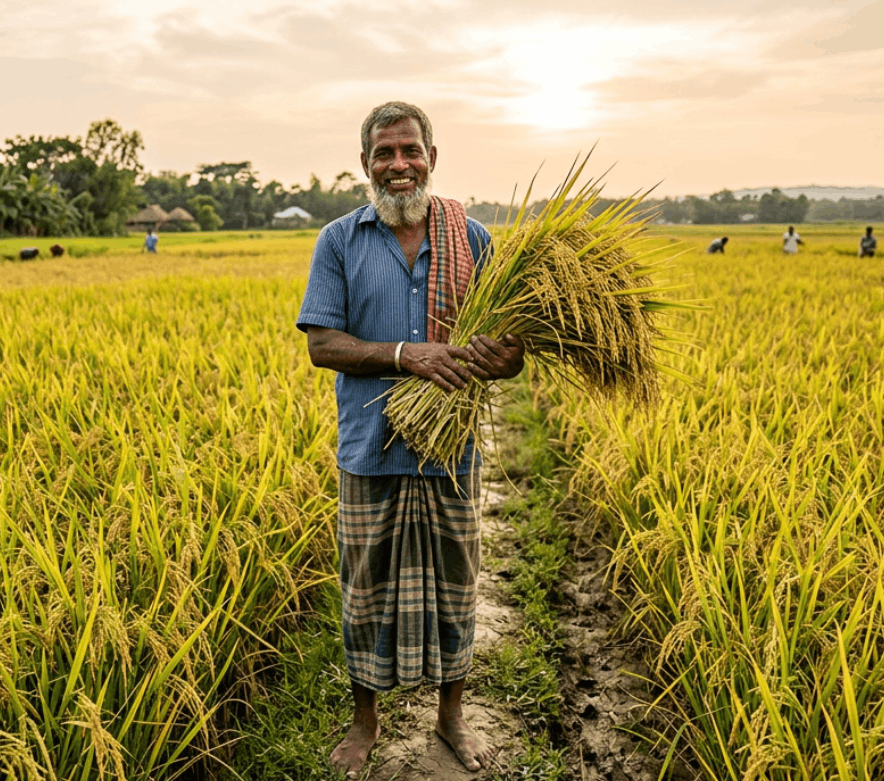

Bangladesh is set to begin a new Farmer Card pilot in nine upazilas, a move officials say could make farm support faster, fairer, and easier to track. The first phase will cover one upazila from each division, including Tangail Sadar, Shibganj in Bogura, Panchagarh Sadar, Islampur in Jamalpur, Shailkupa in Jhenaidah, Nesarabad in Pirojpur, Juri in Moulvibazar, Comilla Sadar, and Teknaf in Cox’s Bazar. Before the cards are issued, teams will collect detailed information on farmers in the selected areas so the government can build a clearer database. Officials expect this pre-pilot work to be finished within 45 days and say the data will help identify farmers by category and need. Under the plan, farmer cards will be given in nine blocks across the nine upazilas, creating a system that links support to the right people. Farmers who receive the card will be able to buy seeds, fertilizers, and other farming inputs at fair prices. The card will also help channel government help and subsidies directly to farmers’ bank accounts, which may reduce delay and confusion. Special attention will go to landless and small farmers, who often face the hardest problems in getting timely help and paying rising input costs. Officials believe this focus can improve rural incomes and strengthen the farm economy from the ground up. The program has already gone through pre-pilot and pilot planning, and the government hopes to expand it across the country within four years if the first stages work well. Supporters of the plan say a farmer card system could bring better records, smoother service, and less waste. It may also help the state respond more quickly when farmers need aid or price support. For many farming families, the idea is simple: one card, one record, and a cleaner path to the help they are supposed to receive. The plan also matters because farming support often reaches people through many steps, and that can make the process slow. With a single card and a cleaner farmer list, officials hope to reduce repeated paperwork and make service delivery more consistent. In simple terms, the card could work like a trusted ID for farm support, helping local offices match the right farmer with the right benefit. That could be useful in seasons when quick access to seed, fertilizer, and cash support can affect crop output. It may also help the government keep better records of who grows what, where they live, and what kind of help they need most. For farmers, that kind of system could mean fewer trips, fewer errors, and more confidence that public support is reaching the farm gate.