

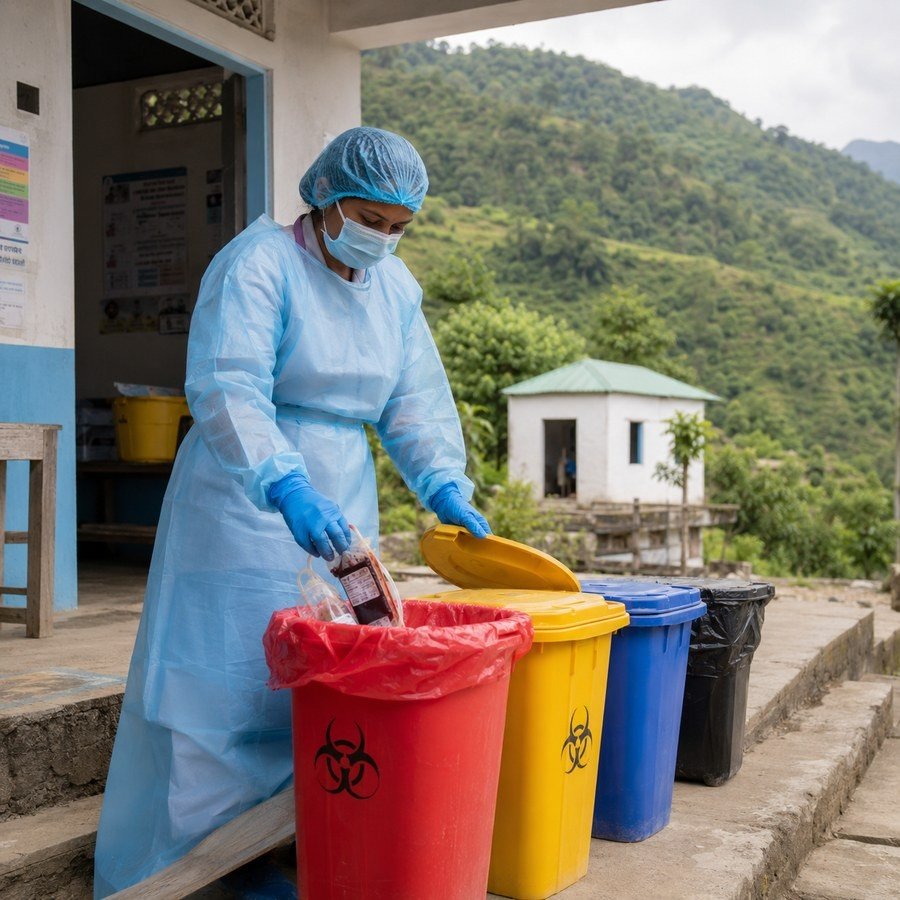

A modern solution for managing infectious healthcare waste in Bangladesh’s remote hills is helping clinics and communities handle medical waste more safely. This development matters because healthcare waste can become dangerous if it is not collected, stored, treated, and disposed of properly. Used syringes, bandages, gloves, test materials, and other infectious items can spread disease, harm workers, and pollute the environment. In remote hill areas, the challenge is even greater because transport is difficult, facilities may be far apart, and regular waste services may not be available. A safer waste system can protect patients, health workers, cleaners, waste handlers, and nearby communities. Healthcare waste management is often hidden from public attention, but it is a key part of quality care. A clinic may treat patients well, but if waste is dumped carelessly, the risk continues outside the treatment room. Modern systems can include color-coded bins, safe storage, worker training, protective equipment, transport plans, treatment technology, and clear reporting. Training is especially important because staff must know how to separate infectious and non-infectious waste from the beginning. If all waste is mixed, the danger and cost increase. For remote hills, the solution must fit local conditions. It should be practical, affordable, and easy to maintain. Communities also need awareness so people understand why medical waste should not be touched, reused, or thrown into open areas. The impact can be large. Safer waste management reduces infection risk, keeps clinic surroundings cleaner, and builds trust in healthcare services. It also protects the natural environment, which is important in hill areas with rivers, forests, and farming communities. The effort can support health workers by giving them safer workplaces and clearer procedures. It can also help local authorities plan better services. Bangladesh’s health system is expanding, and more care means more medical waste. Without proper systems, waste problems can grow quickly. A modern solution in remote areas shows that safe healthcare should not be limited to big cities. People in hard-to-reach communities deserve the same attention to safety and dignity. The success of such a system depends on regular follow-up, supplies, funding, and trained staff. If maintained well, it can become a model for other remote regions. Managing healthcare waste safely is not a small technical matter; it is part of protecting public health. This initiative shows how practical innovation can make care cleaner, safer, and more responsible.