

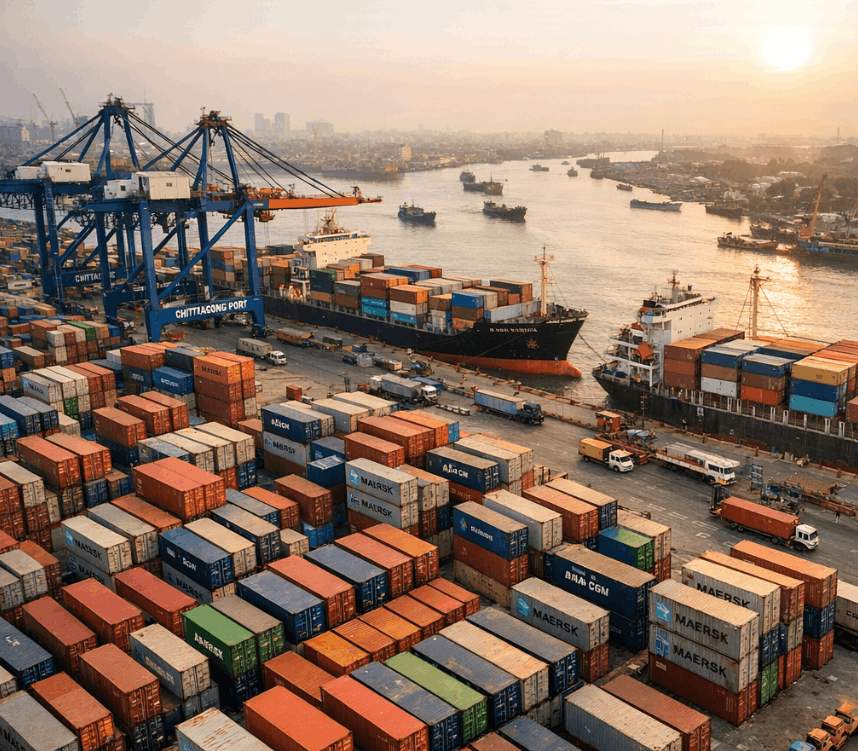

Bangladesh’s Chattogram Port showed clear improvement in the first nine months of FY26, with stronger cargo handling, more ship arrivals, and steady container movement across the busy seaport. During the period from July 2025 to March 2026, the port handled 104,298,658 tonnes of cargo, which was 7.39% higher than the same period a year earlier, while 3,230 ships arrived, marking a 5.62% rise year on year.The port also handled 799,000 containers in the first quarter of 2026, up from 795,000 in the same quarter last year, showing a small but positive rise in container traffic.
The improvement matters because Chattogram Port is the main gateway for Bangladesh’s import and export trade, and even small gains in speed and capacity can help factories, traders, and shipping lines work more smoothly. Officials noted that the average ship stay at the port has fallen and that waiting time at the outer anchorage has dropped to zero, which suggests that port operations are becoming more efficient. The turnaround time for ships has also improved, coming down from four days to 2.53 days, a change that can reduce costs for shipping companies and shorten delays for cargo owners.
For the country’s export-based industries, especially textiles and garments, faster port handling can make a real difference. When containers move more quickly, factories can receive raw materials on time and send finished goods to buyers with fewer hold-ups. That helps protect supply chains, supports production planning, and lowers pressure during busy shipping periods. The rise in cargo handled during October 2025, which was noted at 21.11%, also points to stronger movement through the port during part of the period.
The latest figures suggest that Bangladesh is making practical gains in logistics, even as it continues to face the usual pressure of trade growth, shipping demand, and infrastructure needs. A port that can clear ships faster and move containers more efficiently can support broader economic activity, from factory output to import supply and domestic distribution. For businesses that depend on timely delivery, these improvements are not just technical numbers. They can shape costs, customer confidence, and the pace of trade across the whole economy. The progress at Chattogram Port therefore gives a hopeful sign that transport and cargo handling are moving in the right direction, with benefits that may reach well beyond the docks themselves.