

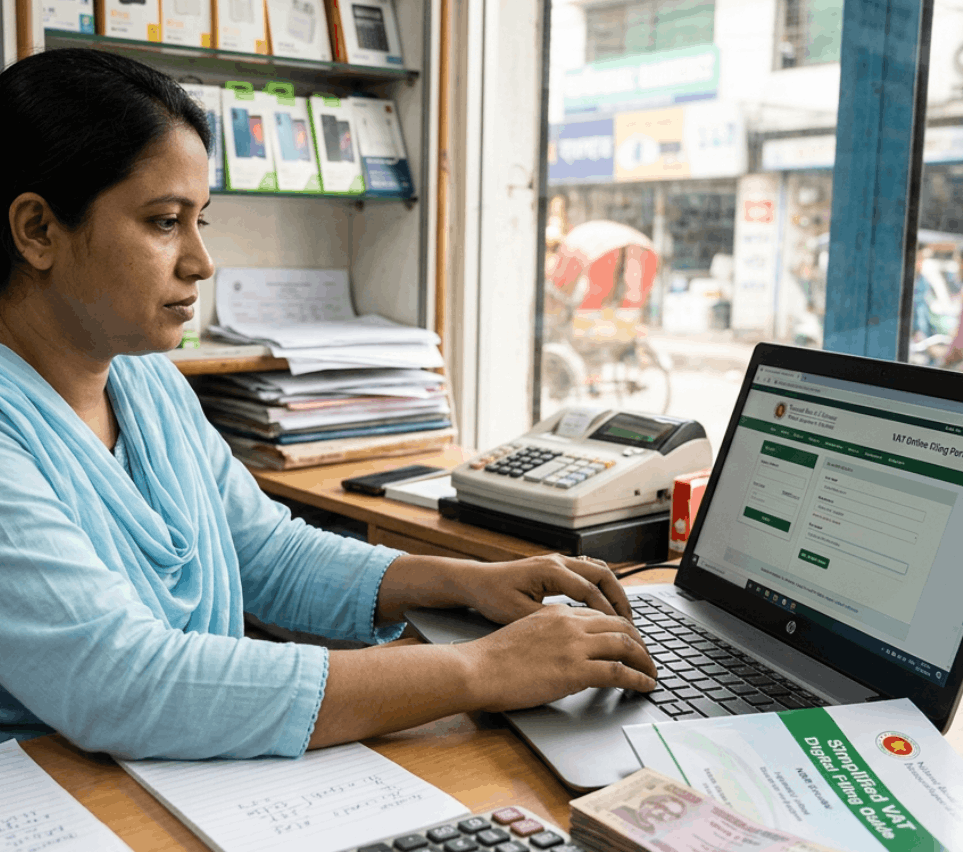

Bangladesh’s tax authority is preparing a major shift in the way businesses pay taxes, with the National Board of Revenue saying the next budget will focus on a more business-friendly tax system that still helps the government raise revenue. The NBR chairman said the plan will include wide changes to the VAT Act so that compliance becomes simpler, faster, and more digital. One of the biggest changes will be the move to make online VAT returns fully mandatory for all registered businesses from the next fiscal year. The goal is to remove the need for physical visits to VAT offices and allow taxpayers to handle registration, filing, and other steps from home or from their office. Officials said legal and administrative changes are being prepared so the digital shift can happen without major obstacles. Small businesses are also part of the plan. The NBR is building special software for SMEs that do not have large accounting teams or the money to hire VAT experts. Under this system, business owners will only need to enter simple receipt and payment details, and the software will then prepare the VAT return automatically. That could save time and lower the cost of compliance for many small firms. The chairman also said the NBR is studying whether different VAT rates should be used for the service sector, with the aim of making tax collection fair across all industries. Another important change is the plan for automatic tax refunds. If a taxpayer has paid more than the correct amount, the extra money will be sent directly to the person’s or company’s bank account instead of going through a slow manual process. That is meant to reduce delay and lower the chance of corruption. Business groups at the meeting welcomed the focus on policy stability, digital customs, and easier tax rules. Women business leaders also asked for a higher tax-free income limit for women and stronger support for female entrepreneurs. The NBR chairman said the country’s tax record has improved, with VAT registrations rising from 5 lakh to 8 lakh after registration drives, but he admitted that there is still a long way to go. His message was that the tax system must become simpler, more transparent, and more digital if it is to support growth, expand the tax base, and help the wider economy. For many businesses, especially smaller ones, these changes could make compliance less stressful and create a more predictable environment for planning, investment, and daily operations. The proposed shift also suggests that the government wants to build a tax system that is not only stricter, but also easier to use, more modern, and better suited to the needs of a growing business community.