

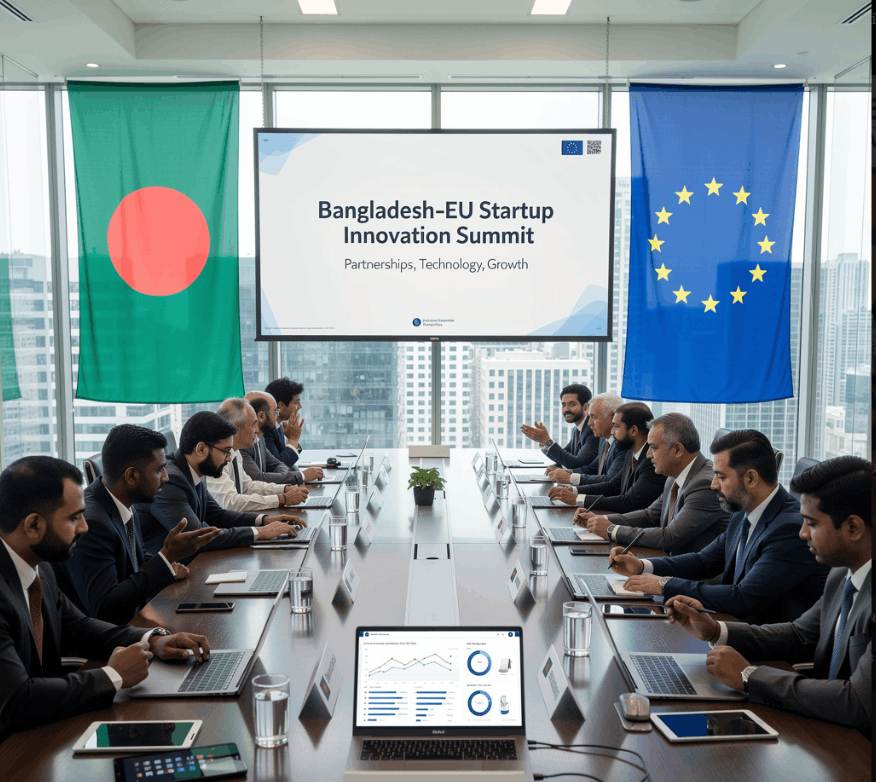

Bangladesh has signaled a stronger push to work with the European Union on building an innovation ecosystem and supporting startups, after a meeting in Brussels between Foreign Minister Dr Khalilur Rahman and European Commission Commissioner for Startups, Research and Innovation Ekaterina Zaharieva. The talks focused on practical cooperation that could help Bangladesh strengthen research links, expand startup opportunities, and connect more closely with European programs and institutions. One of the main areas discussed was Horizon Europe, the EU’s major research and innovation framework, which could open more doors for Bangladeshi researchers, entrepreneurs, and technology-focused institutions. The two sides also looked at cooperation in artificial intelligence, digital innovation, energy efficiency, and sustainable development, showing that the partnership is not limited to one narrow field but is tied to a wider plan for modern growth. Bangladesh said it wants a lasting framework for future engagement so the relationship can move beyond one-off meetings and become a steady channel for collaboration. That matters because startups usually need more than ideas to succeed; they also need research support, access to networks, technical guidance, and a system that helps them grow over time. By linking startup development with international research and innovation cooperation, Bangladesh is trying to create a stronger path for young businesses that want to build useful products and services. The meeting also reaffirmed the country’s commitment to its long-standing partnership with the EU, especially in areas that can support technology, science, and entrepreneurship. For Bangladesh, this could help create a more active innovation environment where universities, businesses, and policymakers work together more closely. It may also give local startups a better chance to learn from global best practices and connect with larger markets. The broader message from the discussion is that innovation is now seen as a national priority, not just a specialist topic. If the ideas raised in Brussels lead to concrete programs, Bangladesh could gain more research cooperation, more startup support, and stronger digital capacity in the years ahead. That would be useful for a country that wants to move faster in technology, create higher-value jobs, and build a more competitive economy. The meeting pointed toward a future in which science, research, and entrepreneurship are treated as central tools for development rather than side projects.