

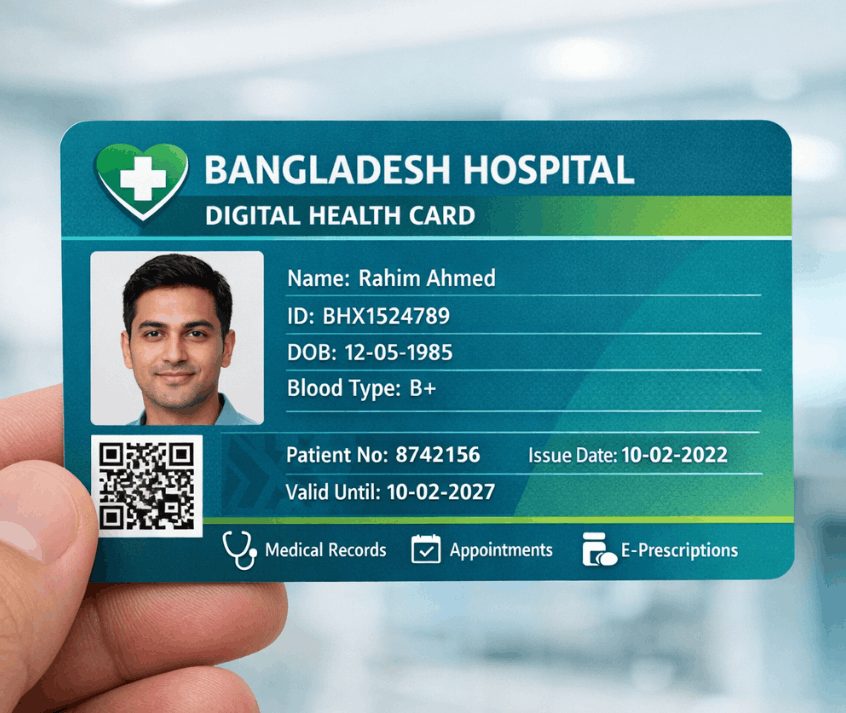

Bangladesh’s planned e-Health Card could change how patients move through the health system by making care faster, better linked, and easier to track, according to a health expert who argues that the idea needs careful planning and strong support to succeed. The plan aims to give each patient a unique health identity that can store key details such as name, photo, health number, and a QR code, so hospitals can quickly find past records and avoid repeat mistakes. The article says this could help doctors see medical history more clearly, reduce fake patient registrations, improve referrals, and make it easier to follow how much care people use and how much it costs. It also notes that many countries use a separate health ID instead of a national ID number because health data is private and must be kept secure. Examples from other systems, including India’s ABHA and the UK’s NHS number, show how a dedicated health number can link records across different facilities while protecting privacy. The writer says Bangladesh could follow a similar path with its own system, especially because children and other vulnerable people may not always have a national ID document yet. But the card itself is only one part of the job. The article says the country also needs electronic medical records, a shared health information platform, and hospital automation so clinics, upazila health complexes, district hospitals, and specialized hospitals can exchange useful data safely. It also points out that this will need computers, fast internet, servers, backup power, and trained staff at each health facility. Doctors and health workers would also need training so digital tools save time instead of creating extra work. Another key issue is data security. Because health information is highly sensitive, the article says Bangladesh must build strong cybersecurity systems, clear rules for data use, and strong teamwork between the health and family planning directorates. It also warns that the plan will fail if money is not set aside for long-term maintenance, training, and system upgrades. To reduce risk, the writer suggests pilot projects in selected districts, gradual expansion, and public awareness campaigns so citizens understand how the card can help them. The overall message is hopeful: with the right infrastructure, fair planning, and good governance, the e-Health Card could make Bangladesh’s healthcare system more organized, more efficient, and easier for people to use.