

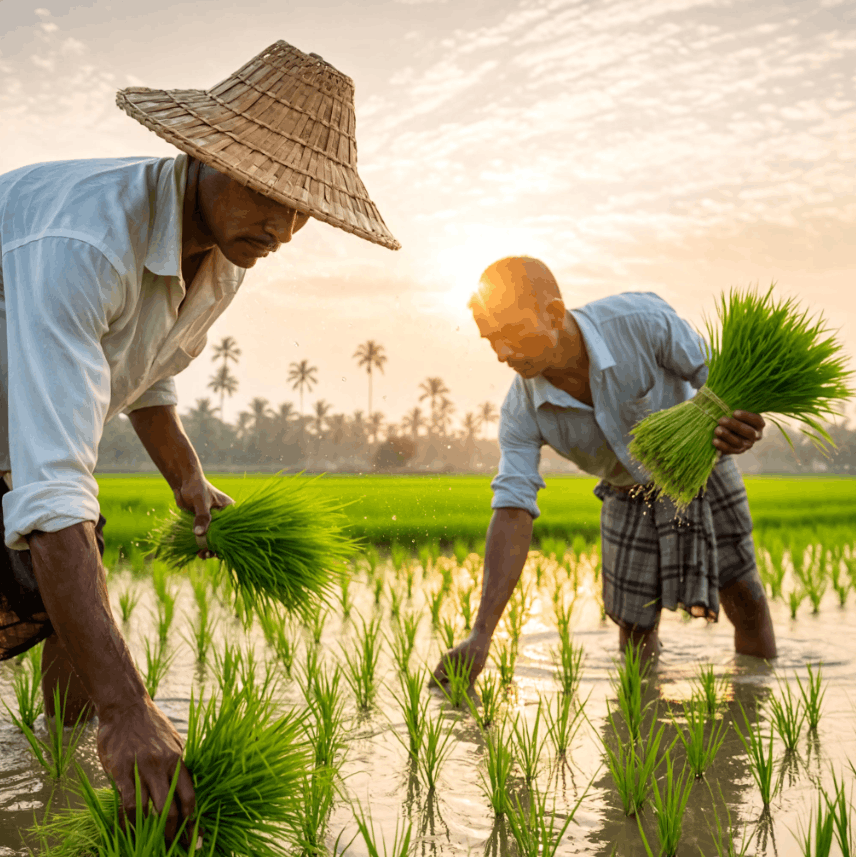

The Rangpur region is preparing for a larger Aush rice harvest, with farmers and agriculture officials working toward a fresh production target that could strengthen food supply and support rural incomes. The Department of Agricultural Extension has fixed a goal of producing 179,161 tonnes of clean Aush rice, equal to 268,742 tonnes of paddy, from 59,195 hectares of land across Rangpur, Gaibandha, Kurigram, Lalmonirhat and Nilphamari. Officials say seedbed preparation is already under way, and transplantation of seedlings is expected to begin soon and continue through the first week of June. Farmers have already prepared seedbeds on 558 hectares, which shows that the season has started with steady momentum. Agriculture workers say the crop is gaining importance because it fits well into the gap between Boro harvest and Aman planting, when much of the land would otherwise stay unused. Aush rice also needs less irrigation water, making it a useful option for areas where farming is being affected by changing weather and pressure on water resources. To help more farmers take part, the government has been giving special support to small and marginal growers, running awareness campaigns, and offering technical advice to improve cultivation and output. These steps have helped Aush rice become more popular in the northern region, where farmers are now seeing it as a practical way to raise total rice production without hurting later Aman farming. Last season, the region produced 184,603 tonnes of clean Aush rice from 61,163 hectares, and the year before that it produced 184,617 tonnes from 61,782 hectares, showing a strong and steady base for the crop. Experts say the crop can play a bigger role in food security if farmers use modern methods, seasonal rainwater, and improved stress-tolerant varieties. They also note that Aush can be a smart alternative to costly irrigation-heavy farming because it helps use natural rainfall during the off-season. Rice scientist Md Abdul Majid has welcomed the wider promotion of Aush cultivation, while farmers in several villages say they have already prepared their seedbeds and are getting their land ready for transplanting. With good planning, local support, and favorable weather, Rangpur’s Aush season could help farmers get more value from every acre while adding another layer of strength to the country’s rice supply.