

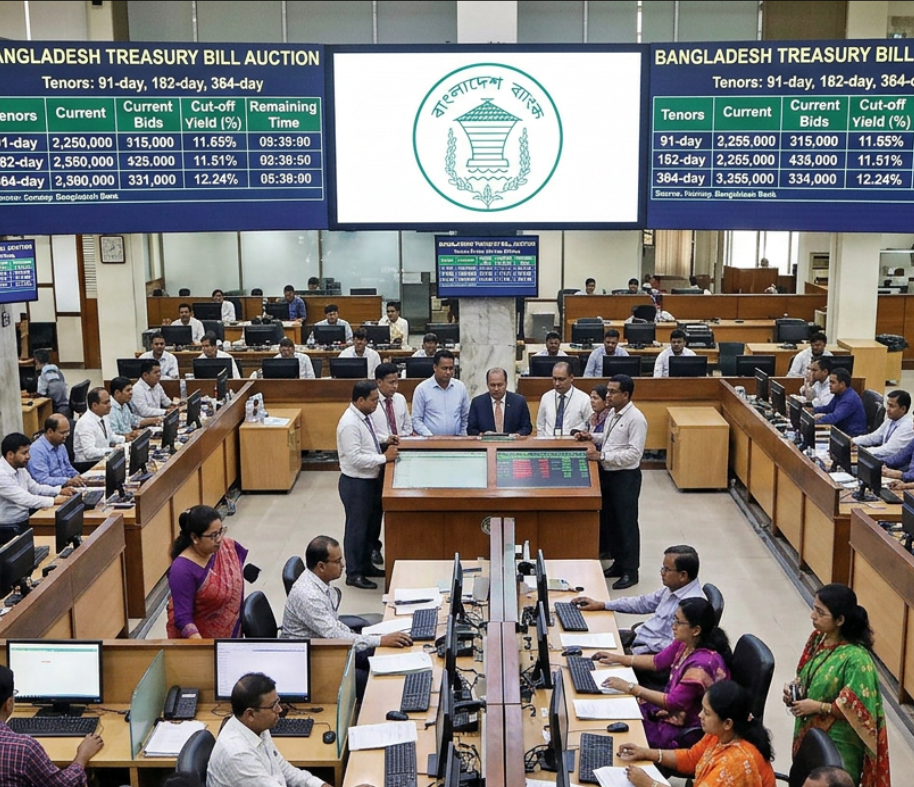

Bangladesh Bank has stepped up its support for the foreign exchange market by buying 171 million US dollars from 11 commercial banks through a fresh round of dollar auctions, part of a wider push to steady the taka and keep money flowing to exporters and remittance earners. In the latest operation, the central bank purchased the greenback at a rate of Tk 122.30 per dollar, sending a signal that it is ready to be an active player in the interbank market rather than watching from the sidelines as exchange rates move. With this purchase, total dollar buying by the central bank has reached 966 million dollars so far in February and about 4.9 billion dollars in the current financial year up to February 9, showing how large and sustained the effort has become. Officials see these auctions as a way to support banks that are facing tight foreign currency positions while also building up the country’s reserves so that essential imports like fuel, food and raw materials for factories can continue without sudden disruption. By injecting taka into the banking system in exchange for dollars, the central bank also gives lenders more room to finance trade and working capital needs of businesses that are trying to keep production stable. For families who rely on money sent home from abroad, a more stable exchange rate can make it easier to plan their monthly budgets, while exporters benefit when sharp swings in the currency are reduced and they can quote prices with greater confidence. At the same time, the auctions encourage banks to bring in remittance and export earnings through formal channels, since they know there is a clear, transparent window where they can sell dollars at a market-based rate. Economists note that such operations work best when combined with careful control of inflation, strong monitoring of banks and clear communication so that people understand the goals behind each move. If handled well, the ongoing series of dollar purchases can ease pressure on the foreign exchange market, cool fears about shortages and help restore trust among businesses, investors and ordinary savers. Looking ahead, the central bank is expected to keep a close watch on global trends in oil prices, interest rates and trade so that it can adjust the pace of auctions as needed, always aiming to protect macroeconomic stability and support steady growth in jobs, exports and remittances for the country. Business groups say a predictable currency and easier access to foreign exchange are vital for planning investment, paying overseas suppliers and keeping shelves stocked with imported goods. Many hope that, alongside careful reforms in tax and trade policy, the auction strategy will help build a stronger and more resilient financial system.