

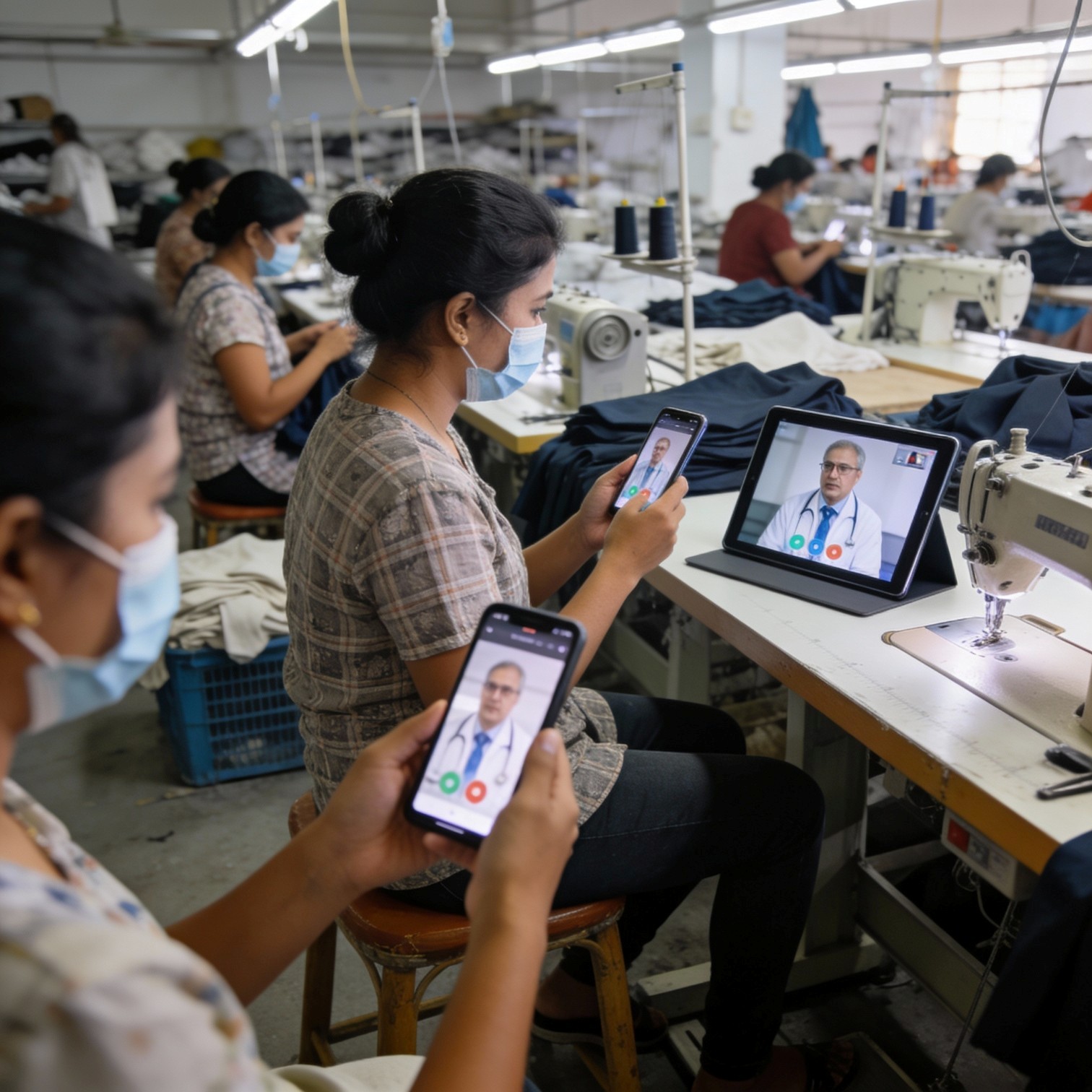

An important new health service for garment workers was launched when the Bangladesh Garment Manufacturers and Exporters Association (BGMEA) joined with tech partner Olwel BD Ltd and Nuvista Pharma to start a digital hospital pilot for ready-made garment workers and their families. The project will give 24/7 access to primary care and mental health support through an ICT-enabled platform that lets workers speak with general practitioners, get follow-up care, and keep secure electronic health records, and it will also build a referral network for gynecological and reproductive health services. The partners signed an agreement at the BGMEA complex in Uttara to begin the pilot with five thousand workers and then expand to another five thousand after three months, with the long-term aim of offering services across all member factories. The plan is practical: Olwel will run the digital platform, Nuvista Pharma will co-finance and link clinical referrals, and BGMEA will help reach factories and workers. Health leaders praised the move, saying healthier workers are more productive and that easy access to care inside or near factories can remove barriers for women who need confidential advice. Company leaders stressed simple steps such as starting small, testing carefully, and training staff so the service works well before it grows. The service will include basic consultations, follow-up appointments, secure record keeping that helps continuity of care, and clear referral pathways for services that need in-person treatment. The pilot also aims to strengthen nutrition and maternal health services and to give workers fast access to advice about common illnesses, mental health concerns, and reproductive needs. Organisers said the service will protect privacy, lower travel time for health visits, and reduce lost work hours when people can get help quickly. Factory leaders, health partners, and staff who joined the ceremony spoke about teamwork and local solutions that fit busy urban factory life. By combining digital tools, shared costs, and local healthcare links, the project hopes to make care reliable and affordable for thousands of workers, while building local capacity for nurses and technicians. Early pilots will let teams learn what works, fix problems, and build trust with workers before services expand. If successful, the model could be copied across regions and help make routine and reproductive care easier to reach for millions of people who depend on factory work. The message from the launch was clear and positive: simple, steady steps with strong partnerships can bring real health benefits to garment workers and their families. Organisers promised regular reviews, training for clinic staff, clear data security guidance, and feedback channels so workers can shape services, and they said mobile outreach and local partnerships will help extend the digital hospital to hard-to-reach workers and their families.