

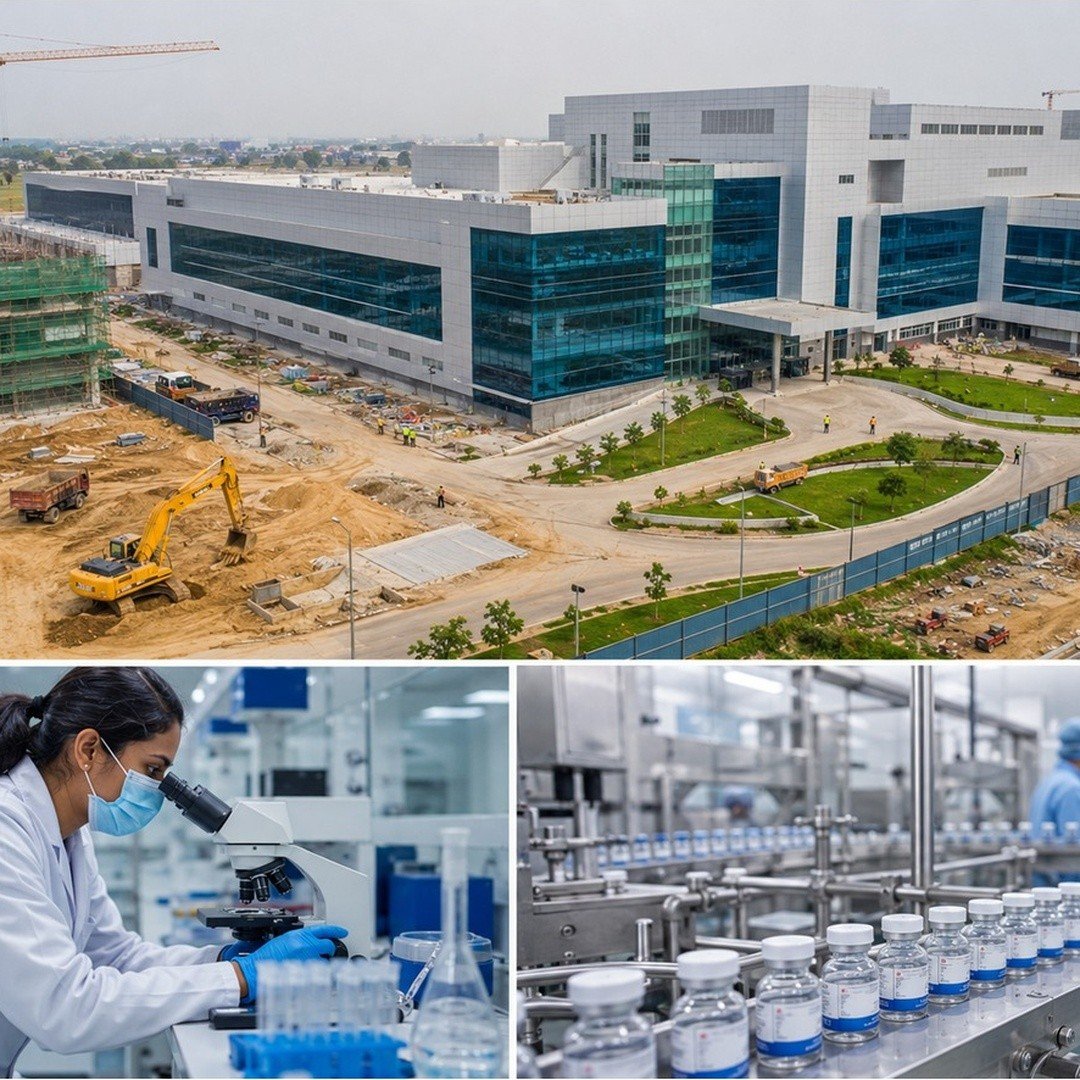

Delta Pharma has begun developing a major pharmaceutical manufacturing complex in Mirsarai with a long-term investment plan of about $100 million, a project that could reduce Bangladesh’s dependence on imported medicine ingredients and expand production of advanced therapies. The complex covers about 42 acres in an economic zone and will be built in stages. The first phase alone is expected to require roughly $43 million. A central goal is to produce active pharmaceutical ingredients, or APIs, which are the key substances used to make medicines work. Bangladesh’s pharmaceutical companies currently import most of these raw materials, leaving the industry exposed to global prices, shipping delays and foreign-currency pressure. Local API production can make the supply chain more secure if manufacturers can achieve the required quality at competitive cost. The planned complex goes beyond basic ingredients. It is expected to include biopharmaceutical fill-and-finish operations, oncology medicines, herbal and nutraceutical products, research facilities and advanced manufacturing systems. The company has also outlined the use of artificial intelligence in production and quality processes. Products under consideration include anti-cancer medicines, monoclonal antibodies and other specialised treatments that require strict technical control. Building this kind of facility can create jobs for pharmacists, chemists, microbiologists, engineers, laboratory staff and quality specialists. It can also encourage universities and training institutions to develop more industry-focused skills. Bangladesh already has a strong generic medicine industry and supplies pharmaceutical products to many international markets. Moving further into APIs, biologics and oncology products would allow the sector to capture more value and develop deeper technical capability. The challenge is that advanced medicine manufacturing demands high investment, reliable utilities, precise regulation and internationally accepted quality systems. Research and development must also be continuous because medical technology changes quickly. Strong oversight from regulators will remain essential to protect patients and maintain confidence in locally made products. The Mirsarai project shows how Bangladesh’s pharmaceutical sector is starting to look beyond volume and toward higher-value production. If the facility reaches commercial scale and meets global standards, it can support import substitution while creating new export opportunities. More importantly, it can help build a local knowledge base for complex medicines, giving Bangladesh a stronger position in a field where science, manufacturing and public health are closely connected. Measured carefully, these gains can support confidence without creating unrealistic expectations. Maintaining public trust will be just as important as expanding capacity. That is how a promising announcement can become practical economic progress. That combination can help more people share in the benefits of future expansion. The broader opportunity is to build capacity that remains useful long after the first investment. A steady focus on quality can help this progress remain useful over the long term.