

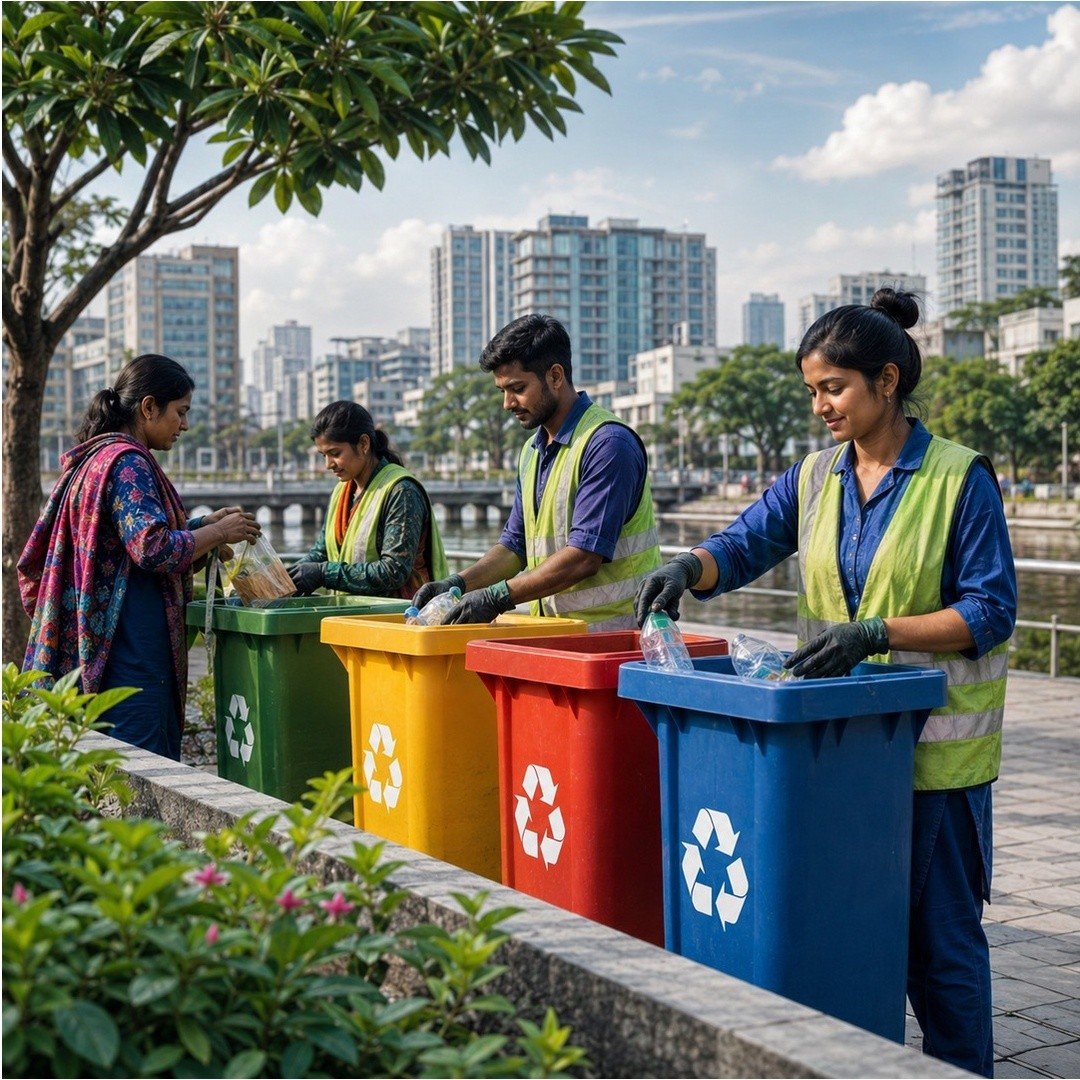

Bangladesh is pushing a stronger circular-economy approach that treats waste as a source of raw material, new business and export income instead of something to be dumped and forgotten. Plastic is one of the clearest examples. The country generates more than 821,000 tonnes of plastic waste each year, but only around 36 percent is currently recycled. Improving collection and processing could recover much more value while reducing pollution in drains, rivers and neighbourhoods. One major opportunity is turning used plastic into textile fibre. Bangladesh’s garment industry imports large amounts of man-made fibre, so local recycled material could replace part of those imports and support more sustainable clothing production. Industry estimates suggest that a formal plastic-to-textile system could eventually add billions of dollars in garment export value if the country meets international quality and environmental standards. This is becoming more important as major markets introduce stronger rules on recycled content, producer responsibility and product traceability. Bangladesh is also working toward an extended producer responsibility system, which would make companies more responsible for what happens to products and packaging after consumers use them. Clear standards for recycled PET and other materials can give processors confidence to invest in modern plants. The wider circular-economy idea includes repair, reuse, recycling and better product design so materials stay in the economy for longer. That can create jobs in collection, sorting, transport, processing, engineering and manufacturing. Informal waste workers already play a major role in recycling, and a stronger formal system should improve their safety and income rather than push them aside. Finance will be another key issue because modern recycling plants require expensive equipment. Foreign investment, green finance and blended funding can help build capacity, especially when businesses can show reliable supplies of sorted waste. Strong local collection systems are essential because a recycling factory cannot operate efficiently if raw material arrives in mixed or contaminated form. Bangladesh’s large manufacturing base gives the circular economy unusual potential. Waste from one industry can become input for another, reducing import costs and environmental pressure at the same time. The transition will require policy, business investment and changes in consumer behaviour, but the economic case is growing stronger. If Bangladesh builds reliable collection, traceability and recycling standards, waste can become a productive resource that supports cleaner cities, greener exports and a new generation of recycling businesses. Measured carefully, these gains can support confidence without creating unrealistic expectations. Maintaining public trust will be just as important as expanding capacity. That is how a promising announcement can become practical economic progress. Progress will be most valuable when businesses, workers and communities benefit together. Practical follow-up can turn this early step into a stronger foundation for future growth.