

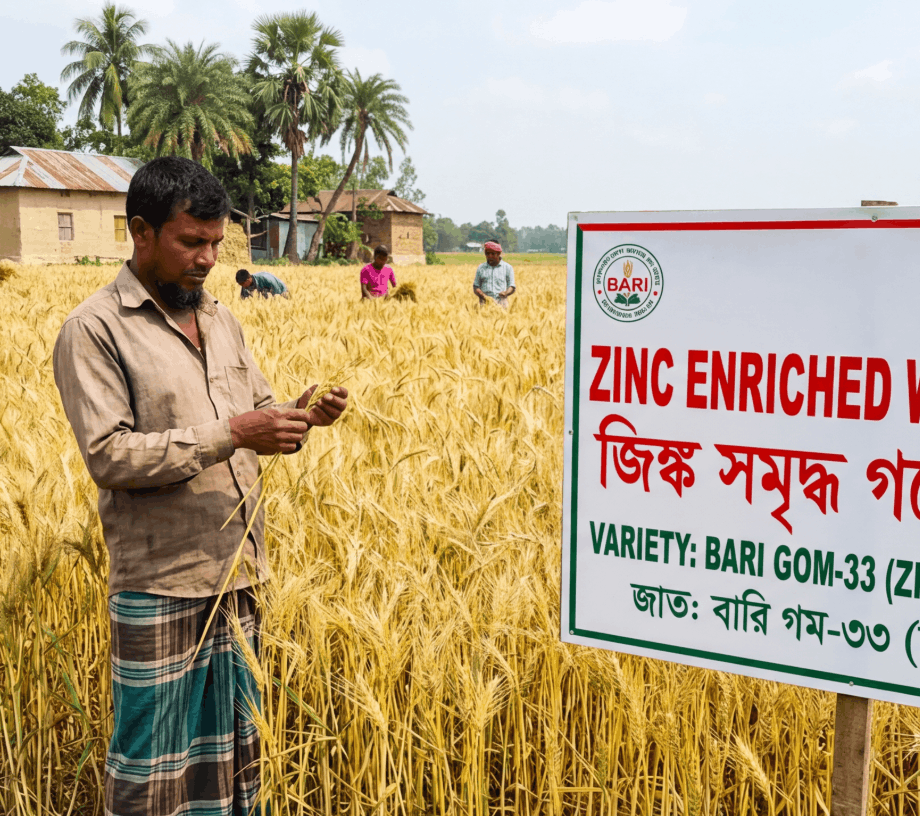

Agricultural experts are urging more farmers to grow biofortified wheat because it can help fight zinc deficiency while also giving growers a strong harvest. The focus is on BARI Wheat-33, a zinc-enriched variety developed by the Bangladesh Agricultural Research Institute, which has been drawing attention for its good yield and climate-friendly traits. In the drought-prone Barind area, farmers say the variety is performing well even where land often stays unused because of water shortage. The wheat is reported to resist blast disease, tolerate heat, and produce strong results with very little irrigation, which makes it useful for places where water is limited. Farmers in Naogaon are already seeing the value of this approach through a climate action project that supports them with training, seeds, fertilizers, demonstration plots, and technical advice. The project also works with government agriculture offices so farmers can get more complete support in the field. It promotes other climate-smart crops too, including homestead vegetables, yam, thick-stemmed Malabar spinach, and zinc-rich rice and vegetables, creating a wider system for better nutrition and stronger farm income. Youth groups are also involved, helping farmers build digital skills and use mobile apps to manage crop diseases and pests more easily. At a recent field event, farmers and local agriculture officers gathered to review the harvest of BARI Wheat-33 and share what they had learned from the demonstration plot. One farmer said the crop needs less irrigation, lowers production costs, and gives a good yield with long spikes and better disease resistance. An agriculture officer said the variety can produce around 17 to 20 maunds per bigha when it is planted on time and managed well, and he expressed hope for even better results after seeing the field. About 60 to 70 farmers, including both men and women, took part in the program, showing growing local interest in the crop. Project leaders said the larger goal is to build a more resilient and diverse food system by improving farmers’ access to climate-smart tools and community-based adaptation methods. For many rural families, the appeal of this wheat is simple: it can improve nutrition, lower risk in a dry climate, and still give a solid harvest. If more farmers adopt it, the crop could help make local food systems healthier and more secure while bringing value to land that used to sit empty.