

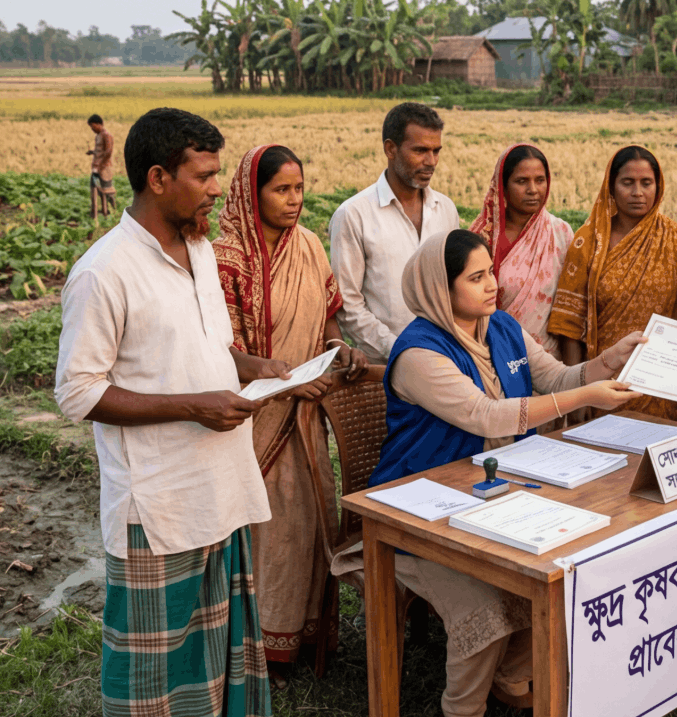

The government has approved a plan to waive agricultural loans of up to Tk 10,000, including the interest on those loans, in a move aimed at giving small farmers a clearer path out of debt and back into production. The relief covers loans used in grain, crop, fisheries, and livestock work, which means it can help many kinds of rural households that depend on farm income. Officials say the main goal is to protect poor and marginal farmers, who often borrow small sums for seeds, fertilizer, feed, or other seasonal costs and then struggle when prices, weather, or market conditions make repayment hard. Under the plan, about 12 lakh farmers are expected to benefit directly, and the unpaid amount linked to these loans is estimated at about Tk 1,550 crore, including interest. By removing this debt pressure, the government hopes farmers will be able to spend more on quality seed, better irrigation, and other basic tools that can lift crop output and improve farm income. The relief is also expected to reduce the need for high-cost borrowing from informal lenders, which can trap families in a cycle of repeated debt. Officials believe the move may help strengthen farmers’ credit records as well, making it easier for them to borrow again from banks at lower rates when they need fresh support for the next planting season. That could matter a great deal in rural areas, where even a small loan can decide whether a family plants on time or falls behind. Supporters of the step say it may also bring wider benefits beyond the farm gate. If farmers face less debt stress, they may keep more money in local markets, which can help village shops and services. It could also slow the movement of people from villages to cities when farm income is weak. The waiver is part of a broader effort to make farm support more direct and practical for people who work on small plots and face narrow profit margins. For many families, the promise of a clean start matters as much as the cash value itself. If the plan is carried out smoothly, it could give farmers more confidence, more breathing room, and a stronger chance to invest in the next harvest with less fear of falling deeper into debt. Farmers in the grain, crop, fisheries, and livestock sectors often face the same basic problem: they must spend before they earn, and a small setback can quickly turn a small loan into a heavy burden. By waiving both principal and interest on loans within this ceiling, the state is trying to give those workers a cleaner balance sheet and a better chance to grow food, raise animals, and earn steady cash through the year.