

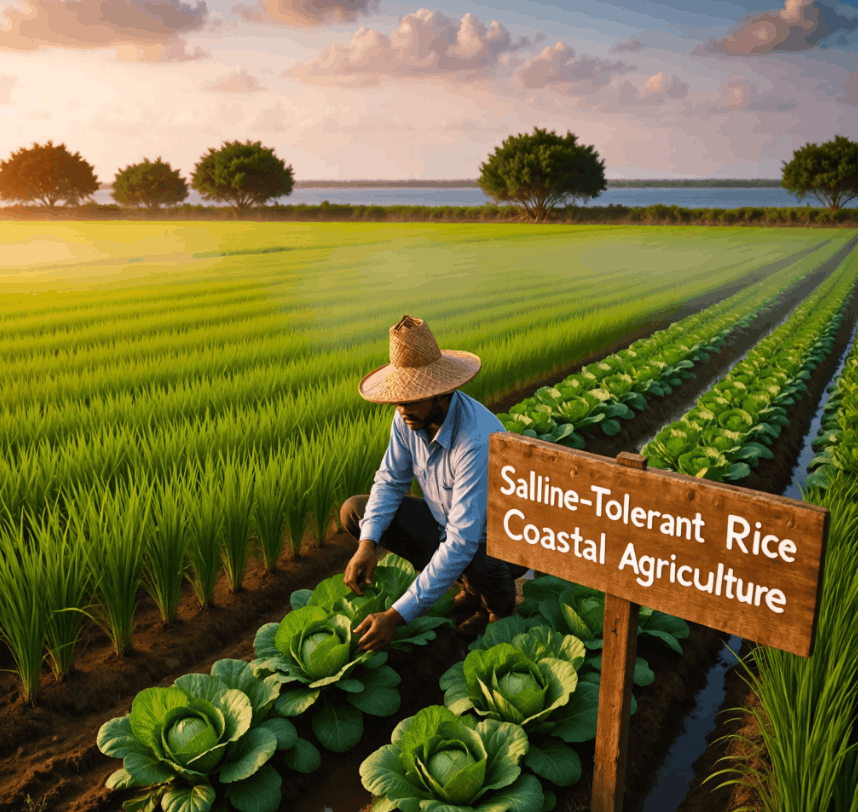

Farming in the low-lying coastal belt of Bangladesh and West Bengal has long been difficult because the land is salty, water can be scarce in the dry season, and flooding often damages crops. A long-running research effort has now helped many small farmers grow more food and earn more money by using salt-tolerant crops and simple farming methods. The work has focused on helping families make better use of land that would otherwise stay empty after the main rice season. One of the biggest gains has come from new rice varieties that can handle salt and still give higher yields. These types mature earlier than older ones, which gives farmers enough time to plant a second crop in the dry season with leftover monsoon moisture. In some areas, this has made it possible to grow two rice crops a year for the first time. Farmers also learned to grow salt-tolerant winter rice, while others tried crops such as sunflower, maize, potato, garlic, watermelon, pumpkin and spinach. Some farmers found no-till potatoes useful, while many in Bangladesh chose watermelon as a good dry-season option. The project also introduced an easy method for growing vegetables on the edges of paddy fields by filling reused sacks with soil and manure and placing them beside bamboo trellises. This small-space method helps families grow vegetables like cucumber, sponge gourd, bitter gourd and snake gourd, which can be eaten at home or sold for extra cash. Women have been a major part of the change, both as farmers and as scientists and field workers, and their role has helped spread the new methods more widely. The project also improved knowledge about salinity, waterlogging and land use through surveys, field trials and remote sensing, giving local teams better tools to plan for climate stress. For many families, the result has been more food, better income and stronger hope that coastal farming can remain productive even in a changing climate.