

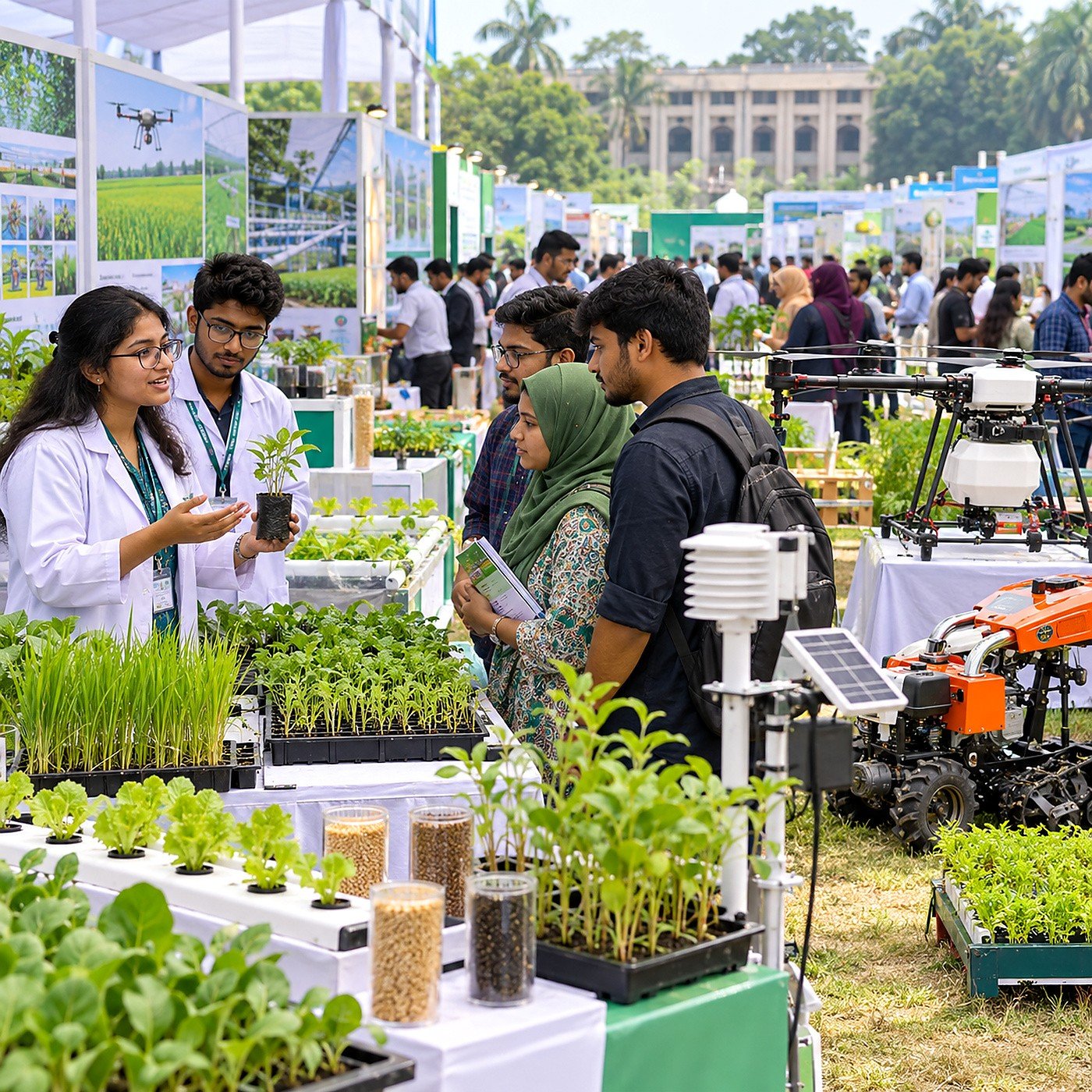

Bangladesh Agricultural University selected 36 innovative research projects for presentation at the Bangladesh Innovation Fair, giving researchers a national platform to show how new agricultural technologies can move from university work into practical use. The projects were developed by BAU researchers and chosen for display at the three-day fair in Dhaka. University researchers said they hoped the event would help take technologies created through academic research to grassroots users. That connection between research and real farming is important for Bangladesh because agriculture faces constant pressure to produce more efficiently while dealing with climate risks, changing markets, labour shortages and the need to reduce waste. University innovation can contribute solutions in areas such as crop production, livestock, fisheries, farm machinery, food processing, soil management and digital agriculture. A fair alone does not guarantee adoption, but it can bring researchers into contact with government agencies, businesses, investors, students and other institutions that may help test or commercialise useful ideas. Agricultural technology becomes most valuable when farmers can understand it, afford it and see a clear improvement in income or productivity. That means researchers need feedback from the people who will use their work, while farmers need access to demonstrations, training and local support. BAU’s participation also highlights the wider role of agricultural universities in Bangladesh. These institutions do more than educate graduates; they can develop solutions for national food security, rural livelihoods and climate adaptation. When their research is presented publicly, young scientists gain exposure and successful projects have a better chance of attracting support. The Innovation Fair can also encourage interdisciplinary work, because many modern agricultural problems require engineering, biotechnology, data analysis, business planning and environmental knowledge together. Bangladesh has a large farming population and a growing agro-processing sector, creating a strong domestic market for technologies that save labour, improve quality, reduce post-harvest loss or increase resource efficiency. The next step is to identify which of the 36 projects have the strongest practical and commercial potential and help those teams move beyond exhibition. With field trials, industry partnerships and extension support, promising university research can become tools that farmers and agribusinesses actually use. BAU’s strong representation at the fair therefore reflects a positive shift toward turning agricultural knowledge into innovation with direct value for Bangladesh’s food and rural economy.