

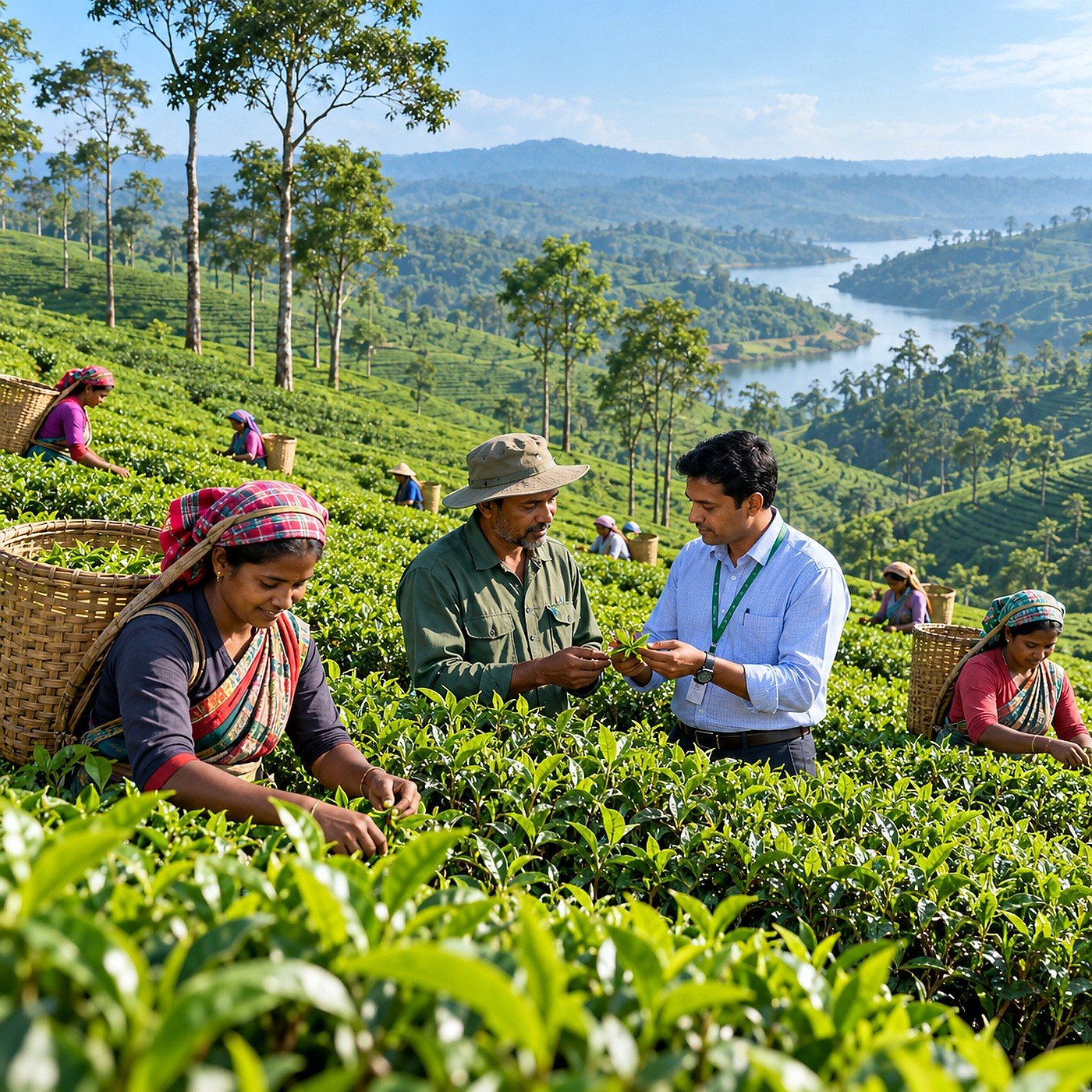

Bangladesh is preparing a long-term development approach for its tea industry, with attention to financial sustainability, income diversification and better management of tea-garden resources. The plan was discussed at the first meeting of an advisory committee formed to support the sector’s development. Tea remains an important part of the economy in areas such as Sylhet and Chattogram, where gardens support workers, local communities, transport, trade and related businesses. A stronger sector can protect those economic links while helping Bangladesh make better use of its long history of tea production. One of the most promising ideas discussed is income diversification inside tea estates. Participants proposed using suitable unused or fallow land for activities such as solar power, agriculture, alternative afforestation and other income-generating projects, while preserving the core character of tea gardens. These options could give garden operators additional revenue streams and make better use of land without depending only on tea sales. Solar projects could be especially useful because they connect agricultural estates with Bangladesh’s wider clean-energy goals. The meeting also emphasised stronger management efficiency and greater financial capacity within individual gardens. That approach can encourage operators to improve productivity, plan investments more carefully and reduce long-term dependence on repeated support. Garden-specific action plans are expected to be reviewed, with banking and policy assistance considered according to actual needs. For workers and surrounding communities, the most important outcome would be a tea industry that remains productive and stable over time. Better management and diversified income can create more predictable economic activity in regions where many families are linked with tea. The sector can also explore higher-value products, improved packaging and stronger branding so that Bangladeshi tea competes through quality as well as volume. Any diversification plan should be designed carefully so that environmental balance, worker interests and tea cultivation remain protected. Clear land-use rules and technical review will be essential. If the long-term plan leads to practical garden-level improvements, Bangladesh can strengthen a traditional industry while connecting it with renewable energy, modern management and new income opportunities. That combination could make the tea sector more resilient, commercially sustainable and better prepared for future market demand.