

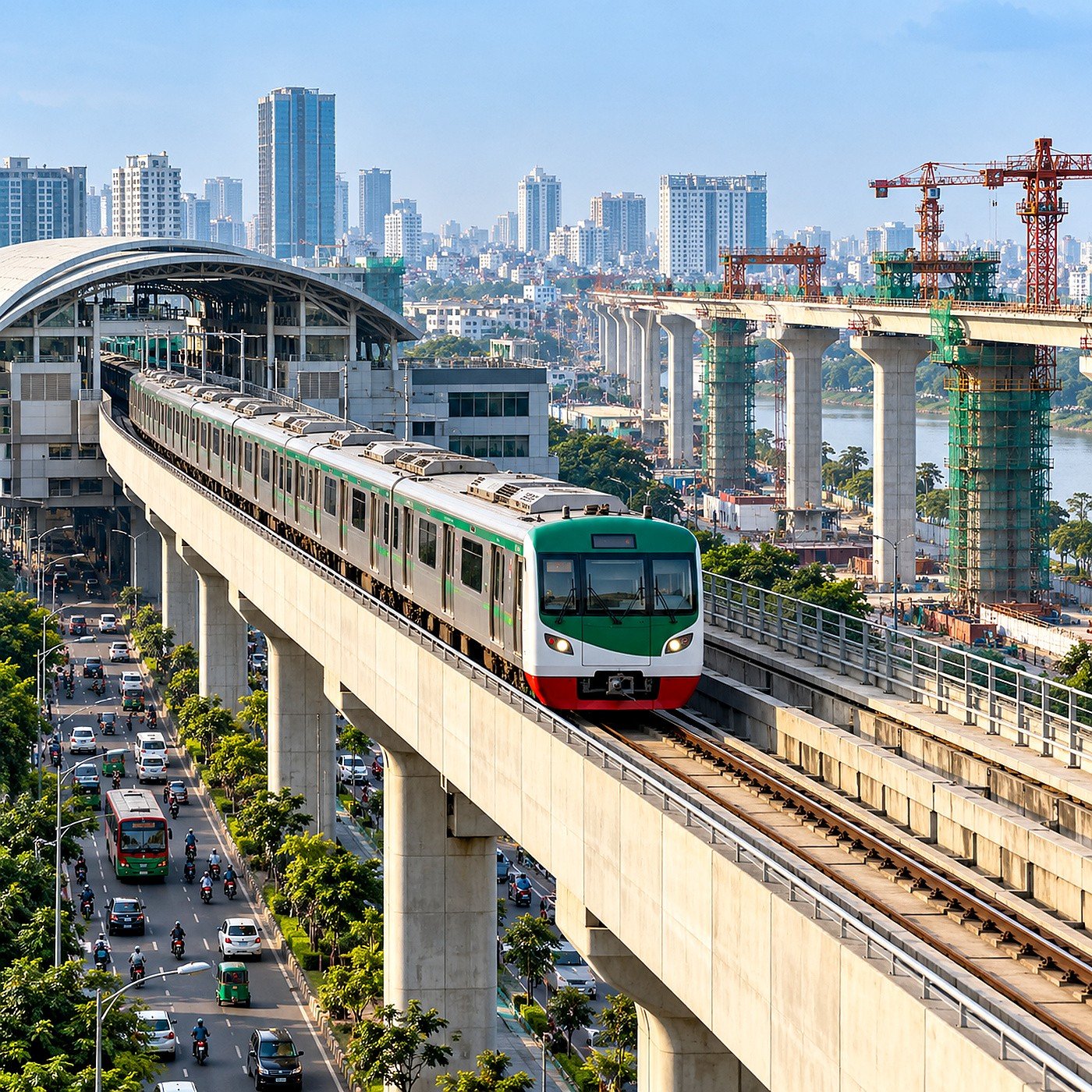

Dhaka’s mass-transit network is set for further expansion after ECNEC approved three metro rail projects as part of a wider development package, strengthening the capital’s long-term move toward higher-capacity public transport. The approvals include a new MRT Line 5 Southern Route along with revised projects for MRT Line 1 and MRT Line 5 Northern Route. The southern route is planned to run about 17.2 kilometres from Gabtali to Dasherkandi, including roughly 13.1 kilometres underground. An underground section can be especially useful in a dense city because it allows large numbers of passengers to move without taking additional road space at surface level. The broader metro network is designed to connect major residential, commercial and transport areas, giving commuters an alternative to slow road journeys. For students, office workers and businesses, reliable mass transit can make daily schedules more predictable. It can also support the economy by reducing time lost in traffic and improving access to workplaces, markets, hospitals and educational institutions. Metro construction also creates demand for engineers, technicians, station staff, safety specialists and maintenance teams, while giving local professionals experience with large urban rail systems. The environmental value is also important. A well-used electric rail network can move many passengers with less road congestion and lower emissions per trip than a system that depends mainly on private vehicles. To achieve those benefits, however, metro lines need good connections with buses, walking routes and other forms of public transport. Stations should be accessible, easy to navigate and safe for women, elderly passengers and people with disabilities. Large infrastructure projects also require disciplined project management so that construction, procurement and future maintenance remain efficient. The approvals are therefore a major planning step, while the real public benefit will depend on implementation quality. As more lines are built and connected, Dhaka can gradually move from isolated rail corridors toward a true network. That network can reshape how people choose to travel across the city. If the projects progress with strong engineering, passenger-focused design and reliable operations, the expanded metro system can help Dhaka become more connected, productive and environmentally friendly.