

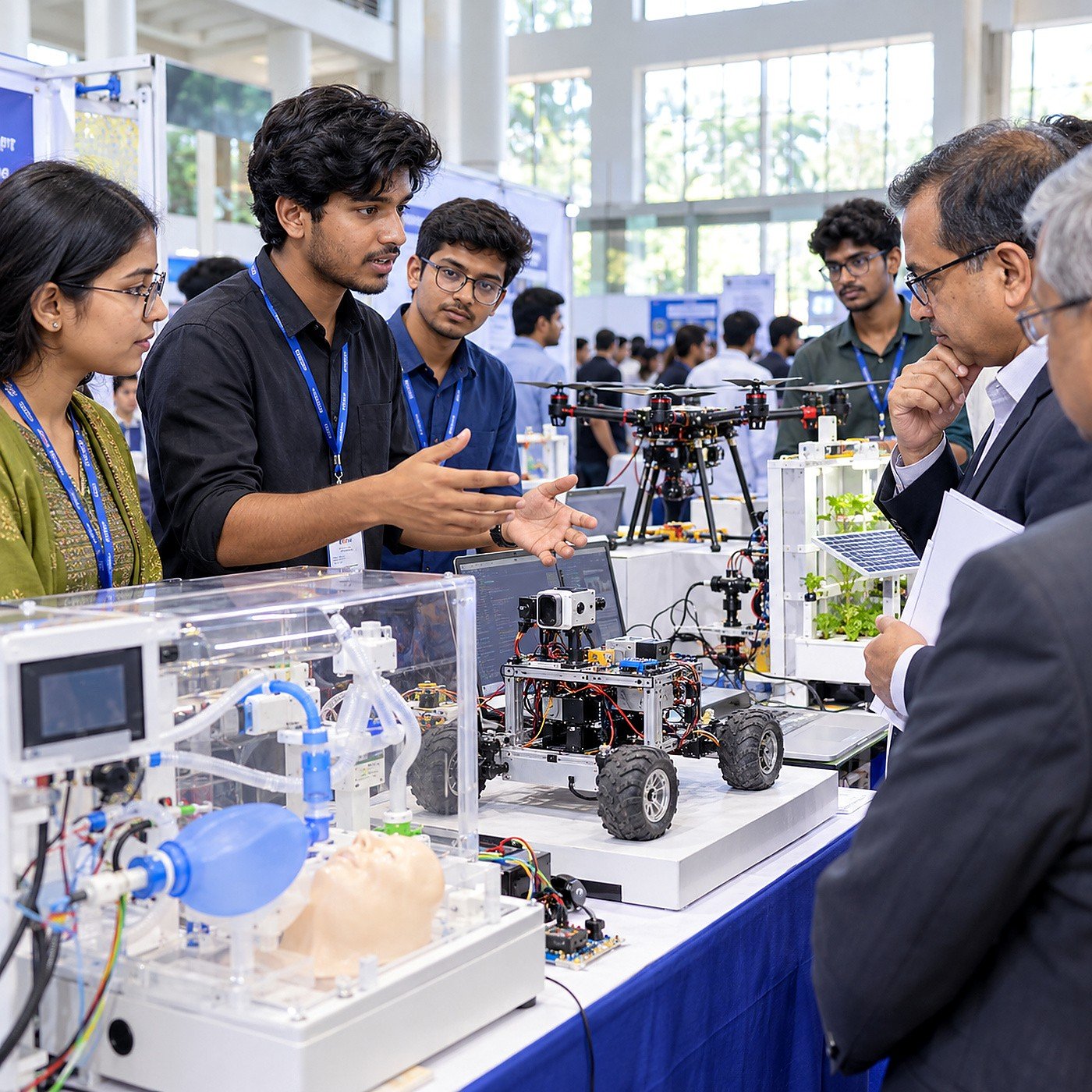

Ten science, technology and engineering innovations have received Tk100,000 each to help move them from research and prototype stages toward commercial use, creating a stronger bridge between invention and entrepreneurship in Bangladesh. The projects were selected from 50 shortlisted innovations at the Bangladesh Innovation Fair after evaluation by a panel of judges. The selected ideas cover a wide range of practical challenges, including healthcare, disability support, disaster response, cybersecurity, textiles, electronics, satellite communication, environmental management and industrial safety. Among the projects are a remote biometric and telemedicine network for home-based healthcare, an IoT-enabled smart wheelchair, an infrared rescue robot, an offline AI translation device, a cybersecurity response portal and a water-repellent jute fabric. Other projects include a natural-fibre printed circuit board, a nanosatellite antenna, a microalgae-based ‘Liquid Tree’ system for reducing carbon emissions and a smart electrical switch designed to protect industrial circuits. The variety of ideas shows that young Bangladeshi innovators are working on both social needs and commercial technology. The funding is relatively small compared with the capital required to manufacture products at scale, but early support can be valuable when teams need to improve prototypes, test performance, prepare documentation or demonstrate market potential. The fair also brought together more than 100 stalls from 73 universities and included academic, media and policy sessions, giving students and researchers opportunities to meet people outside their own institutions. Commercialisation is often one of the hardest stages for university innovation. A project may work technically but still need product design, certification, business planning, manufacturing partners and customers before it becomes a sustainable company. The government’s stated aim of helping young innovators move beyond exhibitions is therefore significant. Some projects have already received opportunities for market adoption and even export interest, showing that research can create economic value when the right connections are made. The next step should be continued mentoring, technical testing and links with industry rather than one-time awards. If promising teams receive support through these later stages, the programme can help Bangladesh create more locally developed products, encourage engineering entrepreneurship and turn university research into practical solutions for businesses, public services and communities.