

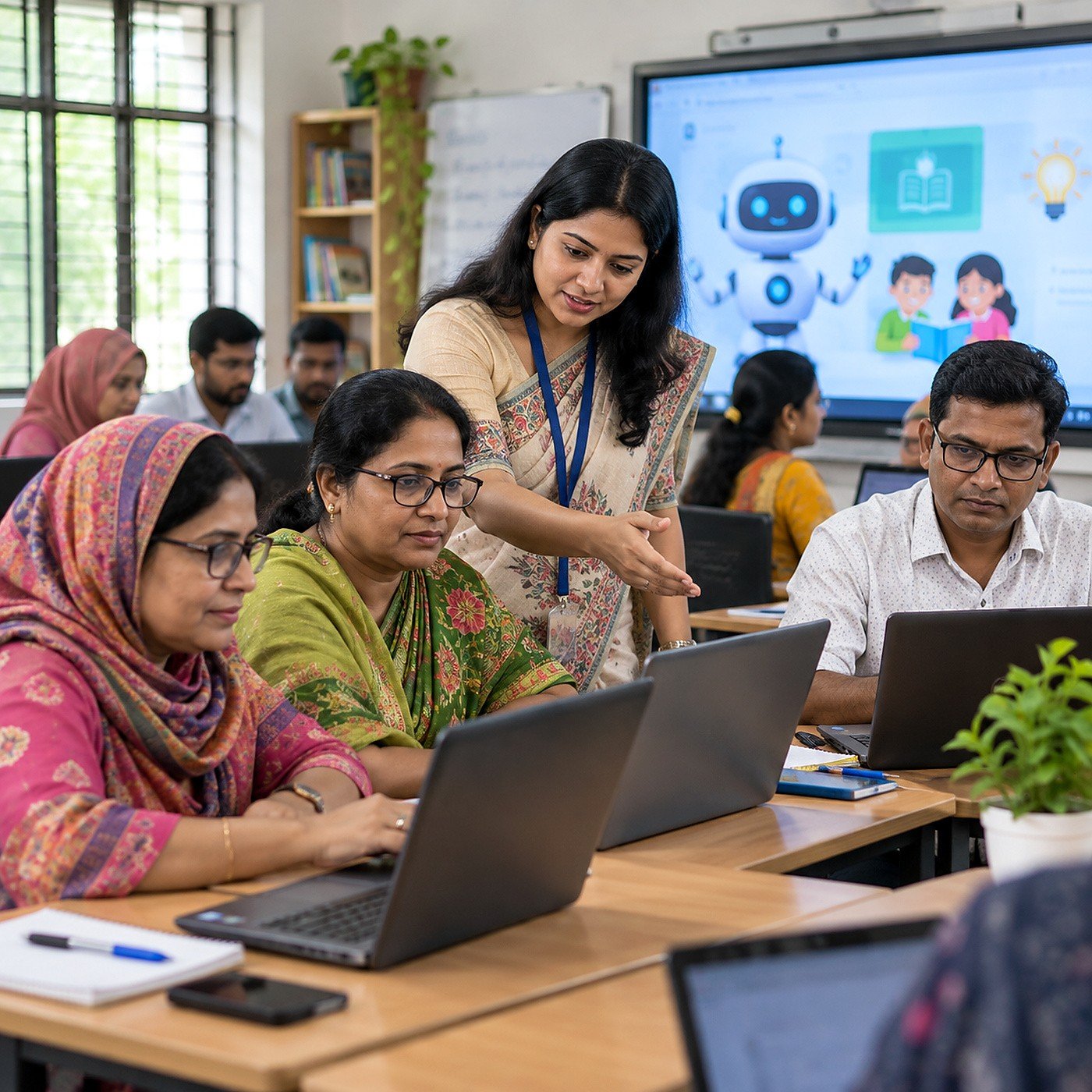

Bangladesh plans to introduce modern artificial intelligence-based training for primary school teachers, placing teacher skills at the centre of technology use in education. The initiative is intended to help teachers develop the ability to use digital tools in ways that improve learning rather than simply adding technology to classrooms. The policy direction recognises an important point: technology can support teaching, but it cannot replace the role of a trained teacher who understands students, local needs and the learning environment. The planned training is therefore focused on building teachers’ capabilities so they can use AI and other education technologies more effectively. This can be especially useful in low-resource classrooms, where teachers often need practical ways to personalise learning, prepare materials, explain difficult topics and support students with different levels of understanding. AI tools can assist with lesson planning, practice activities, translation, simple assessments and the creation of locally relevant learning content, but teachers need enough knowledge to judge when those tools are accurate and appropriate. Training can also help educators understand digital safety, student privacy and the risks of relying on incorrect AI-generated information. The government’s approach also encourages teachers to become active innovators rather than passive users of technology. That matters because solutions designed for high-income schools or foreign education systems may not always fit Bangladeshi classrooms. Teachers who understand both technology and their own students can adapt tools to local languages, class sizes, available devices and curriculum needs. International experience and partnerships are expected to support the initiative, while implementation will need to remain grounded in local realities. Bangladesh has a large primary education system, so even gradual improvements in teacher capability can affect many children. The programme can also strengthen teachers’ confidence as education becomes more digitally connected. Successful implementation will require practical training, continued support after courses end and clear guidance on responsible AI use. Schools with limited internet or devices will need solutions that do not depend on expensive infrastructure. If the initiative is designed around real classroom challenges, AI training can help teachers save time, improve lesson quality and make learning more inclusive. By investing in teachers first, Bangladesh can use education technology as a tool for stronger teaching rather than treating technology itself as the final goal.