

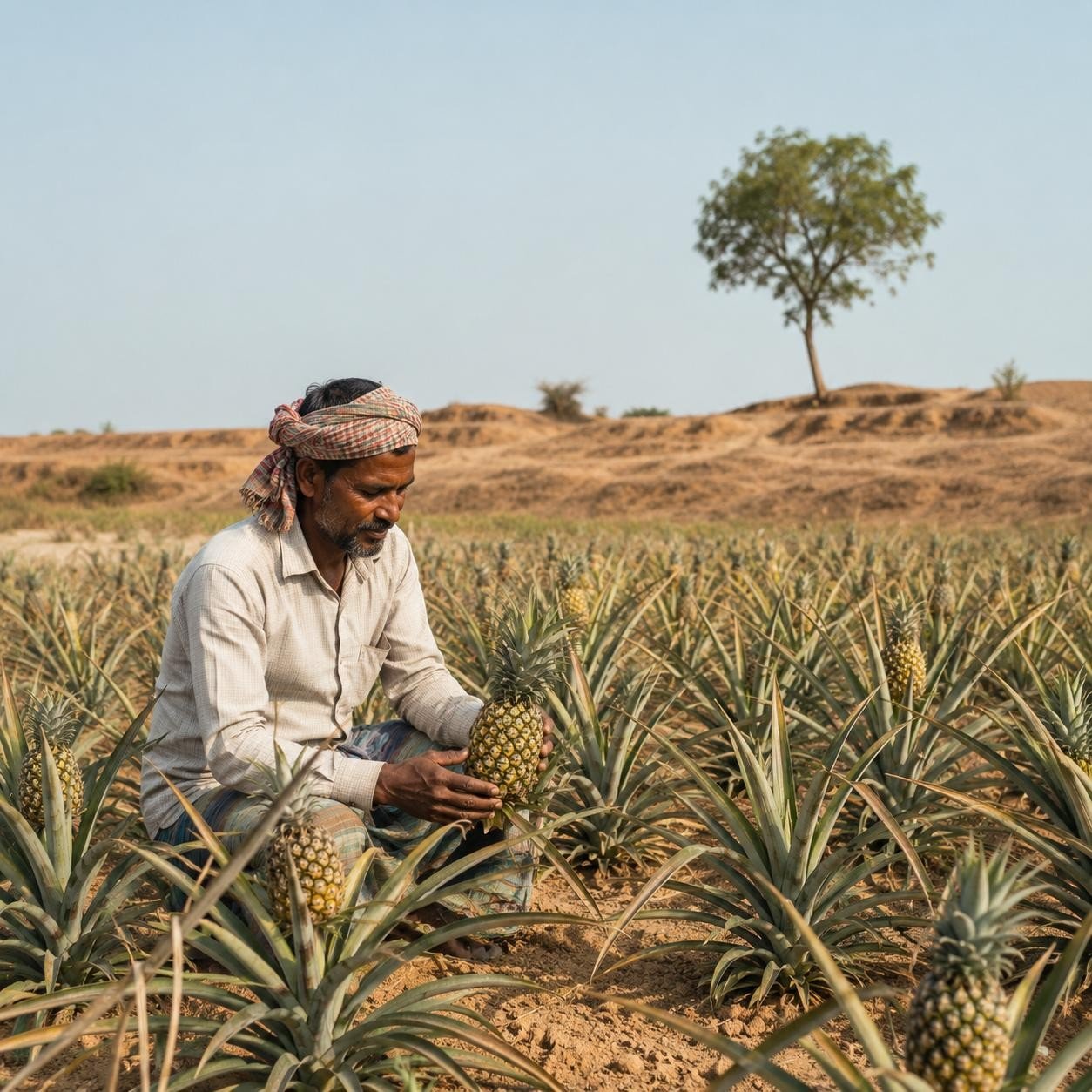

Sweet pineapple cultivation is opening a promising new path for farmers in the Barind region, where dry conditions often make crop selection difficult. Growers in Naogaon are exploring pineapple as an income source because the fruit can offer good market value and may fit selected areas when soil, water, and farm care are properly managed. The move is important for a region known for limited rainfall and seasonal water stress. Instead of depending only on familiar crops, farmers are testing a high-value fruit that can help diversify production and reduce financial risk. Pineapple farming also creates work at many stages, including land preparation, planting, weeding, irrigation, disease control, harvesting, sorting, transport, and sales. Local nurseries can benefit by supplying healthy planting materials, while traders and transport workers can gain from increased fruit movement. For farmers, success will depend on careful field selection and practical guidance. Pineapple needs suitable soil, controlled moisture, and protection from standing water. In a drought-prone area, efficient irrigation and moisture-saving methods are especially important. Mulching, timely watering, and good field management can help plants use available water more effectively. Farmers also need access to reliable advice so they can choose suitable varieties and avoid costly mistakes. Market planning is equally important because pineapple must be harvested and sold at the right stage. Strong links with wholesalers, retailers, and food processors can reduce waste and improve returns. Better grading and packaging may help growers reach larger markets and build a reputation for quality. If production expands, local businesses could develop juices, dried pineapple, jam, and other products, creating more value close to the farms. The early progress in Naogaon shows how agricultural innovation does not always require complex machines. Sometimes it begins with choosing a crop that offers a better match between land, climate, and market demand. It also shows the value of learning through small trials before expanding. Other farmers in the Barind region may watch the results and adopt the crop when they see clear evidence of profit and manageable risk. With support from agricultural experts, access to quality planting materials, and dependable buyers, pineapple cultivation could become a useful addition to the region’s farming system. The opportunity is not only about growing a sweet fruit. It is about building stronger farm incomes, creating local jobs, and helping communities adapt to difficult growing conditions through practical and hopeful choices. The crop may also encourage young people to see farming as a modern business that uses planning, market knowledge, and careful resource management. Cooperative selling could help small growers combine harvests and negotiate better prices. Regular soil testing and weather information would further reduce risk and support steady production across difficult seasons for everyone in future.