

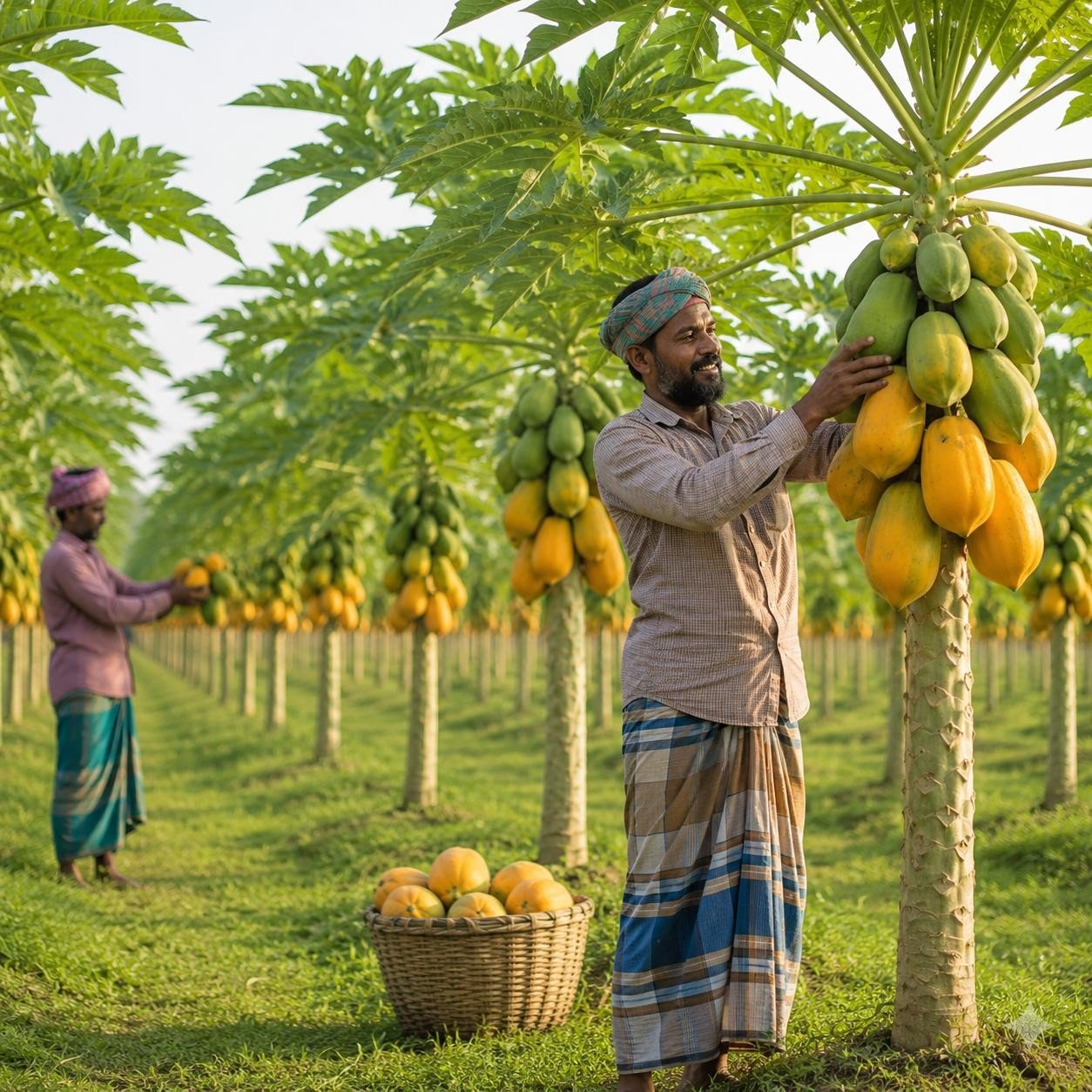

Commercial papaya farming is creating fresh jobs and new income opportunities in Barishal, showing how one well-managed crop can support an entire rural community. A local farmer has expanded papaya production after seeing strong results from earlier cultivation, turning the orchard into a practical example of agricultural diversification. Papaya is attractive to growers because the plants can begin producing fruit relatively quickly and can continue yielding over an extended period when they receive proper care. The expanding farm needs workers for planting, watering, weeding, applying nutrients, controlling pests, harvesting, sorting, packing, and transporting the fruit. This creates regular work for local people while also supporting traders, transport operators, market sellers, and small suppliers. The project also shows why farmers benefit from moving beyond a single traditional crop. By choosing fruit that has steady demand, growers can spread risk and make better use of available land. Careful planning remains important because papaya plants need good drainage, healthy seedlings, balanced fertilizer, and protection from disease. Farmers must also follow market prices and arrange transport so ripe fruit reaches buyers without delay. When these steps are managed well, commercial papaya farming can provide a reliable flow of produce and cash. The success in Barishal may encourage other farmers to study local soil, weather, and market conditions before starting similar orchards. It can also create opportunities for agricultural officers, nurseries, and experienced growers to share practical training on crop care and post-harvest handling. Better packaging and direct links with wholesalers could reduce damage and help farmers receive fairer prices. Small processing businesses may also use papaya in juices, dried fruit, sweets, or food products, adding more value within the region. The wider lesson is simple: rural growth can begin with a crop that matches local conditions and is managed as a business rather than only as a seasonal activity. The Barishal farm demonstrates how patient investment, technical knowledge, and access to buyers can turn fruit cultivation into a source of employment. As production grows, the benefits can reach families beyond the farm itself, strengthening the local economy and giving young people more reasons to find work close to home. With continued attention to quality, safe farming, and market access, papaya cultivation can become a useful path for farmers seeking higher returns and communities seeking steady, practical development. Local schools and youth groups may also learn from the farm by seeing how agriculture uses science, teamwork, and business skills. Access to small loans, crop insurance, and dependable farm advice could help more growers begin carefully. If production remains steady, Barishal may become better known for quality papaya and attract larger buyers from nearby cities, creating stronger demand throughout the year for local producers and workers.