

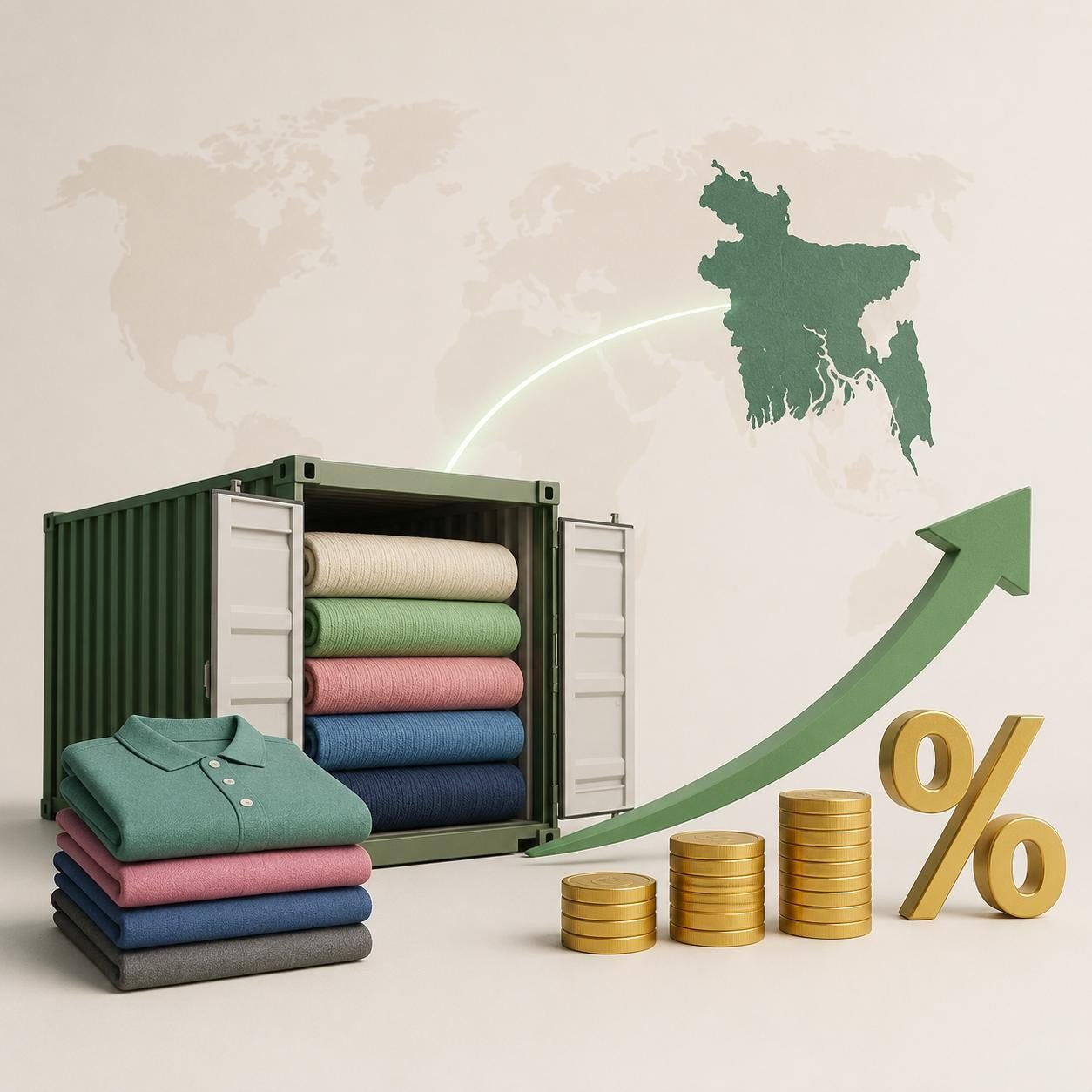

Bangladesh has increased the cash incentive for eligible textile exports to five percent, offering stronger support to businesses that use locally produced yarn, fabric, and other approved materials. The previous rate was one and a half percent, so the new level gives exporters a much larger benefit when they meet the required conditions. The change is designed to improve export competitiveness while encouraging manufacturers to buy more inputs from domestic suppliers. This can create a wider chain of benefits across the textile and apparel sector. When exporters choose local yarn and fabric, spinning mills, weaving units, dyeing facilities, finishing plants, transport companies, and supporting businesses may receive more orders. Greater local sourcing can also reduce dependence on imported materials and help more export earnings remain within the country. For garment manufacturers, the incentive may lower part of the cost pressure created by changing global prices, shipping expenses, and strong competition from other producing nations. It can give companies more room to invest in quality, worker training, modern machinery, cleaner production, and product development. However, the support is not automatic. Exporters must belong to recognised industry associations or other relevant trade bodies and must provide documents showing that eligible raw materials were purchased from local suppliers. Existing procedures for checking locally sourced yarn and fabrics will continue, which means businesses need accurate records and clear coordination with banks and suppliers. Proper verification is important because it protects the programme and ensures that benefits reach qualified exporters. The higher incentive can also encourage stronger links between garment factories and local textile producers. Long-term supply agreements may help mills plan production, maintain quality, and invest with greater confidence. Exporters may benefit from shorter delivery routes and faster access to materials when local supply chains work well. To make the most of the policy, the sector must still address challenges such as energy efficiency, reliable utilities, skills, technology, and product variety. Cash support alone cannot solve every issue, but it can provide useful breathing space while companies improve. Small and medium businesses may need guidance so they understand the rules, prepare documents correctly, and avoid delays when applying. Banks and trade groups can help by explaining the process in simple terms. The increased incentive sends a positive signal to the textile industry and recognises the value of domestic production. If managed carefully, it can support exports, strengthen local manufacturing, protect jobs, and encourage greater value addition throughout Bangladesh’s apparel supply chain. It may also encourage suppliers to improve testing, traceability, and delivery standards because exporters need proof of origin and consistent quality. Better cooperation among mills, factories, banks, and buyers can turn the incentive into lasting industrial progress rather than a temporary financial advantage.