

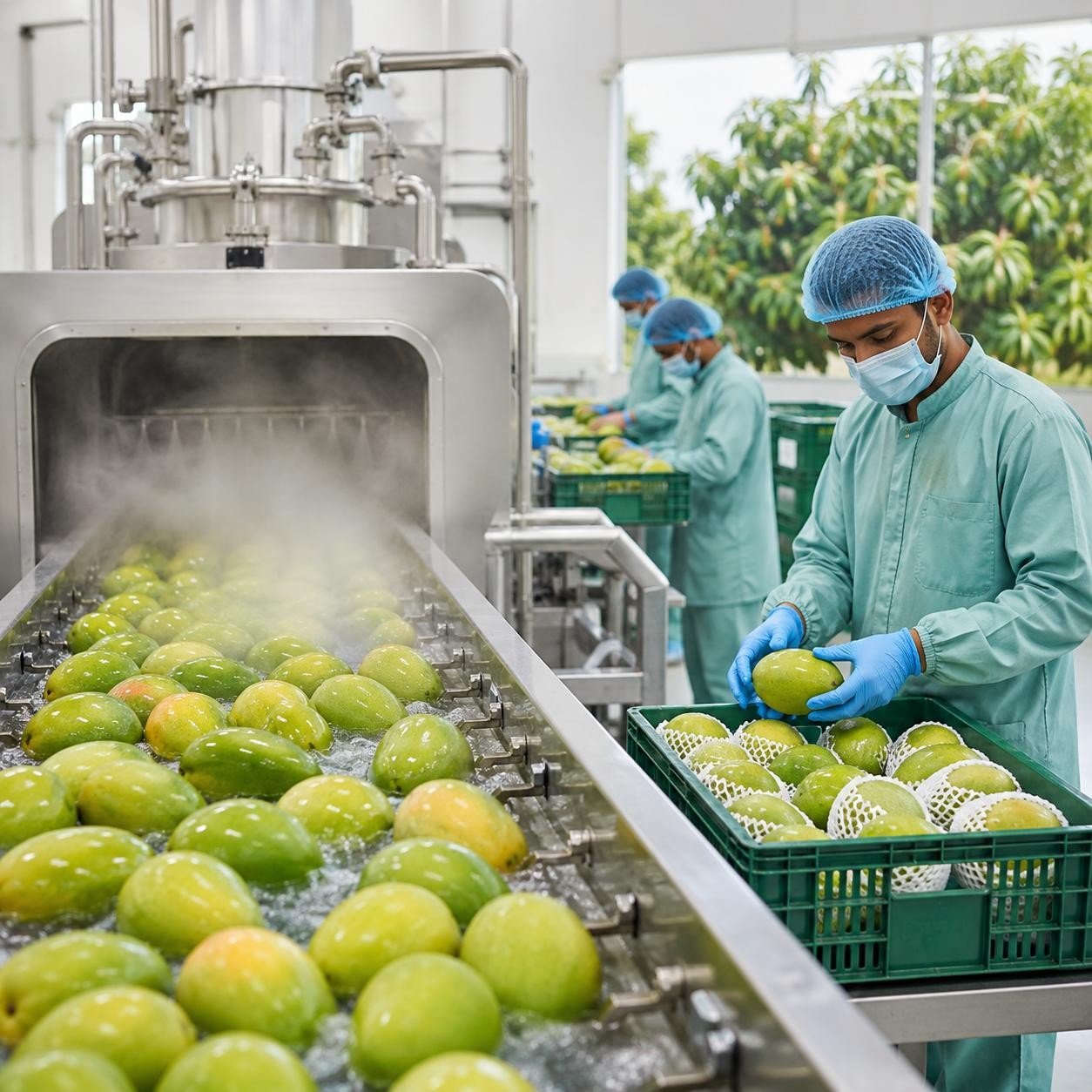

Bangladesh’s first vapour heat treatment plant has opened in Gabtoli, giving mango growers and exporters a new tool for reaching premium overseas markets. The modern facility can treat and process up to 12 tonnes of mangoes each day under internationally accepted plant-health rules. This is important because many importing countries require fruit to be free from pests such as fruit flies and larvae before it can enter their markets. Vapour heat treatment uses warm, high-humidity air rather than chemicals to remove these risks. Temperatures generally range from 42 to 50 degrees Celsius, allowing the fruit to be treated while protecting its quality. The plant was established by the Bangladesh Agricultural Development Corporation and is designed to handle around three tonnes of mangoes or other suitable produce in each batch. After treatment, the fruit is washed, dried, and prepared for export. The process can improve appearance, maintain quality, and extend shelf life by about eight to ten days. That extra time is valuable because fresh fruit must travel from farms to processing centres, airports, and overseas buyers without losing taste or freshness. The facility is also planned as a one-stop service for purification, quarantine checks, certification, and packaging. Exporters could complete several important steps in one place instead of moving shipments between different offices and facilities. A temperature-controlled storage area at the airport is also planned to protect mangoes and other export produce before flights. Better cargo services and lower airfreight costs will be important because transport remains a major expense for fresh fruit exporters. Bangladesh is one of the world’s largest mango-producing countries, with annual production of roughly 2.4 million to 2.67 million tonnes, yet only a very small share is exported. Interest has come from markets including Japan, Australia, the United Kingdom, the United States, and China. The new plant can help growers meet strict entry rules and build buyer confidence, but careful coordination is still needed. Farmers must follow good agricultural practices, use safe pest control, harvest at the right stage, and protect fruit during transport. Exporters need dependable packaging, fast certificates, cold-chain support, and regular flight space. Locating services close to transport links can also reduce handling costs. The plant creates opportunities for farmers, traders, technicians, packers, laboratory staff, and logistics companies. By combining strong production with modern treatment and reliable export services, Bangladesh can sell more high-quality mangoes abroad, reduce post-harvest loss, and earn greater value from one of its most popular fruits. Farmer groups can combine produce from smaller orchards so exporters receive enough fruit of similar quality. Digital tracking from farm to shipment may improve safety checks. With dependable operation and reasonable costs, the facility can build a stronger global reputation for Bangladeshi mangoes.