

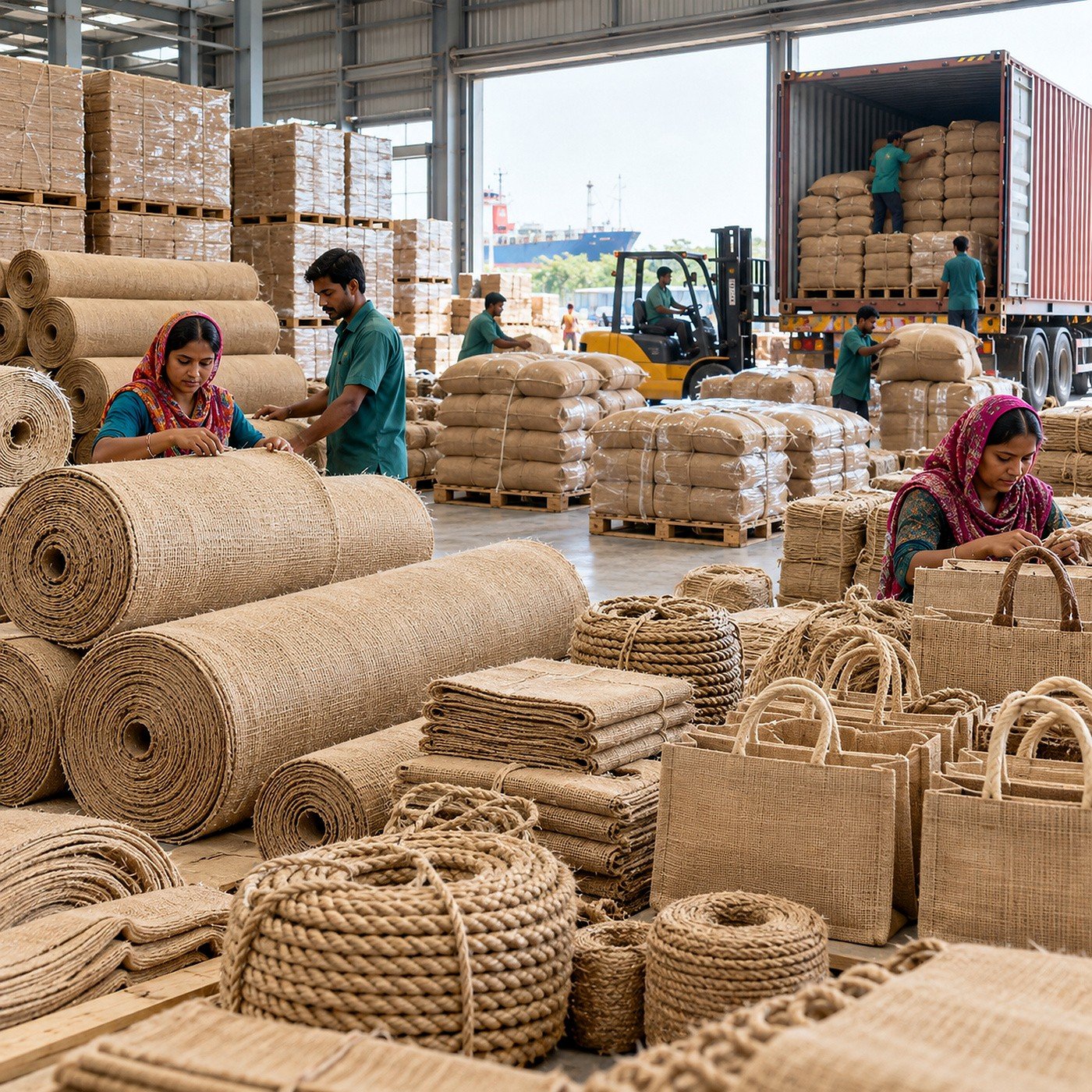

Bangladesh earned Tk84,002.57 crore from exports of raw jute and jute products over the past ten years, highlighting the continuing international value of one of the country’s most traditional natural fibres. The larger share of earnings came from processed jute products, which generated Tk71,390.50 crore from 70.69 lakh metric tons of exports. Raw jute exports accounted for Tk12,612.07 crore from 19.25 lakh metric tons during the period. Bangladesh’s finished jute products have reached 138 countries, while raw jute has had markets in 30 countries. The figures show that jute is not only a heritage crop but also a global commercial product with a wide customer base. Processed products are particularly important because they add more value inside Bangladesh before export. Instead of selling only fibre, manufacturers can produce sacks, yarn, bags, floor coverings, home items, geotextiles, packaging and newer composite materials. This creates more activity for mills, designers, workers and small enterprises. Jute also has a natural advantage at a time when businesses and consumers are looking for alternatives to plastic and other less sustainable materials. The fibre is renewable and biodegradable, giving Bangladesh an opportunity to position jute as part of the global shift toward greener packaging and products. The country’s challenge is to move further into higher-value design, finishing and specialised applications. Traditional products remain important, but modern buyers often expect better branding, consistent quality and products designed for specific uses. Research into water-resistant fabrics, composites and other advanced applications can expand the market beyond conventional sacks and twine. Farmers also benefit when demand for jute remains strong, so industrial development in the sector can support rural income as well as exports. The ten-year earnings demonstrate that Bangladesh already has a strong foundation and international market recognition. Future growth can come from combining that heritage with technology, design and sustainability. Better links between farmers, mills, researchers, designers and exporters can help the sector produce more value from the same raw material. If Bangladesh continues to develop diversified jute products and promote them as environmentally friendly alternatives, the industry can strengthen its export position while preserving an important connection between rural agriculture and modern manufacturing.