

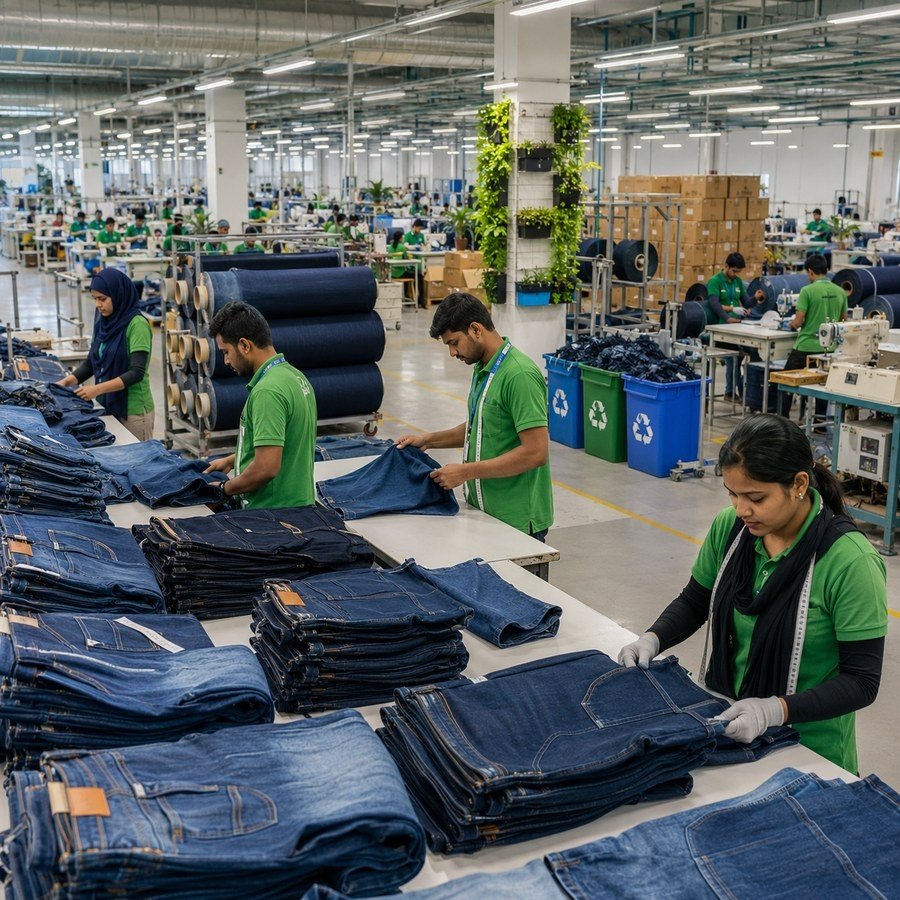

Bangladesh has turned denim into a major export success story by combining production scale, factory experience, quality improvement, and growing attention to sustainable manufacturing. Denim is one of the most popular clothing materials in the world, used in jeans, jackets, shirts, skirts, bags, and many casual fashion products. The market is competitive because buyers expect durability, comfort, style, and reliable delivery. Bangladesh’s rise in denim shows that the country’s garment sector can do more than basic sewing. It can develop stronger fabric supply, washing skills, finishing techniques, design support, and buyer confidence. This is important because higher-value denim can bring better business opportunities than simple low-margin products. Denim production requires careful work at many stages. Fabric must have the right weight, color, stretch, and feel. Washing and finishing must create the desired look without damaging the product. Quality checks must be strict because buyers want consistent sizes, shades, and stitching. Bangladesh has built experience in these areas through years of garment production and investment in modern factories. Local denim mills and washing plants have helped reduce dependence on imported materials and improved speed for exporters. Sustainability is also becoming a major part of the country’s denim story. Traditional denim production can use large amounts of water, chemicals, and energy. Buyers now ask suppliers to reduce environmental impact. Bangladeshi producers that invest in water-saving washing, safer chemicals, waste treatment, energy efficiency, and recycling can stand out in the market. Green factories also improve the country’s image and attract brands that care about responsible sourcing. Workers benefit when factories upgrade technology and skills. Denim production needs trained people in fabric handling, washing effects, machine operation, chemical safety, design, and quality control. This creates room for better jobs and career growth. The success of denim also supports related sectors such as yarn, dyeing, accessories, packaging, testing, logistics, and design. However, Bangladesh must keep improving. Competition remains strong, and buyers can shift orders if quality, price, or delivery weakens. The country needs better design capacity, faster logistics, stronger innovation, and more branding. The denim success story shows what is possible when the sector invests in value addition. If Bangladesh continues to focus on quality, sustainability, and product development, denim can remain a powerful symbol of the country’s apparel strength and its move toward a smarter export future.