

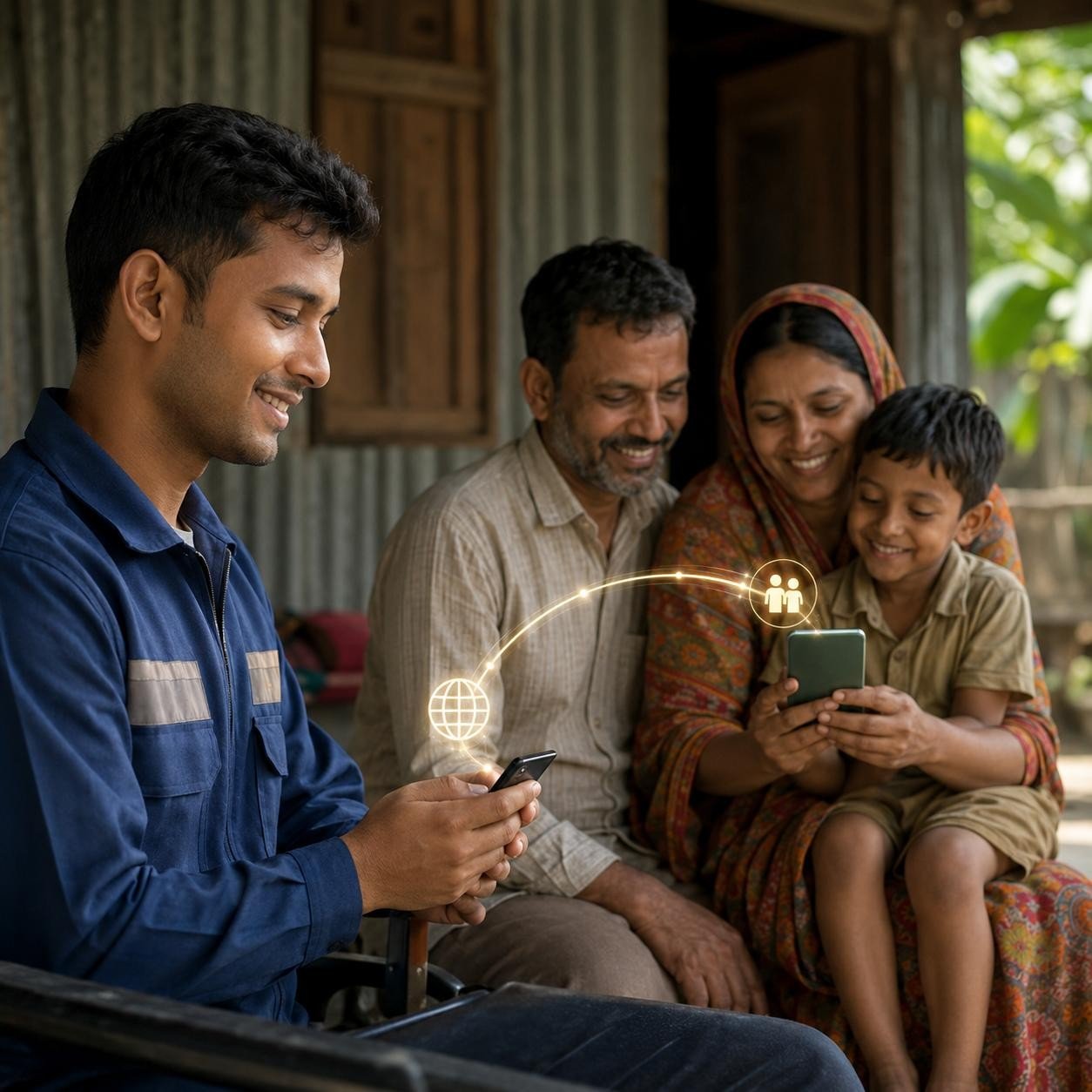

Bangladesh has received a record $35.5 billion in remittances, giving the economy a strong supply of foreign currency and showing the lasting contribution of citizens working abroad. The total increased by 17.3 percent from $30.3 billion in the previous financial year, even though the pace of growth was slower than the year before. This large inflow helped cover part of the country’s trade gap and brought the current account closer to balance. It also supported families who use money from relatives overseas for food, housing, education, healthcare, farming, and small businesses. Remittances often reach communities that receive little direct foreign investment, so their effects can spread widely through local markets. Several factors helped more money move through formal channels. A more competitive exchange rate reduced the gap between bank rates and informal rates, while tighter oversight made unofficial transfer systems less attractive. Wider access to banks, mobile services, and authorised exchange channels also gave migrant workers and their families more convenient choices. More than five million Bangladeshis have travelled abroad for work in recent years, mainly to Middle Eastern countries. The continued movement of workers, along with the rising earning ability of the existing migrant community, has supported the growth in transfers. However, the record figure should not hide the challenges faced by workers. Recruitment costs, job security, wages, safe working conditions, and access to reliable financial services all affect how much they can send home. Improving migrant support before departure and during employment can protect workers and help remittance flows remain stable. Faster, cheaper transfer services would also allow families to receive a larger share of each payment. Banks and digital providers can help by simplifying documents, offering clear exchange rates, expanding rural access, and resolving failed transactions quickly. Financial education can encourage recipient families to save, invest, and plan for emergencies while still meeting daily needs. Remittance-backed savings products, small business finance, and housing options could turn part of these transfers into longer-term economic value. Bangladesh can also reduce risk by expanding employment opportunities in more countries and training workers for higher-skilled jobs. Dependence on a small group of destinations makes inflows more sensitive to regional conflict or changes in labour demand. The record $35.5 billion result is therefore both a major achievement and a reason to strengthen the systems behind it. By protecting migrants, improving formal channels, lowering transfer costs, and creating useful investment choices, Bangladesh can turn remittance growth into more secure family incomes and wider national progress. Stronger data and cooperation among banks, employers, embassies, and training centres can ensure that the benefits remain dependable and reach communities fairly. Safe digital transfers can also reduce fraud, protect savings, and give recipients quicker access during emergencies.