

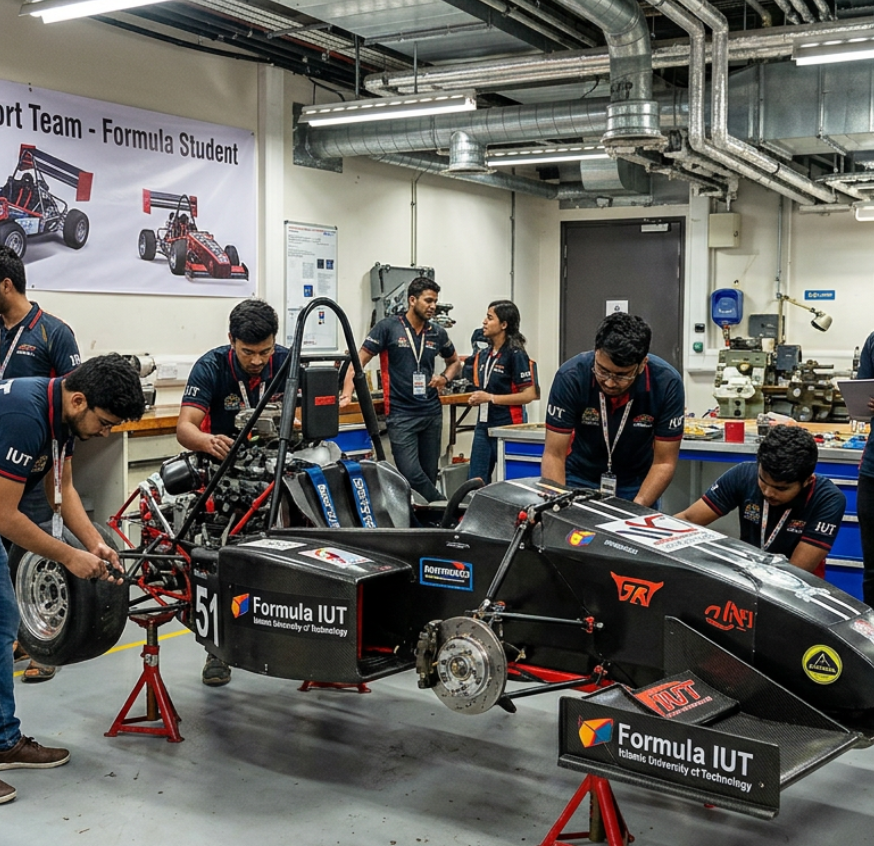

The student team has reached a milestone by designing, building and running its first Formula-style race car after three years of steady work, a hands-on success that shows how project learning can make engineers job-ready. The car is powered by a KTM Duke 390 engine, sits on a stainless-steel space-frame chassis, uses double A-arm suspension and runs on 91-octane fuel, and watching it move proved students could turn textbook ideas into a working machine. The project began in late 2021 with a small group and has grown into a cross-disciplinary effort with over ninety active members from mechanical, industrial and production, and business and technology management programs. Team leaders say the biggest hurdles have been finding Formula-grade parts and a proper workspace, as high-end components and workshop tools are not easy to get locally, forcing creative solutions and careful planning. Since 2022 the team has spent about twelve lakh taka on the build, mostly raised by students with sponsor and alumni help, and one named supporter is Uttara Motors Limited. The students balanced studies with late nights in compact workshops, learning welding, fabrication, suspension setup and basic engine tuning while also preparing technical reports and business plans that judges expect. Their efforts have gained attention internationally: they took notable places in events abroad and returned with technical recognition, and these results show a steady rise in skill and confidence. They placed third in Class I at Formula Bharat 2023, finished seventh at Formula Imperial 2024, earned technical recognition at Formula Student China and were finalists at Formula Student UK, experiences that sharpened their skills. Quotes from the team lead, Farhan Ibtahsum, underline the learning value: he says the project taught teamwork, problem solving and how to manage a full build with limited resources, and he adds the next car will be lighter while keeping torque. For the next season design work focuses on weight reduction, better standardization of parts and clearer production steps so future teams can work faster and safer. Educators and industry partners say hands-on projects make students more ready for jobs because they learn tools, communication and project planning, and the team hopes more workshops, local suppliers and small grants will make future builds smoother. The team hopes to secure a proper workshop, better local suppliers and small grants to scale the work and offer steady training. Industry visits and partnerships could bring tools and internships. The atmosphere around the project is positive: students feel proud, alumni pitch in, small sponsors step up and the wider university community watches a new path for practical engineering education that can help students build careers and attract industry interest. With steady support and access to better facilities, the students say they can turn this early achievement into a lasting program that trains engineers who build, test and improve real machines for a growing motorsport and automotive world and more.