

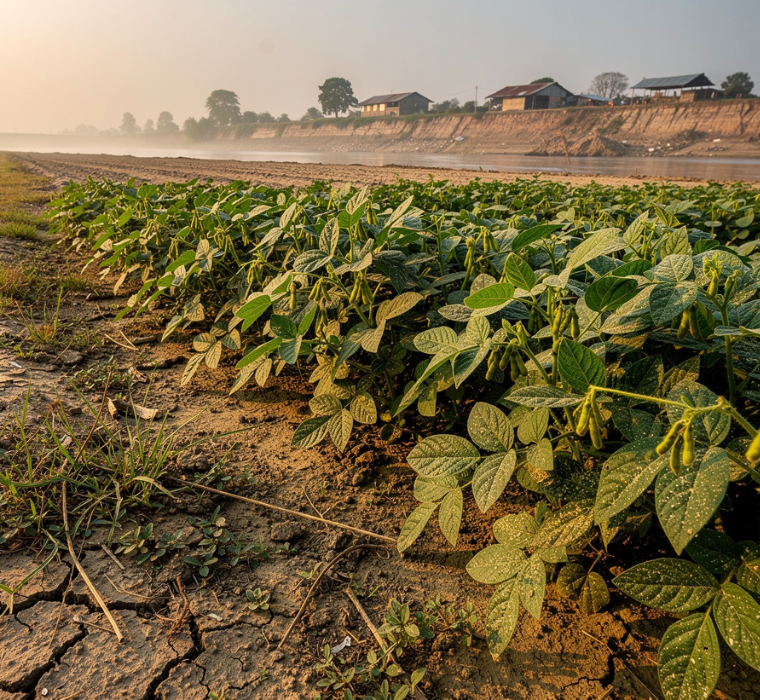

Bangladesh’s first drought-resistant soybean variety is bringing fresh hope to farmers living on the country’s fragile char lands, where sandbars and river islands often suffer from long dry spells and crop loss. Developed by scientists at Bangabandhu Sheikh Mujibur Rahman Agricultural University and partner organisations, the new soybean has been bred to stay green and productive even when rains are late and the soil dries out, giving families a more reliable source of food, fodder and cash income. Char farmers say that in the past they were afraid to plant soybean because a few weeks without rain could wipe out their fields, but early trials with the new variety show plants holding their leaves, setting pods and filling grain where older varieties would wither. Extension workers are helping farmers learn simple practices such as careful seed spacing, timely weeding and the use of compost so that the drought-resistant traits of the crop can perform at their best without heavy spending on fertiliser or irrigation. Local women, who often manage small home plots, are also taking part in the trials, growing soybean along the edges of maize, vegetables and spices to make better use of every strip of land. Because soybean adds nitrogen to the soil, many farmers are noticing that the crops planted after it look greener and stronger, reducing their dependence on costly chemical inputs. The new variety also produces large, protein-rich seeds that can be used in traditional dishes, animal feed or small processing businesses that make snacks and soy-based foods for nearby markets, opening doors to extra earnings throughout the year. Agricultural officers believe that if more char families adopt the crop, it could help cut hunger during lean seasons, when river erosion and extreme weather leave households short of options. They point out that drought-resistant soybean fits well with climate-smart farming plans, as it needs less water than many other cash crops and can cope better with heat waves that are becoming more frequent. Training sessions, field days and farmer-led demonstrations are being organised so that neighbours can see the results for themselves before deciding to switch part of their land to the new seed. The success of this initiative is also encouraging researchers to work on more climate-resilient crops for vulnerable areas, showing how science, local knowledge and patient field testing can work together. For families on the chars, each healthy soybean plant is a sign that even in a changing climate, it is still possible to build a more secure and hopeful future from the soil beneath their feet. Officials are exploring partnerships with seed companies and microfinance groups to expand seed supply, fund storage facilities and ensure poorer farmers share in the benefits.